
Chinese New Year 2027: A Bag Order Planning Checklist
Plan bag orders around Chinese New Year 2027 using confirmed operating dates, sample approvals, component readiness, inspection and shipment milestones.
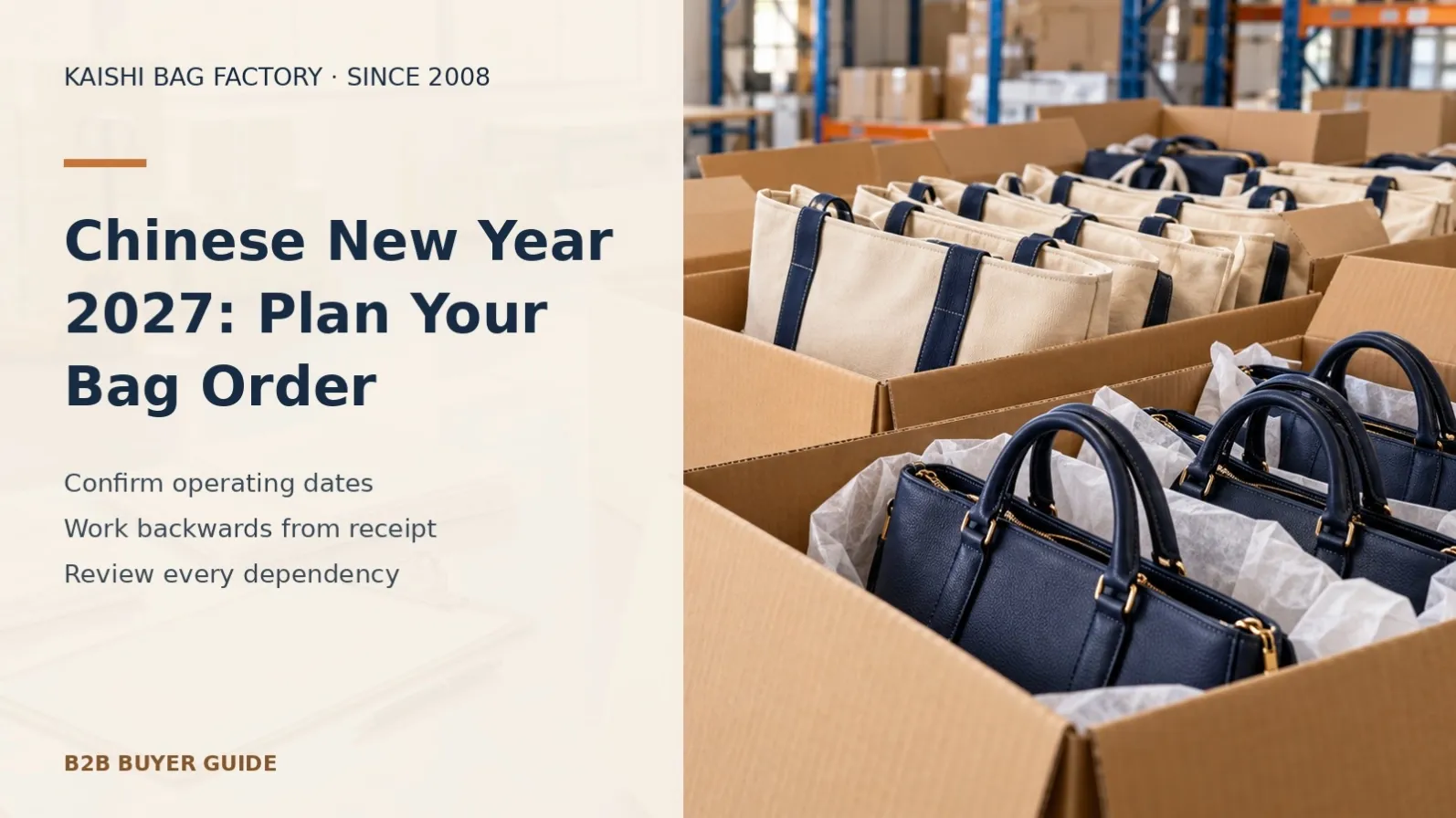
Chinese New Year 2027 falls on 6 February. Plan your bag order backwards from the required delivery date using confirmed material, sampling, production, inspection and freight milestones—not a universal factory shutdown calendar. The festival date is a useful reference. It does not establish when Kaishi, a fabric supplier, an inspector or a carrier will stop or resume work.
This guide helps brand teams and wholesale buyers build an order-specific plan. It separates a verified calendar fact from commercial dates that still require written confirmation. It is especially useful when a spring collection or replenishment order depends on several component suppliers and an overseas receiving deadline.
Separate the festival date from operating dates
The Hong Kong Observatory’s 2027 Gregorian-lunar conversion table places the first day of the first lunar month on 6 February. That source verifies the calendar date; it does not describe mainland factory operations. Hong Kong general holidays also do not establish a Baigou manufacturing schedule.
As of this review on 3 October 2026, a verified mainland 2027 holiday arrangement and Kaishi operating calendar were not available for this article. No fixed closure or reopening window is therefore presented. Before making commitments, obtain updated dates directly from the factory and the suppliers involved in your actual order.
Keep three separate fields in the planning sheet: public holiday information, the supplier’s stated operating dates, and the order’s committed milestones. Combining them into one shaded calendar block can conceal a dependency that remains unresolved.
Start with the date goods must be usable
A retail launch date is not necessarily the warehouse receiving date. Goods may need import clearance, destination transport, receiving checks, photography, allocation and delivery to stores before they can support the launch. Wholesale buyers also need time to distribute cartons and check the assortment.
Specify the receiving location and distinguish a preferred date from a genuine deadline. Tell the supplier whether a later delivery remains commercially useful. A buyer in Nigeria or India should work with the appointed forwarder and customs adviser on the actual route rather than copy a European buyer’s transit assumption.
Build an order-specific milestone sheet
| Milestone | Evidence needed | Responsible confirmation |
|---|---|---|
| Required receipt | Destination and latest useful date | Buyer and receiving team |
| Transport booking | Route, service, cut-offs and cargo handover requirements | Forwarder or carrier |
| Inspection and release | Agreed inspection scope and correction allowance | Buyer, factory and inspector |
| Production completion | Approved specification, material readiness and order allocation | Factory |
| Material arrival | Confirmed component orders and delivery dates | Factory and component suppliers |
| Sample approval | One approved version with unresolved points closed | Buyer and factory |
Enter dates only after the responsible party confirms them. Label estimates clearly and record when each confirmation was received. Use the earliest critical dependency to decide whether the proposed schedule is workable; a completed quotation alone does not reserve every material or transport service.
Check materials before reserving a production target
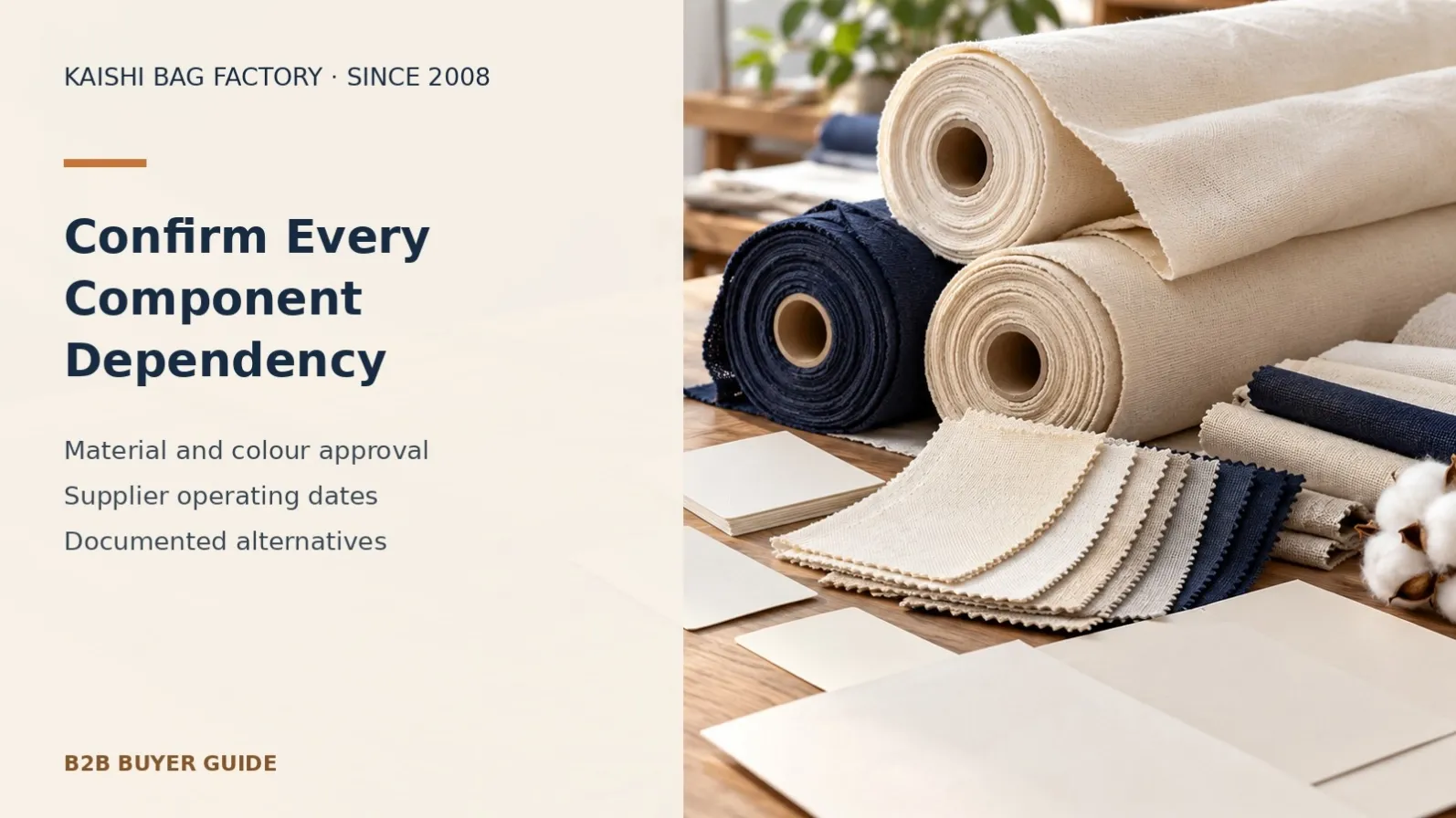
A bag can depend on outer material, lining, reinforcement, zippers, hardware, thread, branding and packaging. Ask which components are confirmed, which require colour approval or tooling, and which remain subject to availability. Do not assume that a commonly used material is held in stock for your quantity and colour.
Identify substitutions that would need a new sample or buyer approval. A change in coating, backing, thickness or hardware dimensions may affect construction, appearance and cost. Record an alternative as an option to review, not as automatic permission to replace the approved component.
Leave room for approval and correction
Sampling is a decision process, not just a parcel travelling to the buyer. Allow for review, measured comments, supplier questions and any necessary revised sample. Identify who can approve dimensions, colour, hardware and branding so that different reviewers do not send contradictory instructions.
Separate a visual approval from a production release. If a sample uses provisional hardware or substitute material, list the remaining conditions. A photograph can support discussion, but it cannot settle every question about touch, opening access, colour under different lighting or the construction of a reinforcement.
Do not compress inspection into a ceremonial final step. Agree how findings will be reported, who decides on corrective work and when the corrected goods will be checked. Schedule flexibility should protect these decisions rather than remove them.
Confirm the shipment responsibility and cut-offs
ICC explains that Incoterms rules allocate delivery-related tasks, costs and risks between sellers and buyers. State the agreed rule, named place and version in the order documents. That allocation helps identify who must arrange each leg; it does not itself promise a sailing, flight or destination arrival date.
Obtain the forwarder’s current cargo-ready, document and handover cut-offs. Distinguish a booking request from a confirmed service and discuss what happens if goods miss a cut-off. Include invoice, packing-list and destination documentation readiness in the same plan.
Prepare options without promising availability
If the plan no longer fits, ask for separately priced alternatives: a later delivery, a simpler approved specification, a different transport mode or a partial shipment. Each option needs its own material, quantity, cost and feasibility confirmation. Air transport cannot recover time lost before goods are ready.
A split shipment can add inspection, documentation and destination costs. Simplifying a design may require renewed approval. Avoid a last-minute decision that changes the product while leaving the purchase order and sample record unchanged.
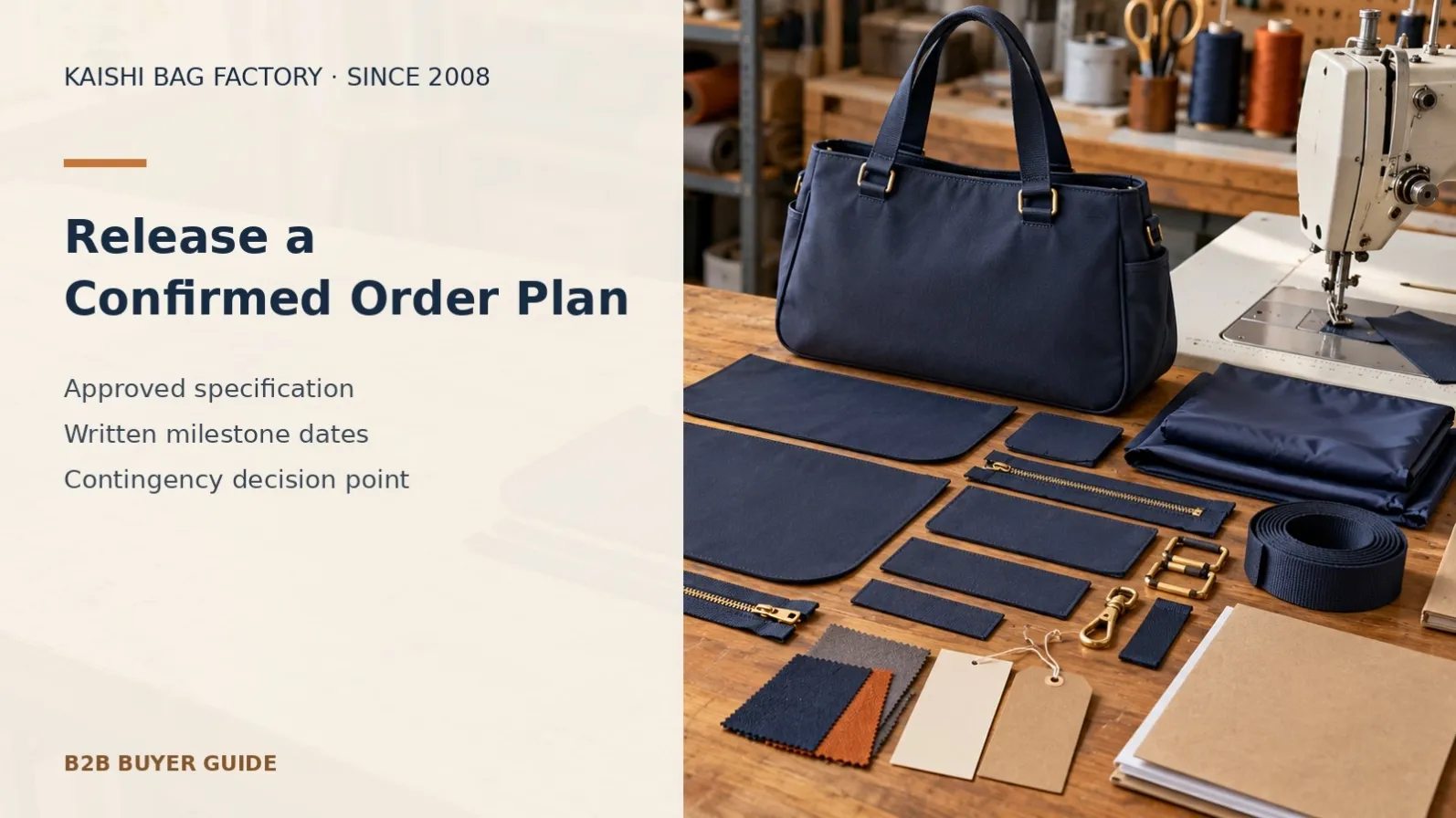
Record a decision point: the date when the buyer will choose an alternative if an unresolved dependency remains open. This makes a contingency actionable without pretending that the alternative is already reserved.
Apply Kaishi’s confirmed order policies
Kaishi Bag Factory is based in Baigou, China, and has worked in OEM/ODM since 2008. The standard MOQ is usually 300 pieces per style. A first order of 200 pieces may be assessed individually and is not guaranteed; 100 pieces is generally not feasible. Mixed styles and lower repeat-order MOQs are not automatic policies.
Payment is by T/T only, usually 50% deposit and 50% before shipment. Samples require upfront payment; fees are non-refundable and are not automatically credited to production. Timing is confirmed according to design, materials, sample approval and quantity. This article gives no fixed sampling or bulk-production duration and no factory holiday promise.
Frequently asked questions
When is Chinese New Year 2027?
The first lunar day falls on 6 February 2027 according to the Hong Kong Observatory calendar. Factory closure and reopening dates require separate confirmation.
Does every Chinese bag factory close for the same period?
No universal period is provided here. Ask the actual factory and component suppliers for their operating dates and the effect on your order.
What is the last safe order date?
There is no single safe date for every bag. Work backwards from receipt using confirmed design, component, production, inspection and transport milestones.
Does paying a deposit guarantee pre-holiday shipment?
A deposit does not replace an agreed schedule or close unresolved approvals. Confirm the specification, materials and shipment conditions in writing.
Can air freight solve a late order?
It may shorten one transport leg if an appropriate service is available. It cannot remove unfinished sampling, missing components or production work.
Can we combine styles to meet the MOQ?
Do not assume so. Kaishi usually applies 300 pieces per style; any different arrangement requires individual assessment.
What should we send for a schedule review?
Send the product specification, quantity by style and colour, approval status, destination, required receiving date and acceptable alternatives.
Request a realistic order plan
Review product examples, learn about Kaishi and check the payment terms guide. Then use the contact page to request an order-specific feasibility review. Email donna@Kaishibagfactory.com or contact Donna through WhatsApp. Include your deadline rather than asking for a generic holiday lead time.
Sources and review scope
- Hong Kong Observatory: 2027 Gregorian-lunar conversion table—calendar date only.
- ICC: Incoterms rules—allocation of delivery responsibilities, costs and risks.
Reviewed 3 October 2026. Milestone and contingency suggestions are procurement guidance, not verified company closure dates. Images are illustrative generated scenes, not documentary photographs of Kaishi’s premises.