
Baigou Bag Sourcing: What Buyers Should Verify
Evaluate Baigou bag suppliers through material specifications, sample control, production responsibilities, inspection and shipment evidence.
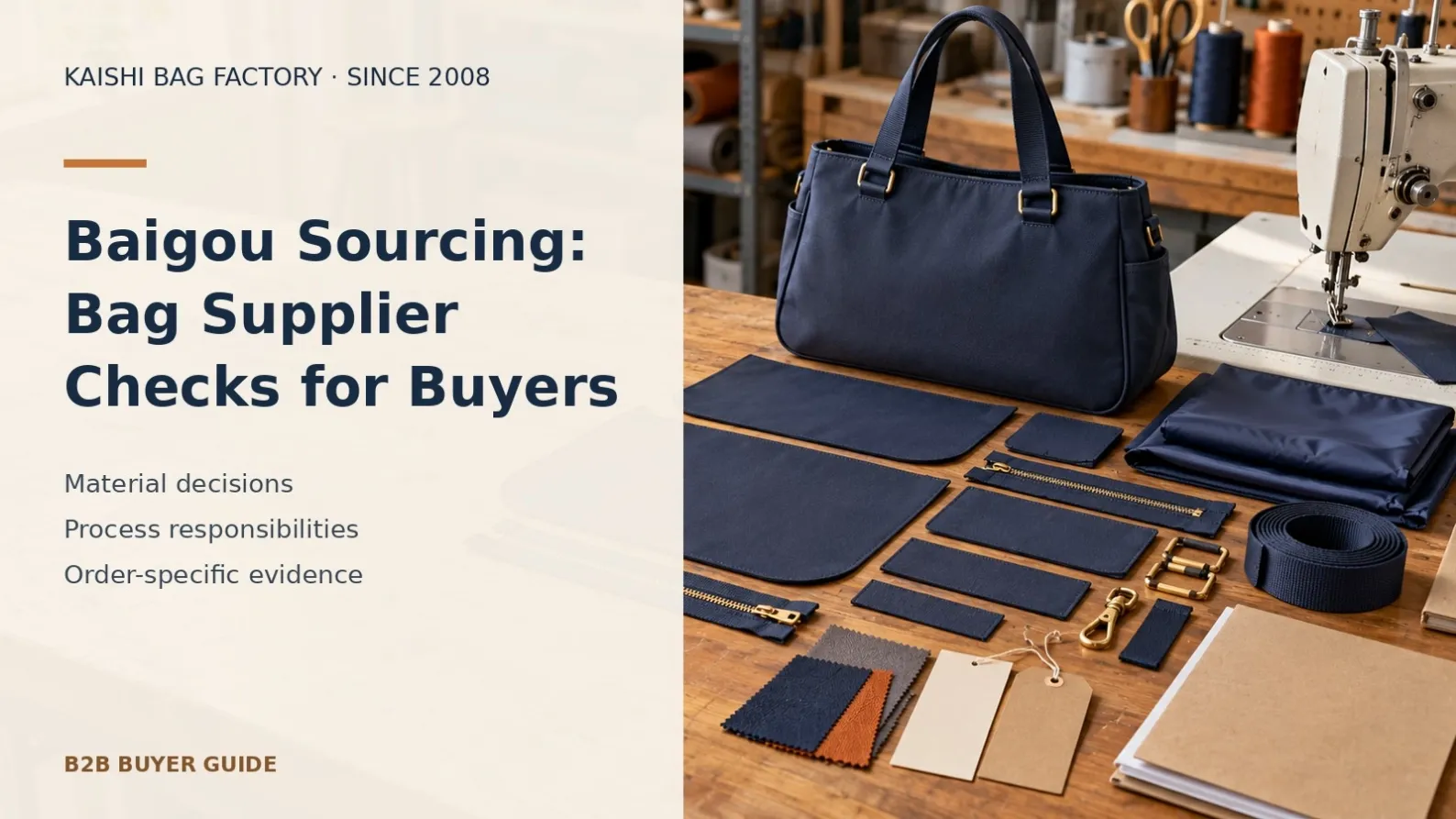
Baigou is an established bag manufacturing and trading cluster in Hebei, China. Buyers should evaluate the specific supplier’s material sourcing, sample control, production responsibilities and inspection records rather than treat the location as a guarantee of quality, price or delivery. Local industry connections may help a project, but every proposed component and process still needs order-specific confirmation.
This guide is for brands and wholesale importers considering Baigou as a sourcing location. It explains what an industrial cluster can mean in practical buying terms and gives a structured way to ask about local supply-chain relationships. It does not rank Chinese manufacturing regions or claim that all Baigou businesses operate in the same way.
Understand the cluster without confusing it with a supplier
Hebei’s Department of Industry and Information Technology describes a Baigou industry chain connecting materials, design, manufacture, exhibition and logistics. That is regional context, not a capability statement for every company in the area. A material merchant, a workshop, an exporter and a finished-goods wholesaler can have different roles.
Ask the business you are considering to explain its role for your project. Who will issue the quotation and receive payment? Who will prepare the sample? Where will the proposed production take place? An honest description of outside services can be more useful than an unsupported claim that every operation is performed internally.
Published regional output figures and business counts can use different boundaries and reporting dates. This guide does not use them to estimate capacity, market share or the size of Kaishi. Location provides a starting point for questions; the answers must concern the actual order.
Ask what local access changes for your specification
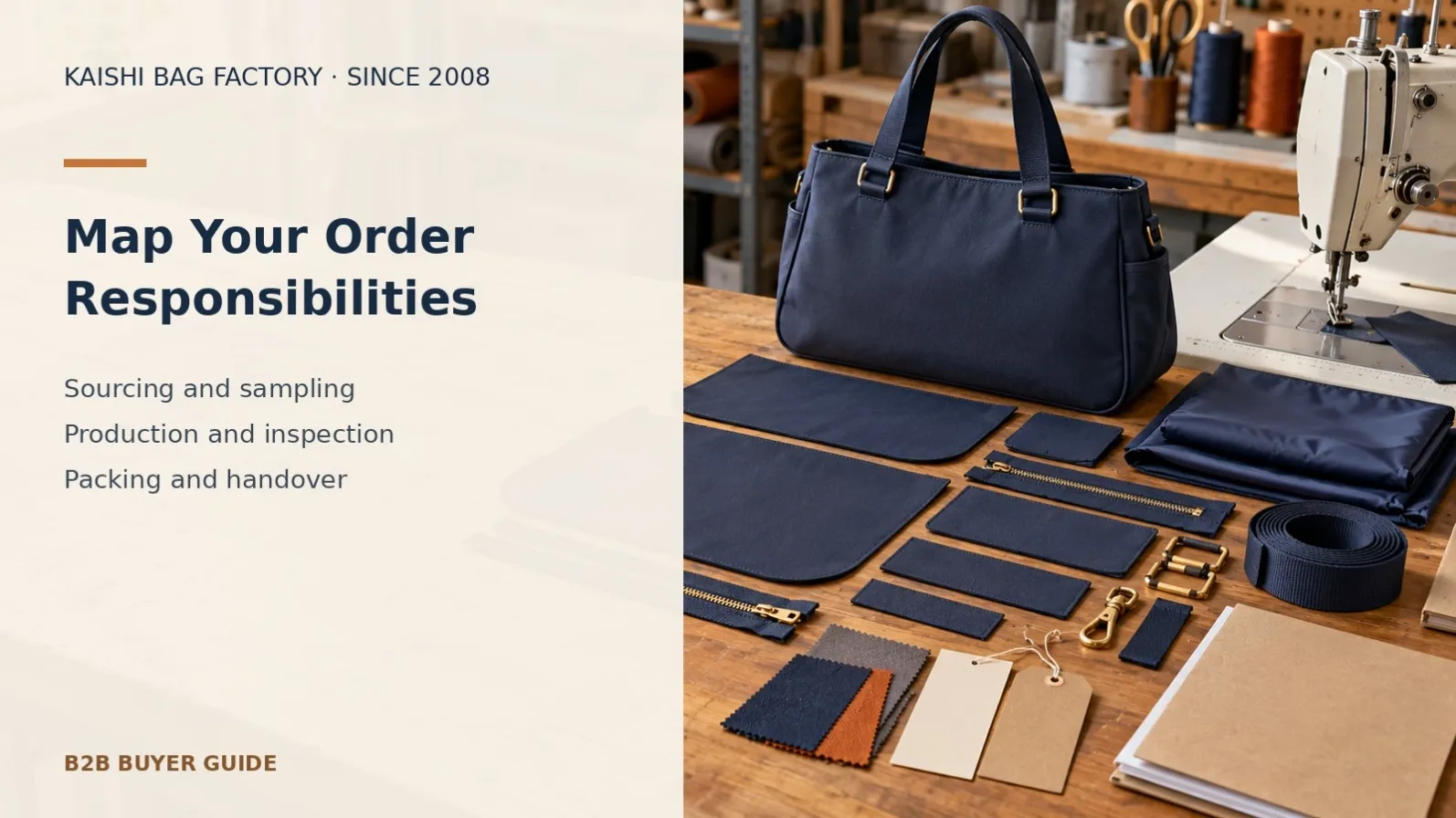
Nearby suppliers may offer opportunities to review material and trim options. Whether those options fit your bag depends on composition, backing, finish, dimensions, colour, availability and minimum purchasing quantities. Physical proximity does not make two similar-looking components interchangeable.
For a structured handbag, ask about the relationship between outer material, reinforcement and seam construction. For a printed tote, review the substrate and proposed decoration together. If a component is suggested as an alternative, request a sample and a cost explanation before changing the approved specification.
A sourcing advantage becomes useful when it resolves a defined buyer problem: finding a suitable handle attachment, checking a coating finish or replacing an unavailable lining with an approved equivalent. It should not be translated into a blanket promise of faster sampling or lower prices.
Map the order responsibilities
| Activity | Question to ask | Evidence to review |
|---|---|---|
| Material sourcing | Who proposes and purchases each component? | Identified swatches and written specification |
| Pattern and sampling | Who translates the drawing into construction? | Versioned sample and correction record |
| Production | Which activities are internal or externally arranged? | Order-specific process description |
| Inspection | Who checks the agreed acceptance criteria? | Inspection scope, defect references and report format |
| Packaging | Who confirms protection and carton arrangement? | Packing specification and sample presentation |
| Export handover | Who prepares documents and arranges each transport leg? | Agreed trade term and named place |
Keep this map with the purchase order. If an activity changes hands, ask whether the change affects approval, timing, confidentiality or inspection. A named commercial contact is useful, but the contact also needs a clear route for resolving production questions.
Compare quotations on the same basis
Two quotes from the same town can differ because their specifications differ. Compare material construction, lining, hardware, reinforcement, branding, packaging, quantity breakdown and delivery scope. A low unit price is not comparable with a higher price if one excludes a component or a service you need.
Ask which items remain provisional and what must be confirmed before a production price is finalized. Custom hardware or a new decoration method may need additional review. Do not assume that a quotation includes testing, tooling, inspection or destination charges unless the document says so.
For wholesale assortments, show the quantity for each style and colour. Combining several products into one total does not automatically satisfy a per-style MOQ. For OEM/ODM brands, separate the development scope from the planned production quantity.
Check sample-to-production continuity
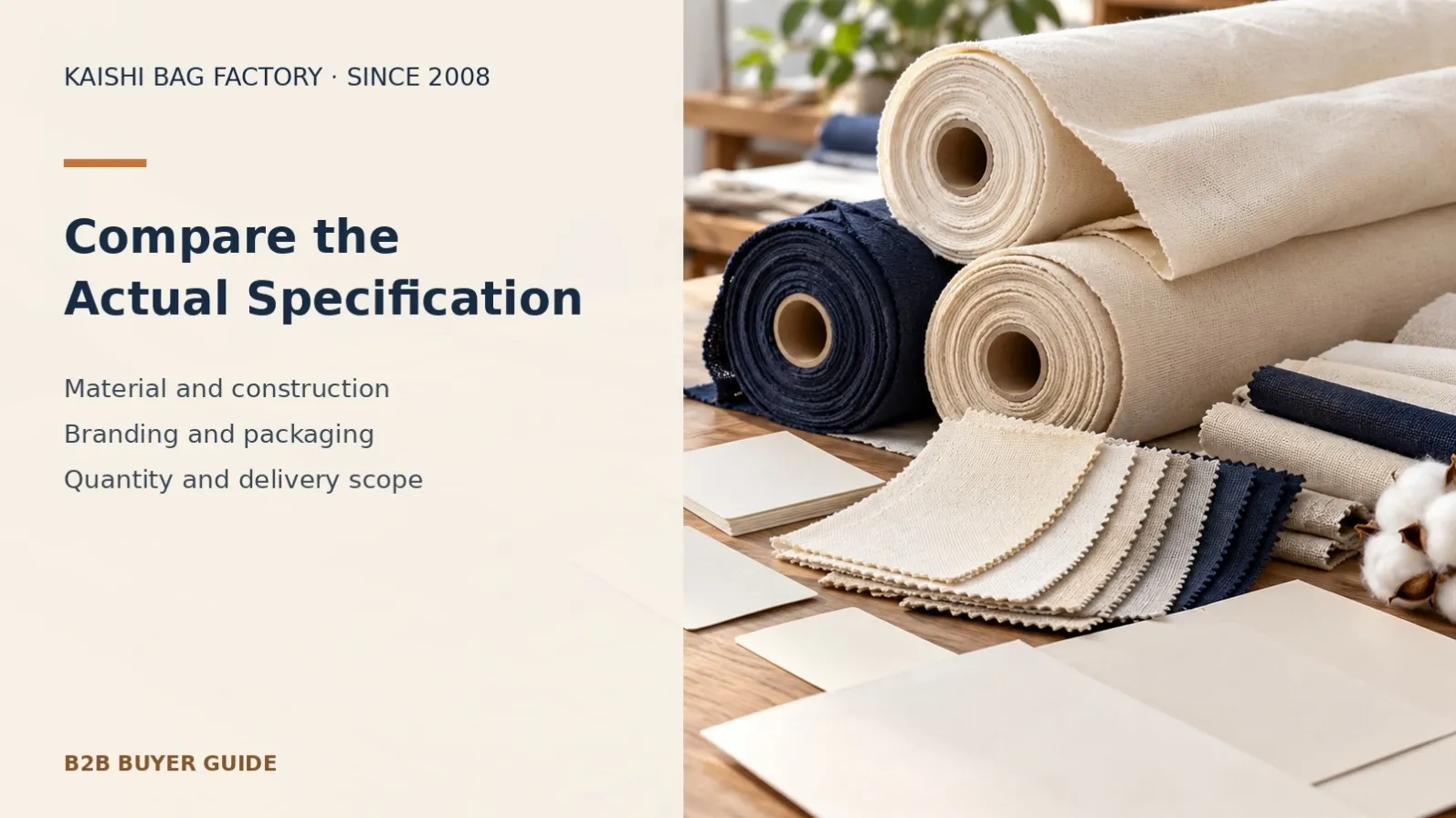
Identify the approved sample, its date and the specification version that goes with it. Record any provisional component and the conditions for production release. Ask how requested changes will be documented and who must approve a substitution before bulk work proceeds.
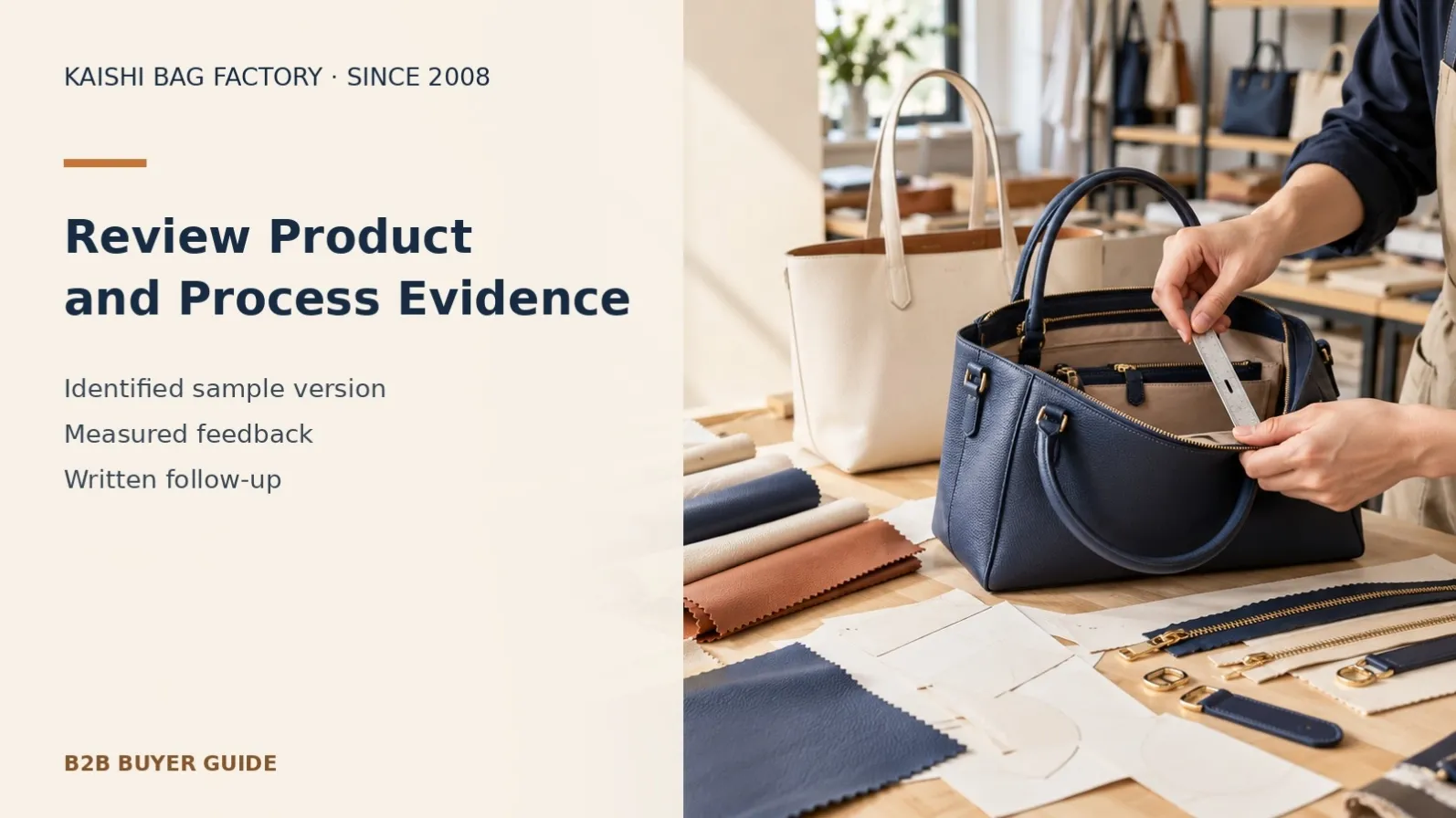
Give feedback through measured comments, annotated images and agreed references. If a sample differs from the drawing, decide which version is authoritative rather than let both remain active. Inspection criteria should follow the approved specification, not an old message or an unlabelled sample.
This is also where supplier relationships matter. An available replacement should still be assessed for connected effects on fit, stitching, decoration and packing. A repeat order deserves a current availability and specification review instead of an assumption that everything remains unchanged.
Use visits or video reviews with a defined objective
A visit or live video review can help clarify a process, inspect a sample or discuss material options. Agree the areas to view and the questions to answer beforehand. Respect worker privacy and confidential customer materials; photographs and recording should be discussed with the host.
Seeing a machine does not prove available capacity for your order. Seeing a showroom does not establish that every item is available for customization. Follow up with written confirmations about the proposed work, approval points and documentation. If travel is not possible, request relevant evidence rather than an unstructured promotional tour.
Protect design information and agree shipment scope
Discuss confidentiality before sharing sensitive drawings or unreleased branding. Limit distribution to the information necessary for the stage of work. NDA terms may be negotiated individually; no universal NDA acceptance or absolute protection is promised here.
For shipping, specify the agreed Incoterms rule, named place and version. ICC describes these rules as allocating delivery tasks, costs and risks. Baigou’s location does not establish a standard port, transport mode or trade term for every order. The route and handover responsibilities should be confirmed with the relevant parties.
What Kaishi can confirm at the enquiry stage
Kaishi Bag Factory is based in Baigou, China, and has worked in OEM/ODM since 2008. Send your design or reference, material preference, branding, packaging, destination and quantities by style and colour for an individual review. Specific materials, certifications, equipment, outsourcing arrangements and available capacity require confirmation rather than assumptions drawn from the wider cluster.
The standard MOQ is usually 300 pieces per style. A first order of 200 pieces may be assessed individually but is not guaranteed; 100 pieces is generally not feasible. Mixed orders and lower repeat-order MOQs are not automatic. Samples are paid upfront, fees are non-refundable and are not automatically credited. Payment is T/T only, usually 50% deposit and 50% before shipment. Timing depends on design, materials, approval and quantity.
Frequently asked questions
Where is Baigou?
Baigou is in Hebei, China. It has an established bag manufacturing and trading industry. Assess the specific supplier independently of that regional reputation.
Does a Baigou address prove a factory owns production?
No. Ask for the business’s role and the proposed production arrangement. Location alone does not establish ownership or which activities are performed internally.
Does sourcing there guarantee shorter lead times?
No. Local connections may help some tasks, but timing depends on the actual design, component availability, approvals, quantity and production allocation.
Can we choose any material found in the market?
Review suitability, supply quantity, colour and construction first. A market sample is not a confirmed supply commitment or proof of compliance.
Can several styles share one MOQ?
Do not assume that. Kaishi’s standard is usually 300 pieces per style; any different arrangement requires an individual review.
Should we visit before ordering?
A focused visit may help, but it should complement specification, sample and commercial checks. Discuss suitable arrangements and evidence needs with the supplier.
What makes a useful first enquiry?
A defined product reference, dimensions, material and branding preferences, quantity by style and colour, destination and required delivery date.
Discuss a specific bag project
See product examples, read about Kaishi and review order payment terms. Use the contact page, email donna@Kaishibagfactory.com or WhatsApp Donna to request a specification and feasibility discussion.
Sources and scope
- Hebei industry department: Baigou’s connected production and sales chain—regional background, not individual company capabilities.
- ICC: Incoterms rules—delivery responsibility framework.
Reviewed 3 October 2026. Buyer checklists are practical guidance. Images are generated illustrations of bag sourcing activities; they do not depict a verified Baigou site or Kaishi premises.