
Bag Fabric Abrasion and Pilling: Choose Evidence for the Actual Material
Specify abrasion and pilling as separate material questions. Select relevant methods and evidence for the actual fabric or coating, without turning a test result into a lifetime guarantee.
Specify abrasion and pilling as separate material questions. Select relevant methods and evidence for the actual fabric or coating, without turning a test result into a lifetime guarantee.
This guide is for OEM/ODM brand teams, importers and wholesale buyers developing an original bag specification. It addresses bag fabric abrasion and pilling through decisions that can be documented, sampled and reviewed. A photograph or generic material name is not an approval standard. Define the intended use, compare the actual proposed construction and keep a controlled physical reference before authorizing production.
Separate wear, pills and surface changes
A fabric can develop surface fuzz, form pills, change gloss or lose material under rubbing. These observations are not interchangeable. State which appearance or functional concern matters for the intended bag. Mark base corners, clothing contact zones, handles and interior contact areas. A promotional tote and a daily-use backpack need different briefs, but neither can be assessed by the word durable alone. Keep appearance changes separate from tear, seam and colour-transfer requirements. Ask the supplier to identify the actual substrate and finish, including whether it is coated or laminated. The method has to match the material and the question. Do not assume a report for plain fabric describes the behaviour of its coated version or the assembled bag.
Check the method scope before comparing numbers
ISO 12947-2 describes a Martindale specimen-breakdown procedure and explicitly excludes coated fabrics including laminated fabrics from its scope. That is a reason to check suitability with the laboratory, not to impose the same method on every material. SATRA’s directory also distinguishes different test methods. Use the applicable current method, specimen identity and assessment endpoint. Avoid ranking two supplier results when the procedures or endpoints differ. A reported rubbing count cannot by itself predict years of customer use. This guide does not set a universal pass threshold. Ask a competent laboratory to advise on the actual surface, intended exposure and acceptance criteria. Keep any appearance evaluation and separate pilling requirement clearly identified in the test brief.
Build a buyer approval worksheet
Use the following worksheet to connect the requirement to its actual reference and review owner. For every field, identify what is confirmed, what is provisional and which evidence is still missing. Include a photograph or annotated drawing where text alone could be interpreted differently. State whether an item is a mandatory functional requirement or a negotiable appearance preference. The table is an operational suggestion, not a quoted standard or a promise of performance. Keep the final version with the accepted sample and quotation so the factory, buyer and inspector can refer to the same baseline. If an exception is accepted, identify its exact scope instead of approving a vague statement that everything is fine.
Connect the test specimen to the order
Record material code, colour, finish, supplier and sample identity. Ask whether the evidence covers the proposed batch or only a development specimen. Identify any differences between the report and the material being approved. Dark and light variants or different finishes should not silently inherit the same conclusion. Keep the complete report rather than a cropped pass screenshot. Check what was tested, the method, conditions and results, and seek clarification for missing details. A report is evidence within its scope, not a blanket certification of a bag collection. Do not claim that Kaishi has tested a material or holds certification merely because this article links to a testing organization. Actual project evidence must be requested and reviewed.
Review wear-sensitive details on the assembled sample
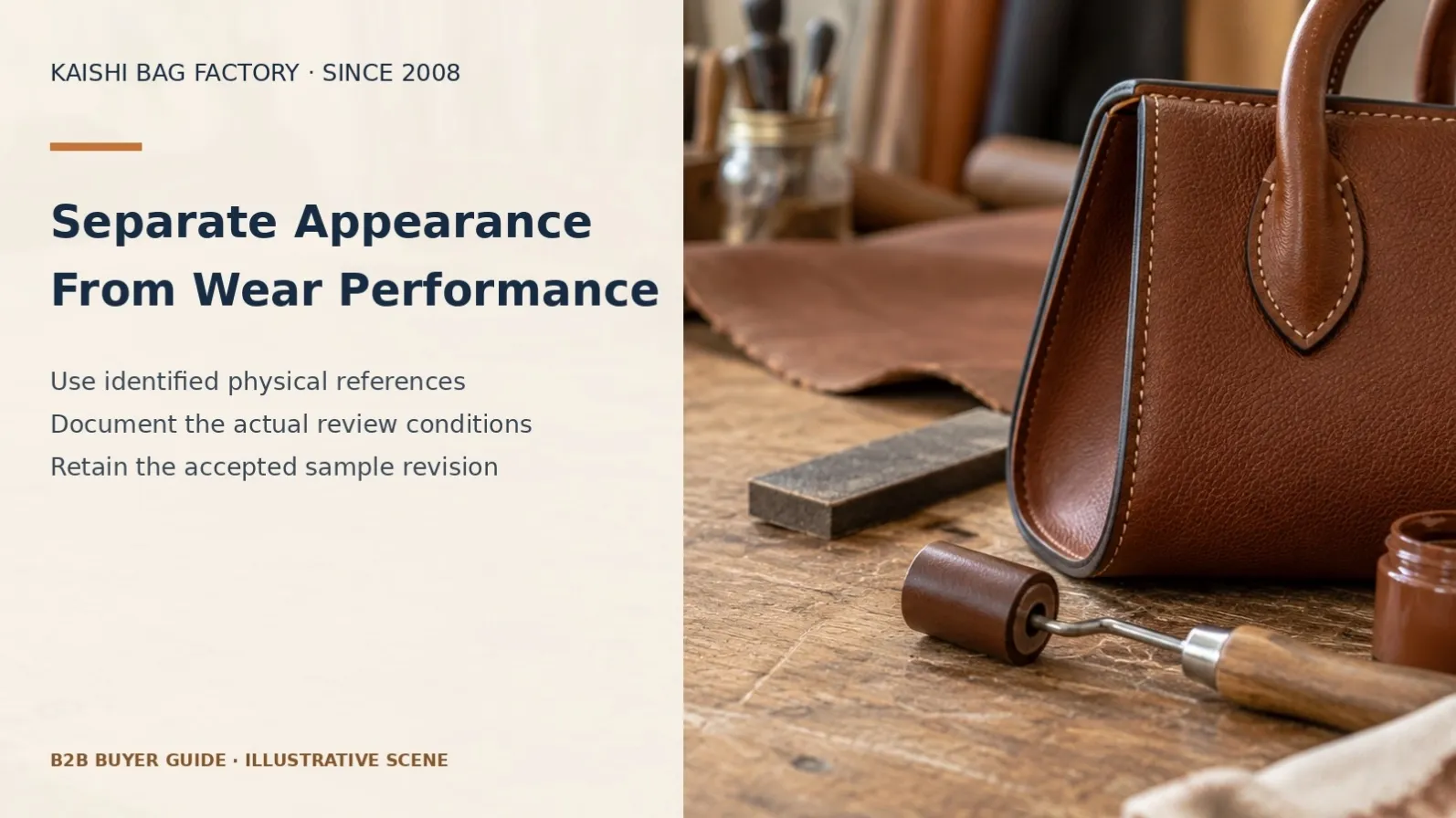
Material evidence should be combined with a practical review of contact locations and construction. A rough seam edge, metal contact or folded corner can create a different situation from a flat specimen. Ask whether the sample represents the intended materials and finish. Document relevant use conditions without inventing a dramatic abuse test. Consider a hypothetical bag where the side panel rubs against clothing: inspect both the material and the hardware contact route rather than blaming fabric weight alone. The example is not a real customer claim. If appearance is important, keep agreed photographs and physical references. For a proposed material replacement, reassess the relevant evidence and assembled contact before accepting a similar-looking surface.
| Review field | Buyer record | Approval check |
|---|---|---|
| Surface concern | Identified reference and decision owner | Accepted sample or applicable evidence |
| Method suitability | Identified reference and decision owner | Accepted sample or applicable evidence |
| Specimen identity | Identified reference and decision owner | Accepted sample or applicable evidence |
| Result interpretation | Identified reference and decision owner | Accepted sample or applicable evidence |
| Assembled contact | Identified reference and decision owner | Accepted sample or applicable evidence |
Use sample review to close the remaining decisions
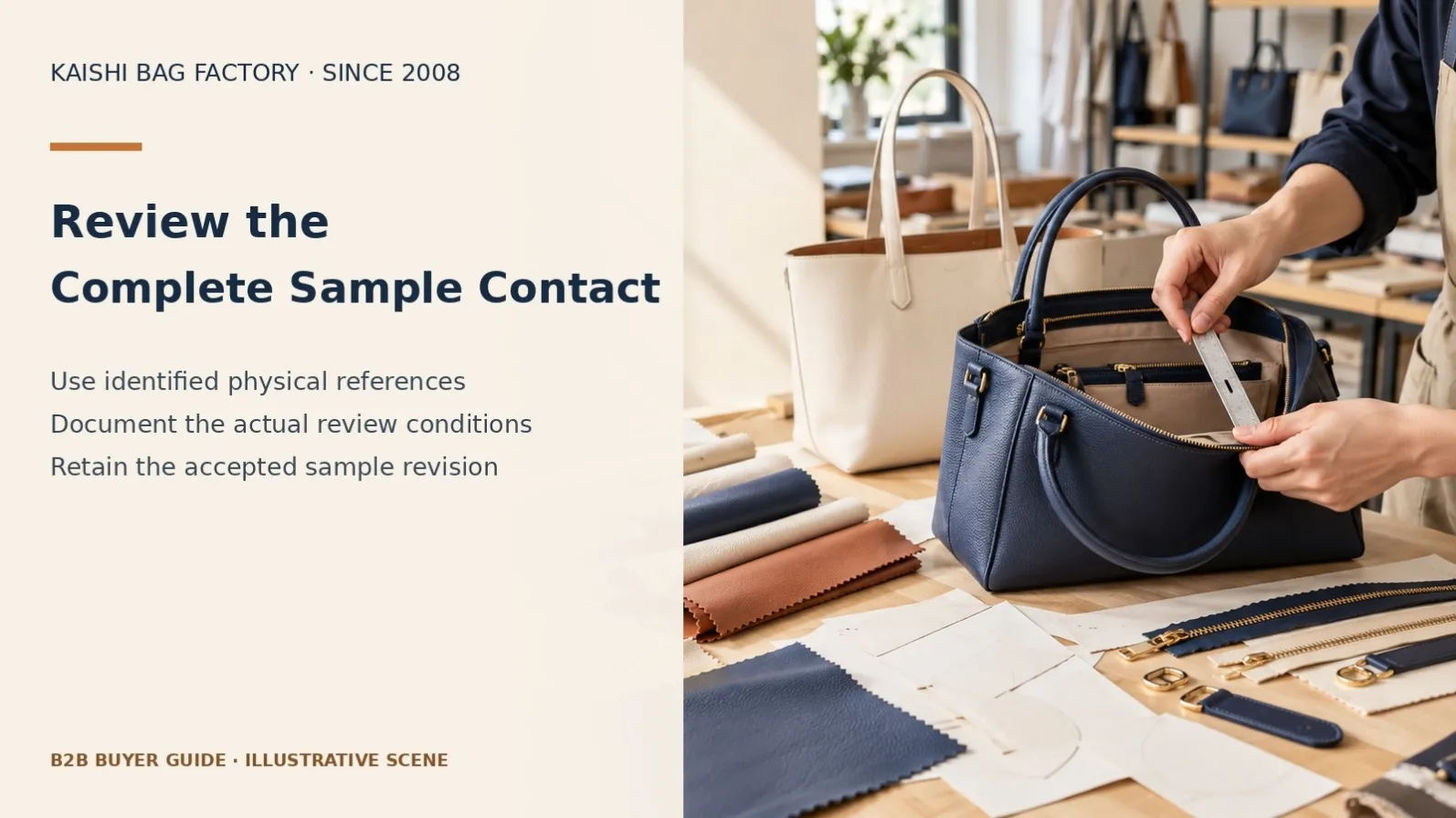
Review the production-intent sample with the agreed contents, material references and component configuration. Record observations before making a correction, then explain what changed and which linked features need reassessment. A sample made with temporary parts should list them clearly. Do not approve the final specification from the silhouette alone. In a remote review, ask for the angles and measurements that address your stated question; a short promotional clip may miss the relevant detail. Photographs support communication but do not replace a physical sample where the decision depends on touch, fit or operation. Decide who approves each open item and retain the written conclusion with the current revision.
Keep wholesale handover consistent across variants
For European and US brand programs, connect technical approval to the actual SKU and any buyer documentation requirements. For Nigerian or Indian wholesale programs, keep style, colour and included-component quantities clear so receiving teams can identify what was supplied. These markets do not share one guaranteed preference or sales outcome. Base assortment decisions on the buyer’s own evidence rather than assume a universal best seller. If variants use different materials or components, identify the differences instead of allowing one approval to silently cover the collection. Keep packing and product descriptions aligned with the accepted specification. A reorder should confirm the current requirements, not automatically reuse an outdated reference.
Prepare a project-specific enquiry
Send the current drawing or tech pack, measured dimensions, intended carry contents, material references, component list, colour breakdown and proposed order quantities. Identify the sales destination and any buyer-required testing or packaging documentation. Separate mandatory requirements from design preferences, and explain which decisions remain open. This lets the factory review a real development scope rather than make assumptions from a reference photograph.
Ask the quotation to identify the selected construction, sample scope, material exceptions, packaging, delivery basis and validity conditions. Confirm who approves the physical sample and which revision becomes the production baseline. If a component changes, request an impact review before accepting the replacement. Keep commercial approval separate from technical approval: an attractive unit price does not establish that the revised bag meets the agreed use or inspection requirements.
Related buyer guides
bag tech-pack checklist and quality-control and inspection guide
Frequently asked questions
Is abrasion the same as pilling?
No. Identify the surface issue and use appropriate separate assessments where needed.
Can every fabric use ISO 12947-2?
Check the scope. Its published abstract excludes coated and laminated fabrics; seek laboratory advice for those surfaces.
Does a high rubbing count prove long life?
No. It describes a specific assessment, not a guaranteed service life in every use condition.
Can one colour report cover all colours?
Do not assume coverage. Review differences and evidence applicability with the supplier or laboratory.
What should a buyer retain?
The complete report, specimen identification, accepted material reference and relevant appearance criteria.
Can heavier fabric solve every wear issue?
No. Surface, construction, contact and intended use also matter. Evaluate the actual proposal.
What are Kaishi’s order, sample and payment terms?
Kaishi Bag Factory is based in Baigou, China and has worked in OEM/ODM since 2008. Kaishi's MOQ is a fixed 300 pieces per style. A first order is also 300 pieces per style, with no exceptions. An order of 100 pieces is not workable for custom production. Mixed styles and reorders do not automatically qualify for lower minimums. Samples are prepaid and non-refundable, without automatic bulk-order credit. Payment is T/T only, usually 50% deposit and 50% before shipment. Timing depends on design, materials, sample approval and quantity. Any NDA and project-specific conditions require agreement.
Sources and next step
Sources checked on 7 October 2026: ISO 12947-2 scope and SATRA test-method directory. Supplier examples explain general principles, not Kaishi equipment ownership, certification or guaranteed availability. The purchasing worksheets are suggested buyer practices rather than quoted standard requirements.
Contact Kaishi Bag Factory with your specification and quantities for a project review. Email donna@Kaishibagfactory.com or message Donna on WhatsApp.