
Bag Hardware Finish Approval: Colour, Contact, Tarnishing and Inspection
Approve bag hardware finishes using actual components, contact conditions and suitable evidence. A colour name or glossy photo is not a durability guarantee.
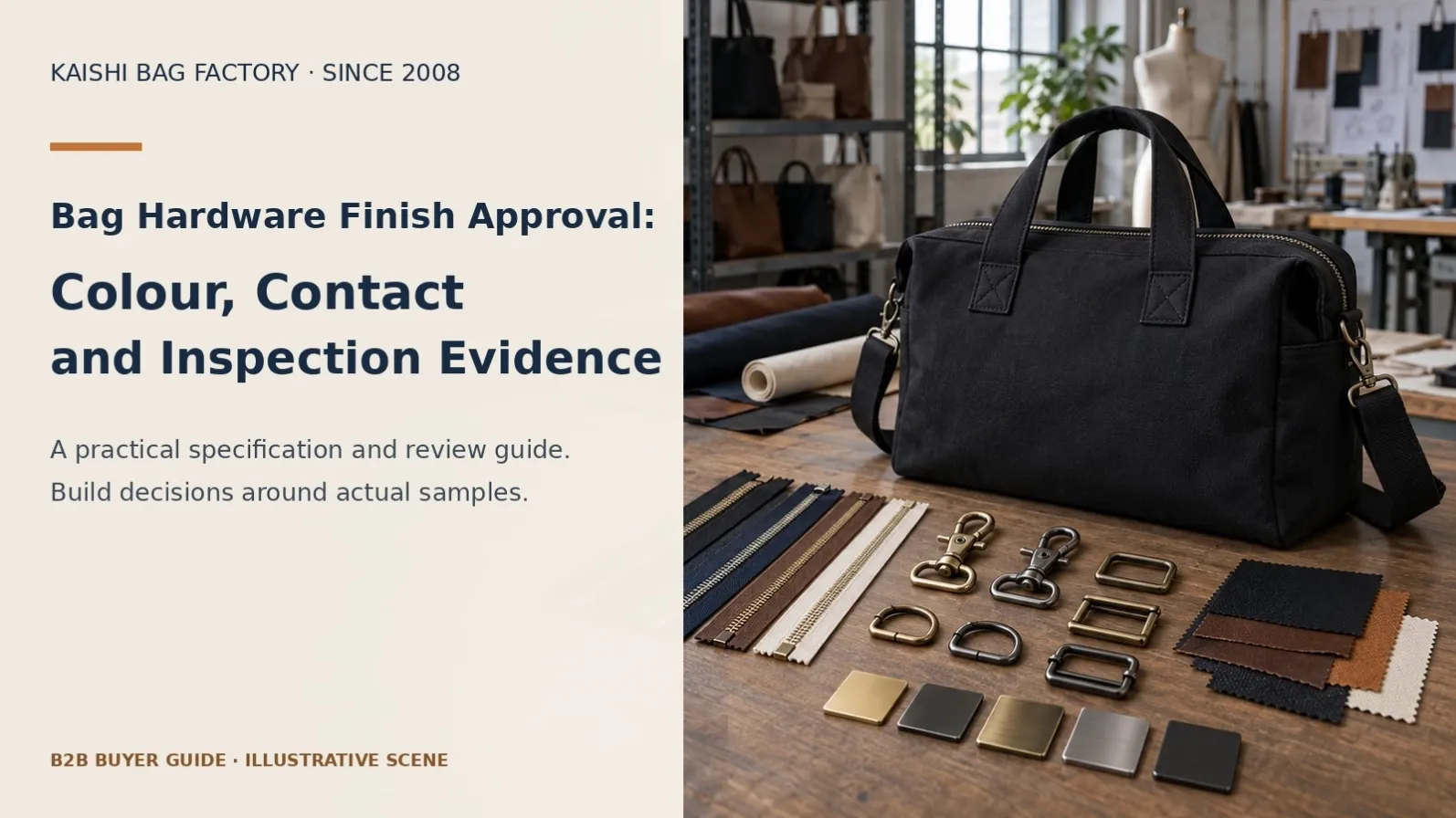
Approve bag hardware finishes using actual components, contact conditions and suitable evidence. A colour name or glossy photo is not a durability guarantee.
This guide is for OEM/ODM brand teams, importers and wholesale buyers developing an original bag specification. It addresses bag hardware finish approval through decisions that can be documented, sampled and reviewed. A photograph or generic material name is not an approval standard. Define the intended use, compare the actual proposed construction and keep a controlled physical reference before authorizing production.
1. Separate base component from surface appearance
List each buckle, ring, clasp, puller and decorative trim with an identified component reference. Ask what material and finish information is available for that item. A label such as light gold describes an appearance intention but does not fully define the surface treatment or the component beneath it.
Keep this record distinct from hardware dimensions and attachment strength. Those matters still require review, but the focus here is surface approval and contact. Do not use premium, rust-proof or permanent colour as substitutes for documentation. Confirm the actual proposal rather than infer it from an unrelated catalogue photograph.
2. Approve colour and gloss as a set
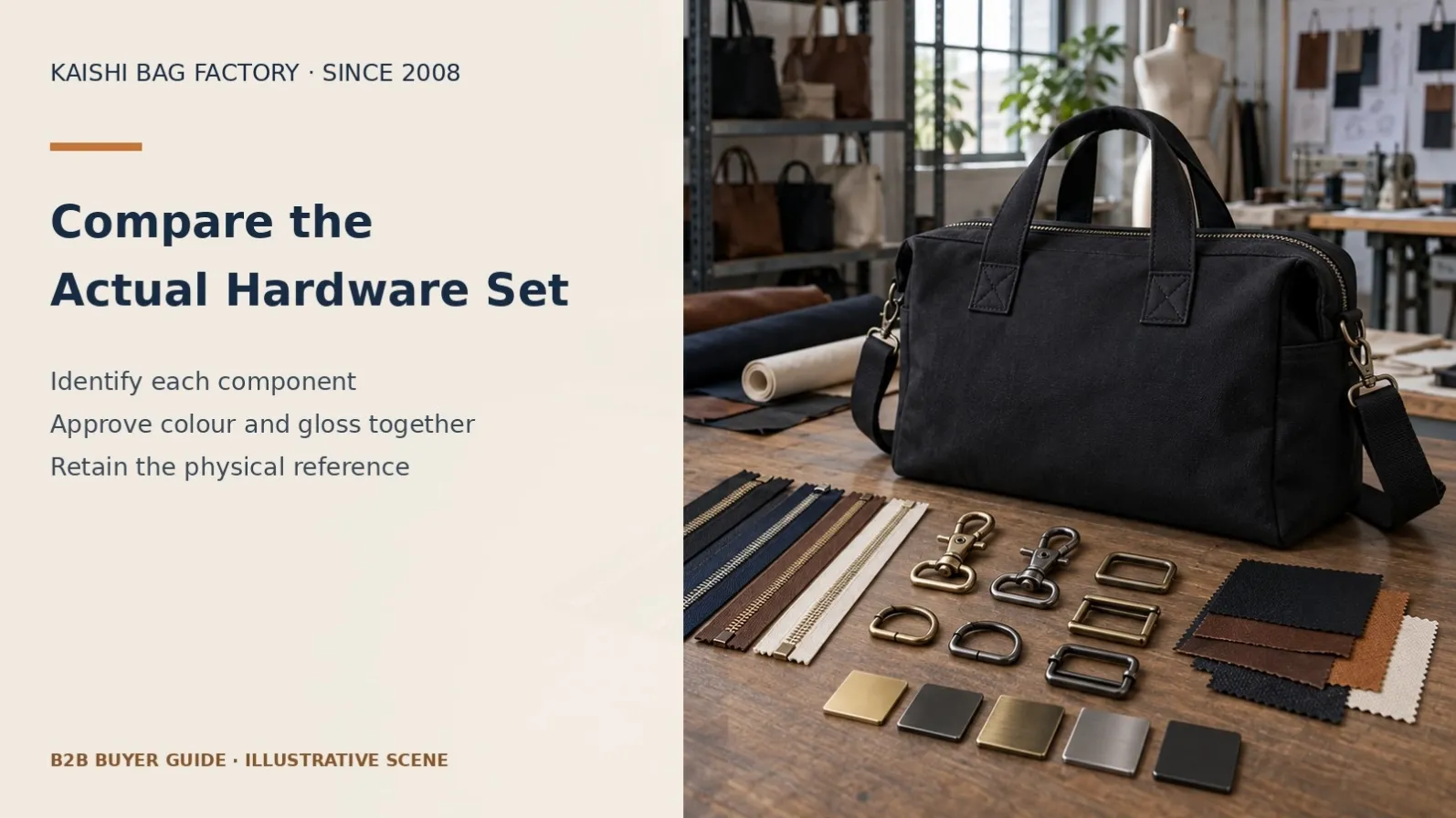
Compare the actual components together on the bag. Different shapes can present the same finish differently under light, and a small ring should not be approved only against a large flat trim photograph. Use an agreed physical reference and identify intentional differences between decorative and functional parts.
Review neighbouring leather, fabric and edge colours as well. The finish can look different beside different materials. Photographs communicate the combination, but retain the parts used for approval. Avoid a universal screen-based colour promise. Ask whether a later component batch or replacement supplier requires a renewed finish comparison.
3. Identify rubbing and contact locations
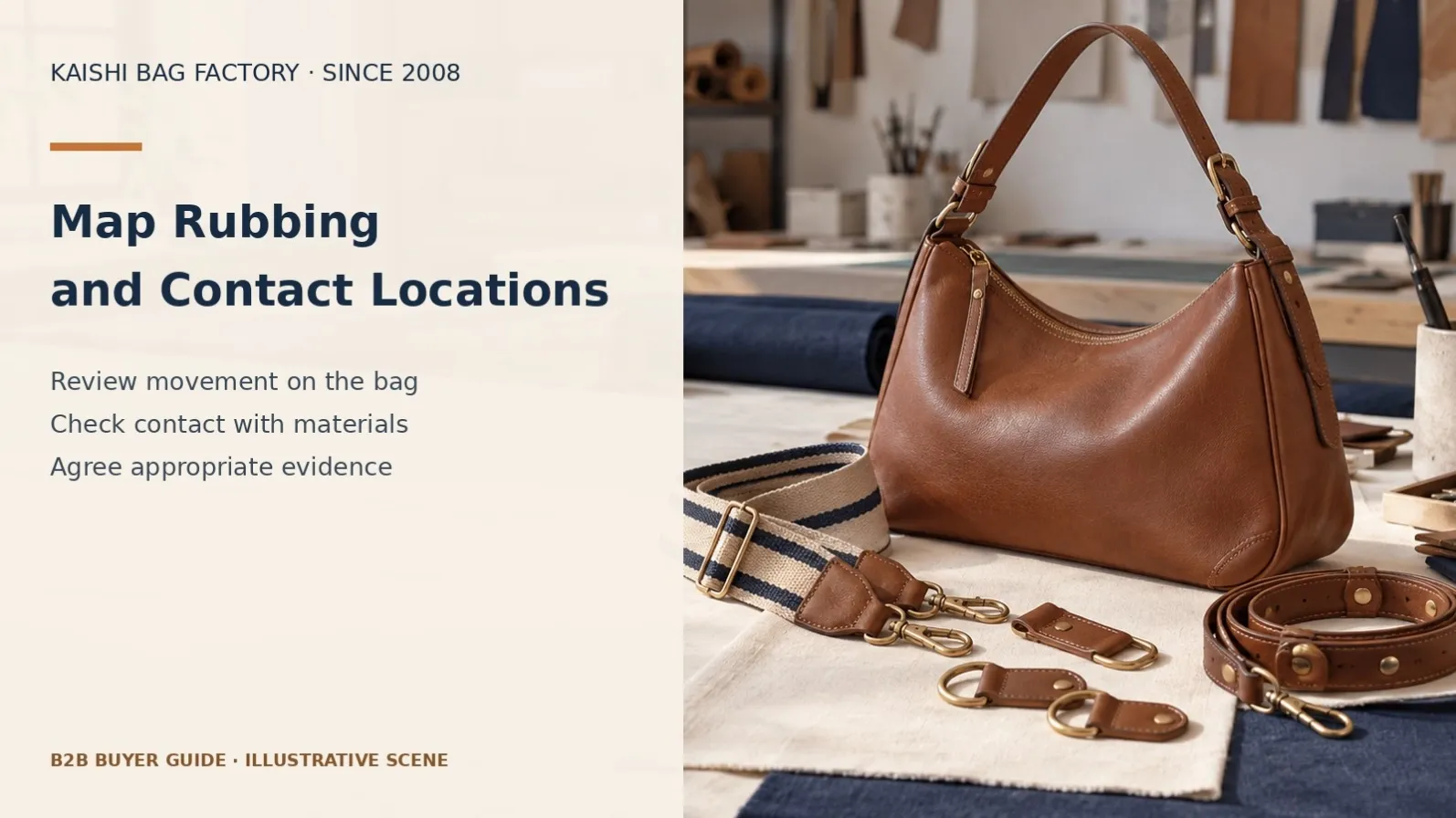
Mark where metal touches the bag face, straps, other hardware or clothing. Check the range of movement of rings, clips and pullers. A visually clean finish on a loose part can encounter very different conditions when attached to a completed handbag. Inspect both normal use and the packed arrangement.
SATRA’s handbag contact guidance discusses corrosion-related staining as a potential concern for metal components. That is a reason to choose suitable review conditions, not proof that every finish will fail or that one treatment eliminates all risks. Keep observations specific to the component, material contact and actual test or trial.
4. Agree relevant evidence rather than a universal rating
Describe the intended use and destination, then ask a competent supplier or laboratory which assessments are appropriate. Appearance, rubbing, corrosion and chemical requirements are separate questions. Do not select a dramatic test number simply because another product used it. Record the applicable method, conditioning and acceptance criteria.
SATRA publishes methods with defined scopes, including atmospheric tarnishing and salt-water corrosion. Refer to current documentation and qualified advice when choosing a method. A supplier report must identify the tested component and finish. A report for a similar-looking trim should not silently approve every part in the collection.
5. Use a finish approval worksheet
Connect each component to its appearance reference, contact locations and required evidence. Identify development samples that used temporary metal parts. Keep open questions visible before the production-intent sample is released. If the buyer accepts an intentional finish difference, describe its scope rather than relying on a verbal approval.
The worksheet below is an operational suggestion. Add project-specific requirements only after they are understood by the factory, supplier and inspector. Retain the physical component set and comparison photographs. Inspection should evaluate the approved proposal, not an undefined idea of luxury hardware or a later showroom sample.
| Component decision | Record | Review |
|---|---|---|
| Colour and gloss | Physical finish reference | Complete hardware set on bag |
| Contact | Movement and touching surfaces | Use and packing conditions |
| Evidence | Applicable method and component | Report scope and acceptance |
| Packing | Protection and placement | Unpacked appearance |
| Substitution | Changed supplier or finish | Renewed approval decision |
6. Review packing and unpacking effects
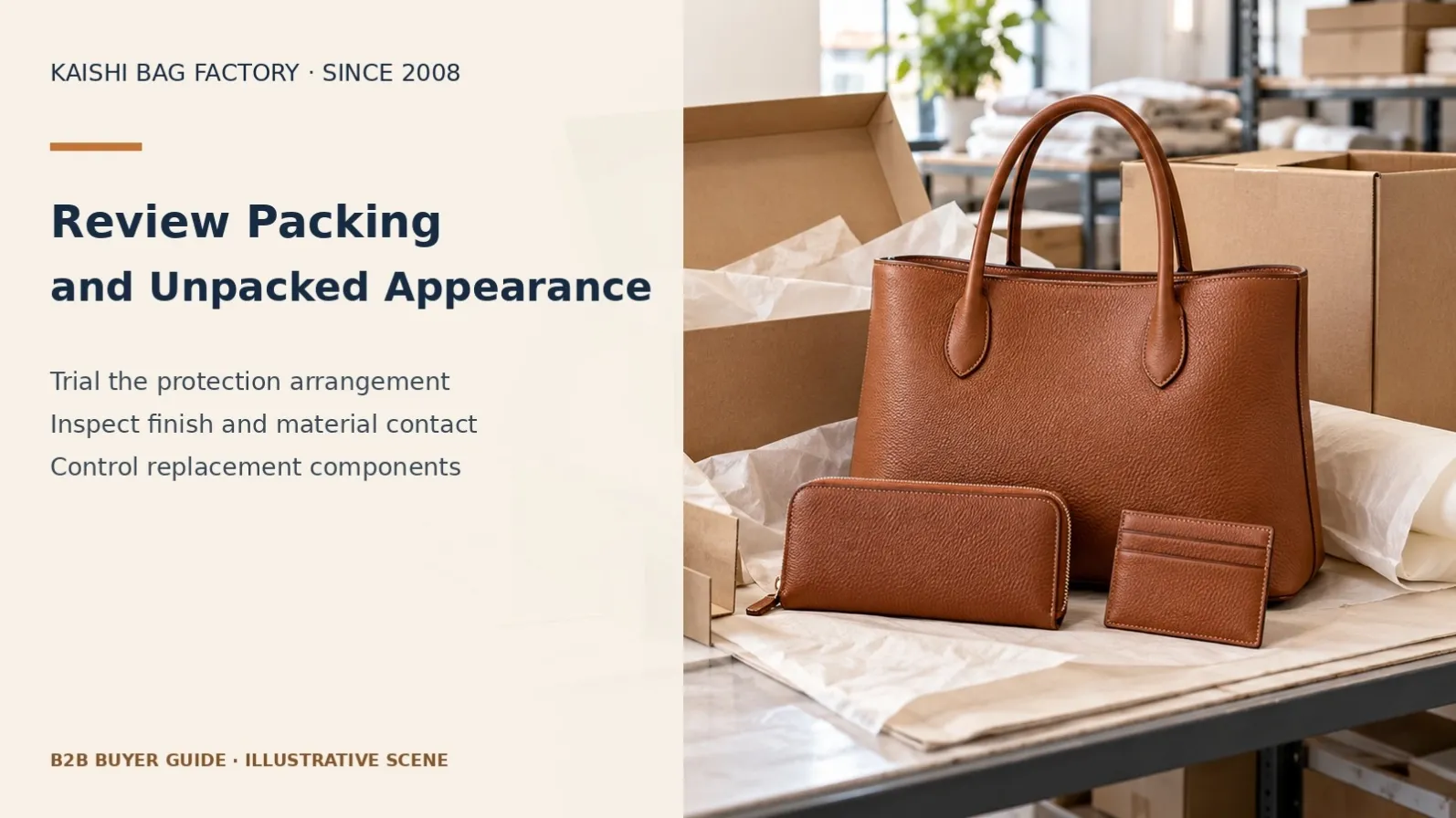
Examine where hardware rests in the protective sleeve and carton arrangement. Check whether parts contact the same face repeatedly or move during handling. A packing trial can reveal an appearance problem that was absent when the bag sat upright on a sample-room shelf.
If additional wrapping is proposed, review removal, presentation and potential material interaction. Do not assume that any paper or plastic is harmless to every finish. Compare the actual packed sample and document the accepted arrangement. Protecting appearance should be part of the specification rather than an improvised last step at dispatch.
7. Control finish substitutions and inspection decisions
A replacement that matches colour may differ in surface treatment or contact behaviour. Ask for an impact review and identify whether a revised assembled sample or report is needed. Keep commercial approval separate from the technical decision; a cheaper component is not automatically equivalent to the approved one.
For an observed issue, record location, batch identity, conditions and clear photographs. Separate discoloration, coating loss, staining and a functional defect. Do not promise that polishing or replacing one part will resolve every case. Approve a proposed corrective action against the actual bag and its connected components.
Prepare a project-specific enquiry
Send the current drawing or tech pack, measured dimensions, intended carry contents, material references, component list, colour breakdown and proposed order quantities. Identify the sales destination and any buyer-required testing or packaging documentation. Separate mandatory requirements from design preferences, and explain which decisions remain open. This lets the factory review a real development scope rather than make assumptions from a reference photograph.
Ask the quotation to identify the selected construction, sample scope, material exceptions, packaging, delivery basis and validity conditions. Confirm who approves the physical sample and which revision becomes the production baseline. If a component changes, request an impact review before accepting the replacement. Keep commercial approval separate from technical approval: an attractive unit price does not establish that the revised bag meets the agreed use or inspection requirements.
Related buyer guides
Continue with hardware component guide, quality inspection guide.
Frequently asked questions
Is light gold a complete finish specification?
No. Identify the actual component, physical appearance reference and available material or finish information.
Can a photo prove corrosion resistance?
No. A photo supports appearance discussion. Any performance claim needs relevant evidence for the actual component and conditions.
Must all hardware look identical?
Define the intended relationship and any accepted differences. Compare the actual set on the completed bag under agreed lighting.
Does one supplier report cover all trims?
Not automatically. Check the tested reference, finish, conditions and report scope before relying on it for other components.
Can protective wrapping solve every issue?
No universal solution applies. Review the actual material, contact and unpacked sample before approving the arrangement.
What changes need renewed approval?
Review changes to component supplier, base material, finish or contact arrangement. Document the impact and required sample evidence.
What are Kaishi’s order, sample and payment terms?
Kaishi Bag Factory is based in Baigou, China and has worked in OEM/ODM since 2008. Standard MOQ is usually 300 pieces per style. A 200-piece first order may be evaluated individually without a guarantee; 100 pieces is usually not feasible. Mixed styles and reorders do not automatically qualify for lower minimums. Samples are prepaid and non-refundable, without automatic bulk-order credit. Payment is T/T only, usually 50% deposit and 50% before shipment. Timing depends on design, materials, sample approval and quantity. Any NDA and project-specific conditions require agreement.
Sources and next step
Sources checked on 7 October 2026: SATRA handbag contact and colour-transfer guidance and SATRA current test-method catalogue. Supplier examples explain general principles, not Kaishi equipment ownership, certification or guaranteed availability. The purchasing worksheets are suggested buyer practices rather than quoted standard requirements.
Contact Kaishi Bag Factory with your specification and quantities for a project review. Email donna@Kaishibagfactory.com or message Donna on WhatsApp.