
Bag Packaging for EU Buyers: A PPWR Documentation Checklist
Prepare EU bag packaging records with component references, role review and supplier evidence. Check PPWR scope and applicable dates before approval.
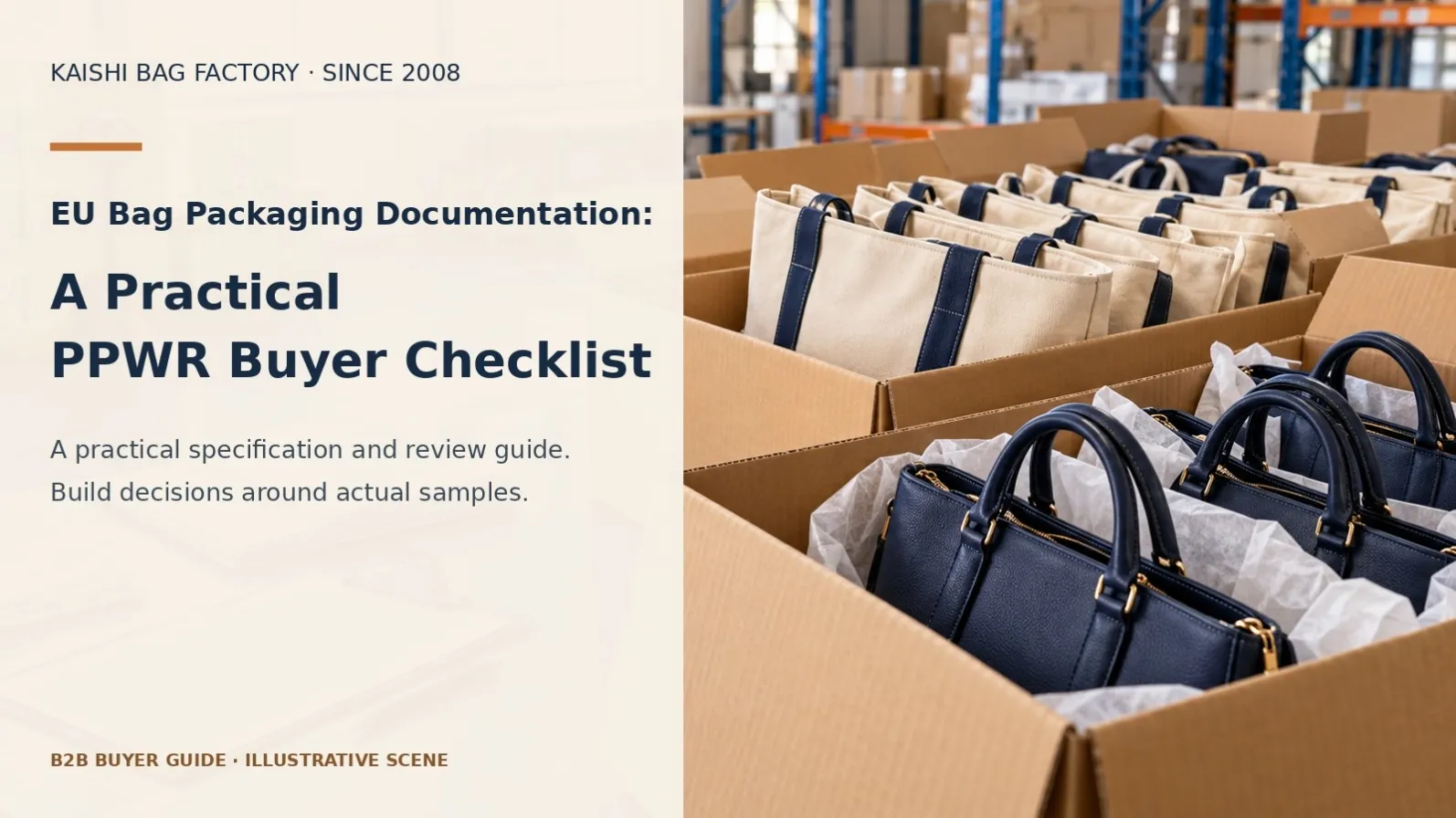
Prepare EU bag packaging with an identified packaging bill of materials, responsible-party review, supplier evidence and revision records. PPWR duties depend on role, packaging type and applicable dates.
This guide is for OEM/ODM brand teams, importers and wholesale buyers developing an original bag specification. It addresses PPWR bag packaging documentation through decisions that can be documented, sampled and reviewed. A photograph or generic material name is not an approval standard. Define the intended use, compare the actual proposed construction and keep a controlled physical reference before authorizing production.
1. Start with scope and an effective-date review
The European Commission identifies Regulation (EU) 2025/40 as the Packaging and Packaging Waste Regulation and gives 12 August 2026 as its general application date. That does not mean every future design, labelling or reuse requirement began on the same day. Review the provision relevant to the specific packaging and planned market placement.
This draft reflects official information checked on 7 October 2026 and needs a fresh check before its planned November publication. The worksheet is a practical document-gathering tool, not a declaration that every listed record is legally required in every transaction. The importer’s compliance reviewer should confirm scope, transitional arrangements and applicable national responsibilities using the current official text and guidance.
2. Identify packaging separately from the bag product
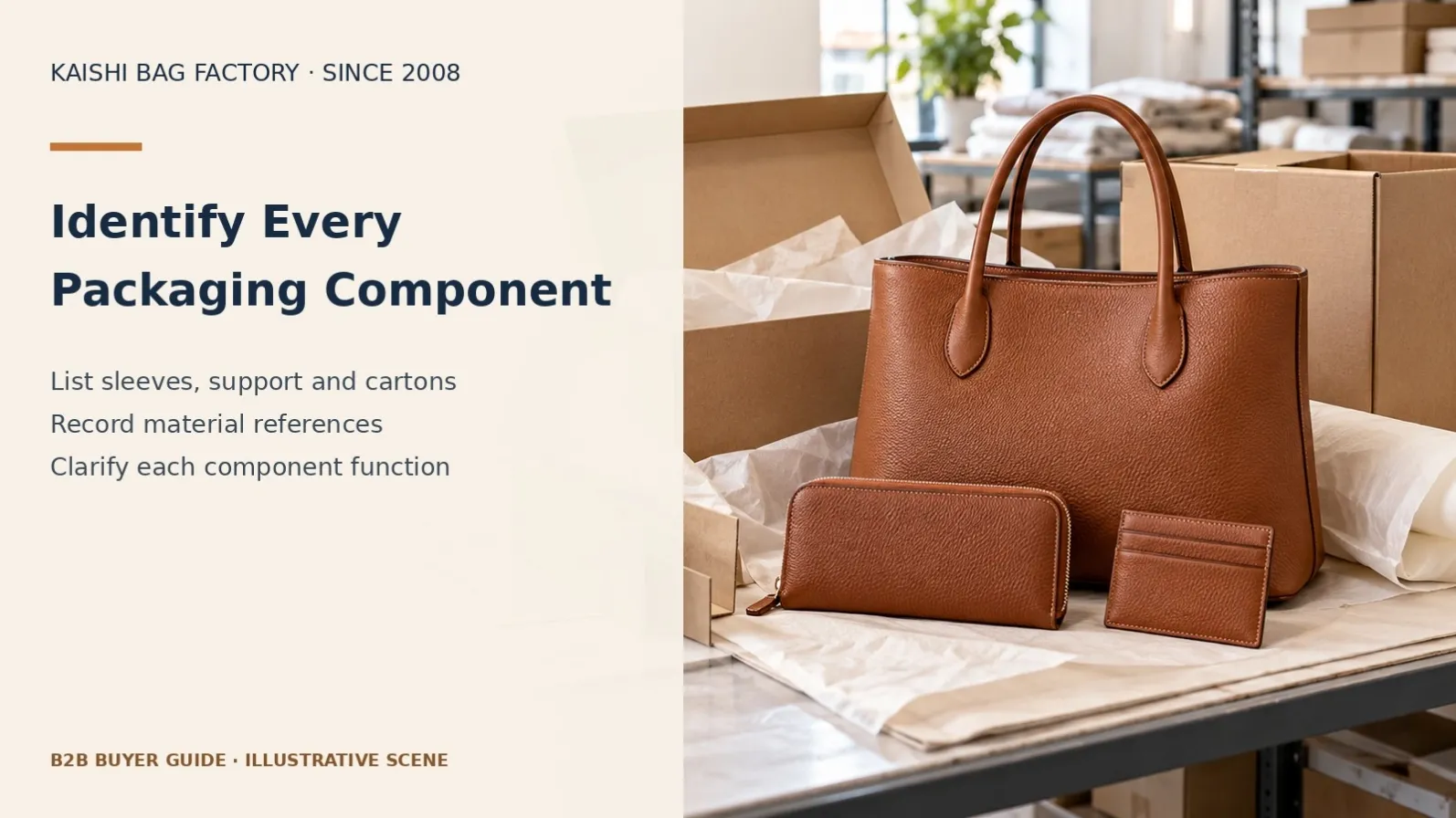
List the protective sleeve, retail box, tissue, internal support, tags where relevant, master carton, pallet film and straps. Describe their functions and how they are supplied. Do not assume that every accessory is packaging or that a durable handbag is legally a carrier bag. Borderline items need a scope decision rather than a convenient marketing label.
Include packaging added after import, such as local ecommerce mailers, because the complete sales route may involve more than the factory’s carton. Assign a component reference to each part and identify who selects or supplies it. A general statement that the order uses recyclable packaging is not a useful substitute for an identifiable material and construction record.
3. Map the commercial roles before requesting documents
A non-EU factory, an EU importer, a private-label brand and a distributor can occupy different roles in the packaging chain. Ask the EU buyer’s compliance contact to confirm the relevant role for each arrangement. Putting a brand name on a package, sourcing packaging separately or selling across borders can change the questions that need review.
Record the legal entities, market destinations, packaging suppliers and who places the packaged product on the market. Allocate responsibility for gathering evidence, reviewing documentation and approving market-facing wording. A purchase order can assign work between parties, but should not be treated as removing statutory duties. Do not promise that a factory document alone completes the importer’s compliance obligations.
4. Gather component evidence that matches the actual package
Request the material description, supplier reference, dimensions, mass where needed, coatings, inks, adhesives and relevant constituent information. The evidence should match the supplied version and the claim or requirement being reviewed. Ask the reviewer which declarations or reports are appropriate for each component instead of collecting an unrelated certificate folder.
If a supplier provides a report, check the tested item, date, issuing organization, conditions and scope. Identify gaps rather than describing a partial report as full PPWR compliance. A paper carton with a coating or composite feature needs a clear description of that construction. Do not infer recyclability, compostability or recycled content solely from colour, texture or a generic resin name.
5. Create a packaging documentation register
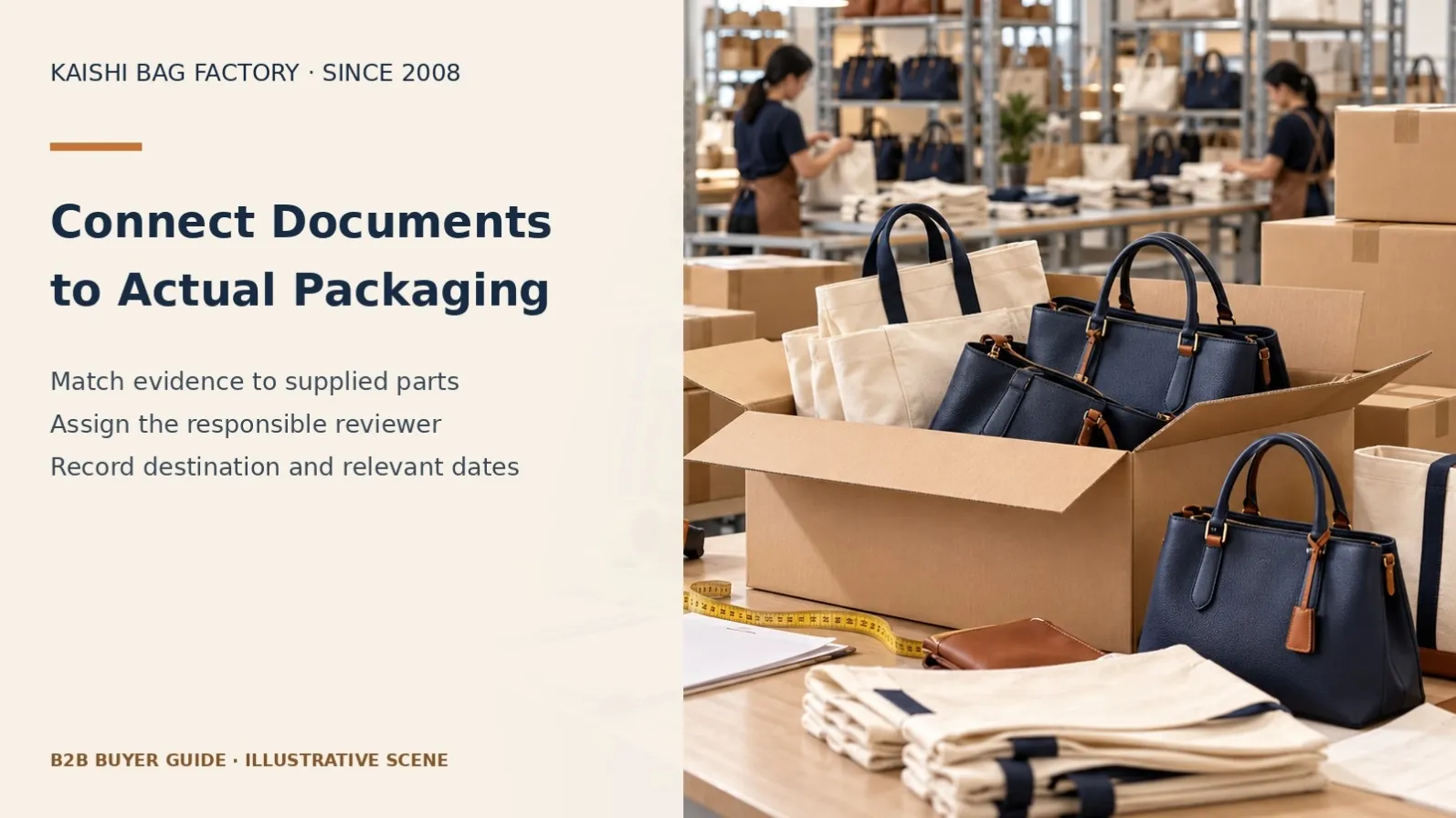
Use a register to connect each packaging part to its technical evidence and assigned reviewer. Keep technical documentation, any applicable conformity document and commercial packing information distinguishable. The exact required content and responsible party should be confirmed against the relevant legal provisions; this article does not invent a universal PPWR certificate.
The table below is a suggested purchasing register. Add the planned placing-on-market date and destination so reviews do not depend on the date the order was merely discussed. Mark unresolved evidence as open. Do not approve a package by assuming missing data will be available after production, especially when a packaging choice affects a buyer’s claim or destination requirements.
| Register field | Buyer record | Review owner |
|---|---|---|
| Component identity | Function, reference and supplier | Packaging development |
| Material construction | Composition, coatings and constituent evidence | Technical/compliance reviewer |
| Role and destination | Entities, route and market placement date | EU compliance lead |
| Documents and claims | Applicable evidence, scope and open gaps | Assigned legal/technical reviewer |
| Approved version | Artwork, packing sample and change log | Buyer and factory project leads |
6. Check claims and labels before artwork approval
Separate product branding from packaging material information, environmental claims and any applicable required marking. Confirm the current rules and transition dates with the EU reviewer before printing. Do not use the regulation’s general application date as a shortcut to claim that one new label is already compulsory for every bag package.
Keep artwork, language and symbol references with an approval record. A recycling-style icon is not evidence that the actual construction qualifies for the intended message. If the buyer requests an environmental statement, identify its exact meaning and supporting scope. Avoid broad terms such as fully eco-friendly. Review the wording again if a coating, film or protective insert changes.
7. Preserve protection and control packaging changes
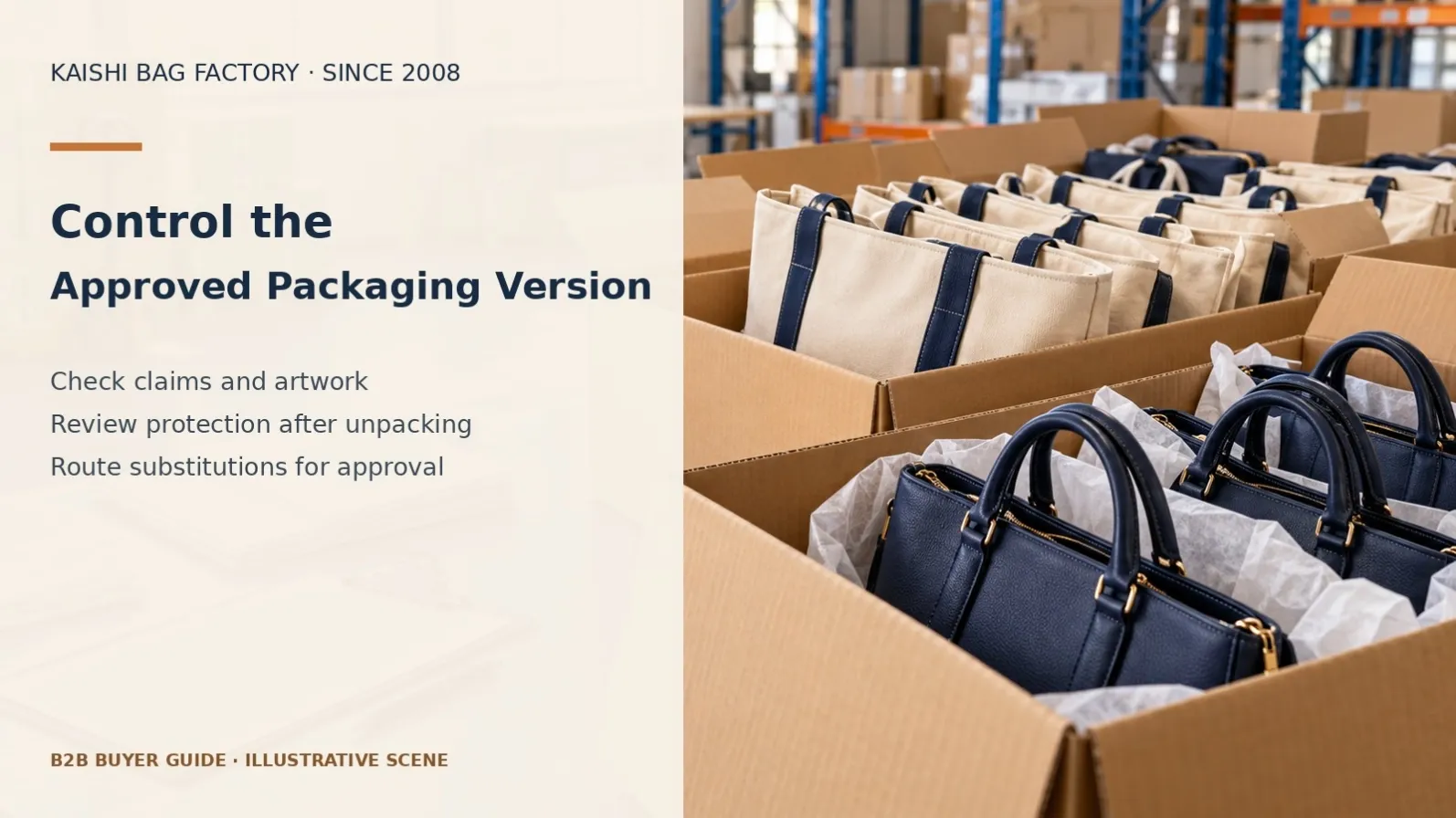
Packaging compliance and product protection need coordinated review. Trial the complete package with the intended bag and inspect arrival condition after an agreed packing evaluation. A reduced-material proposal should not become an unsupported freight-saving or environmental-benefit percentage. Record product contact, shape support and carton configuration as operational information.
After approval, route component substitutions to the assigned technical and compliance reviewers. Update references, artwork and packing instructions when necessary, and retain which shipment used which version. If documentation is incomplete, identify the affected component and action needed rather than offering a blanket assurance. Recheck official guidance before release, because packaging law has staged measures and implementation details that can develop.
Prepare a project-specific enquiry
Send the current drawing or tech pack, measured dimensions, intended carry contents, material references, component list, colour breakdown and proposed order quantities. Identify the sales destination and any buyer-required testing or packaging documentation. Separate mandatory requirements from design preferences, and explain which decisions remain open. This lets the factory review a real development scope rather than make assumptions from a reference photograph.
Ask the quotation to identify the selected construction, sample scope, material exceptions, packaging, delivery basis and validity conditions. Confirm who approves the physical sample and which revision becomes the production baseline. If a component changes, request an impact review before accepting the replacement. Keep commercial approval separate from technical approval: an attractive unit price does not establish that the revised bag meets the agreed use or inspection requirements.
Related buyer guides
Keep packaging review separate from the product-safety questions in the GPSR buyer checklist. Use the importing guide for shipment scope.
Frequently asked questions
Does PPWR cover imported packaging?
The Commission describes EU packaging rules as covering packaging regardless of material or origin. Confirm the specific item and commercial role against the current regulation and guidance.
Did every requirement start in August 2026?
No. General application does not make every staged provision effective immediately. Review the specific requirement and its date.
Is there one PPWR certificate for every shipment?
Do not use that shortcut. Determine the applicable documentation, evidence and responsible party for the actual packaging and transaction.
Is a cotton dust bag always packaging?
Its function and presentation need review. Do not automatically classify every textile accessory as packaging without checking the relevant scope guidance.
Can I label a coated carton recyclable?
Review the actual composite construction and the claim’s evidence. A paper base alone is insufficient to approve a universal recyclability statement.
Who should review the final packaging file?
Identify the responsible EU operator and its qualified compliance reviewer. The factory can supply relevant project records, but cannot promise to replace that review.
What are Kaishi’s order, sample and payment terms?
Kaishi Bag Factory is based in Baigou, China and has worked in OEM/ODM since 2008. Standard MOQ is usually 300 pieces per style. A 200-piece first order may be evaluated individually without a guarantee; 100 pieces is usually not feasible. Mixed styles and reorders do not automatically qualify for lower minimums. Samples are prepaid and non-refundable, without automatic bulk-order credit. Payment is T/T only, usually 50% deposit and 50% before shipment. Timing depends on design, materials, sample approval and quantity. Any NDA and project-specific conditions require agreement.
Sources and next step
Sources checked on 7 October 2026: European Commission packaging waste overview and Commission PPWR FAQs, published 3 August 2026. Supplier examples explain general principles, not Kaishi equipment ownership, certification or guaranteed availability. The purchasing worksheets are suggested buyer practices rather than quoted standard requirements.
Contact Kaishi Bag Factory with your specification and quantities for a project review. Email donna@Kaishibagfactory.com or message Donna on WhatsApp.