
Moisture Risk in Bag Shipping: Packing, Storage and Receiving Checks
Manage bag shipping moisture through material review, dry packing conditions, route-specific protection and receiving records. No single sachet guarantees prevention.
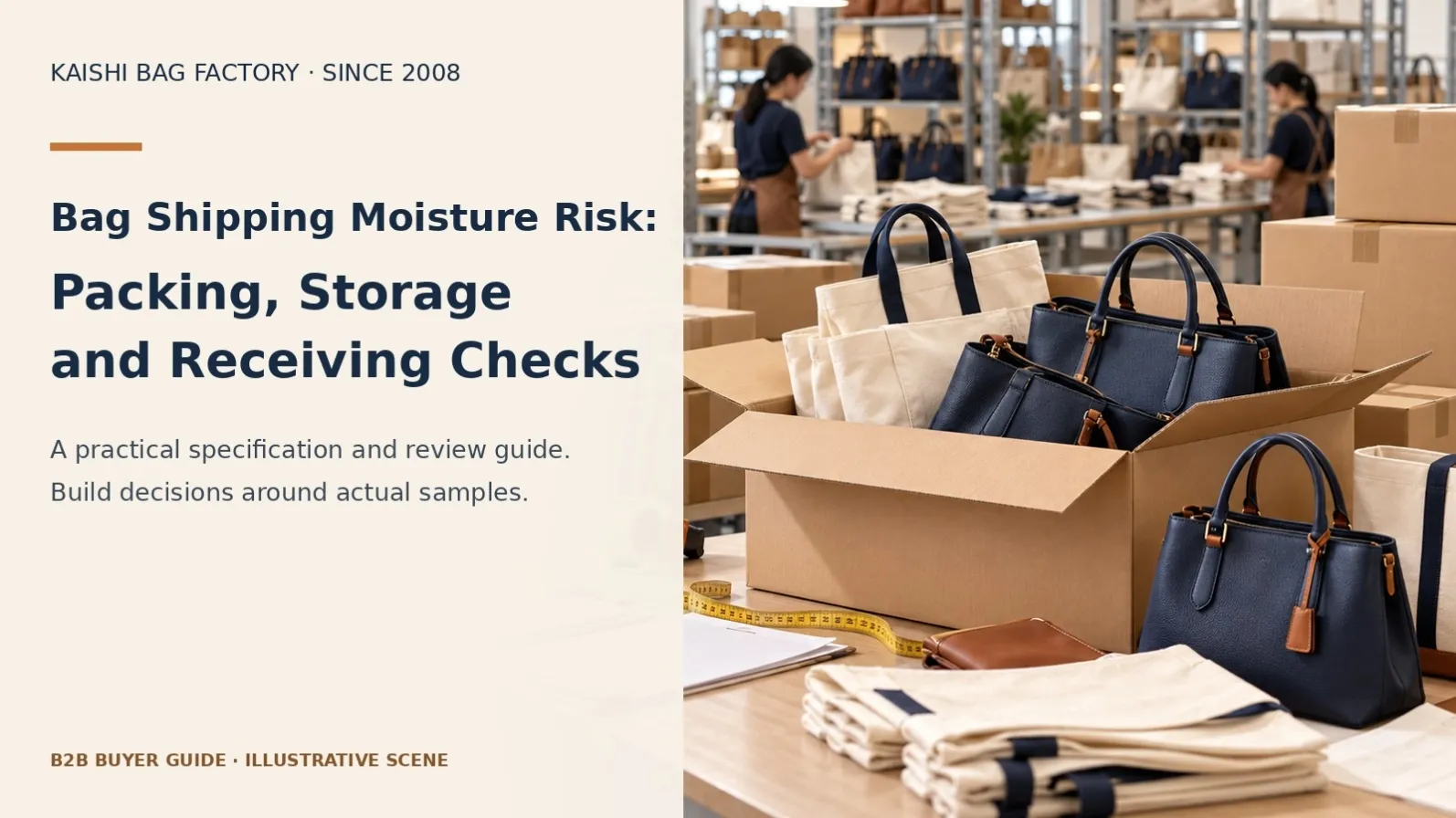
Manage bag shipping moisture through material review, dry packing conditions, route-specific protection and receiving records. No single sachet guarantees prevention.
This guide is for OEM/ODM brand teams, importers and wholesale buyers developing an original bag specification. It addresses bag shipping moisture risk through decisions that can be documented, sampled and reviewed. A photograph or generic material name is not an approval standard. Define the intended use, compare the actual proposed construction and keep a controlled physical reference before authorizing production.
1. Map the route and storage conditions
Identify the packing location, transport route, expected handling stages and destination storage arrangement. Ask the logistics provider about relevant exposure risks rather than assume every shipment encounters the same environment. A warehouse pause, container movement and retail storage are different parts of the journey, each needing an appropriate review.
This is a procurement and receiving checklist, not a universal climate prescription. It does not promise mould-free goods or a fixed humidity target for all materials. Keep the intended route and packing proposal with the order record so any protection decision can be connected to the shipment it was designed for.
2. Review the bag and packaging materials
List outer materials, lining, reinforcement, support paper, sleeves and cartons. Ask about handling instructions and the conditions needed before packing. Do not treat an apparently dry surface as proof that every layer is ready for a long journey. The proposed material combination needs a project-specific assessment.
Billerud’s corrugated-packaging guidance identifies humidity exposure and condensation risk as factors in packaging design. Its statement is about selecting packaging, not a bag-specific guarantee. Review the actual carton and protection system with the relevant supplier. Do not copy a medical or food packaging result into a handbag specification.
3. Define a packing readiness check
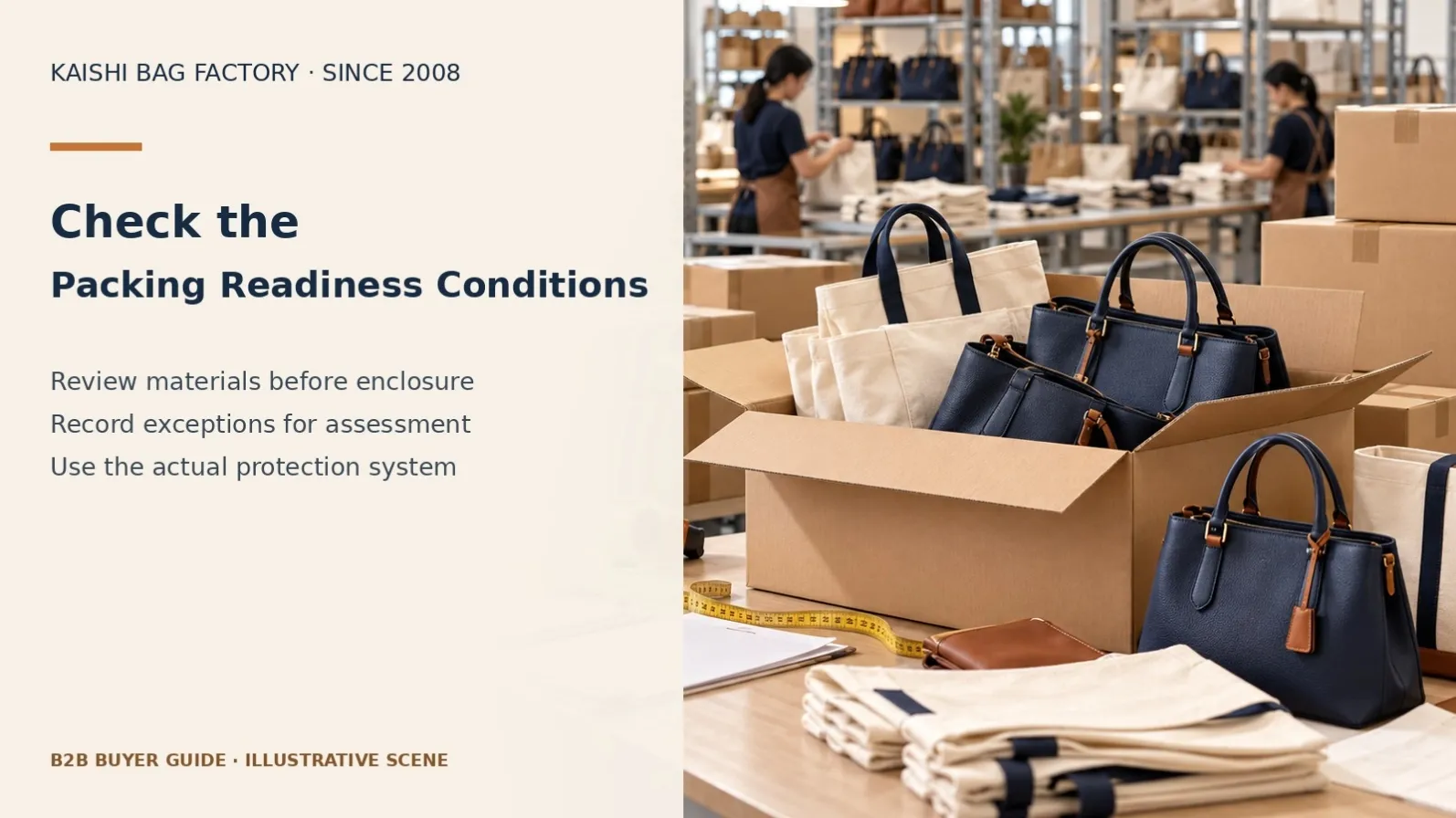
Agree what the factory checks before bags and protective materials are enclosed. Include cleanliness, visible condition and any relevant process or material requirements. Identify who records exceptions and who decides whether a questionable item can proceed. Do not improvise chemical treatment or cover a visible concern simply to keep the shipment moving.
Use the actual proposed packing materials in the trial. Examine contact, odour and presentation as well as protection. A sealed sleeve can be part of a system but is not automatically the correct solution for every route and substrate. Ask for a reasoned proposal and relevant evidence instead of choosing solely by unit cost.
4. Evaluate desiccants and protection as a system
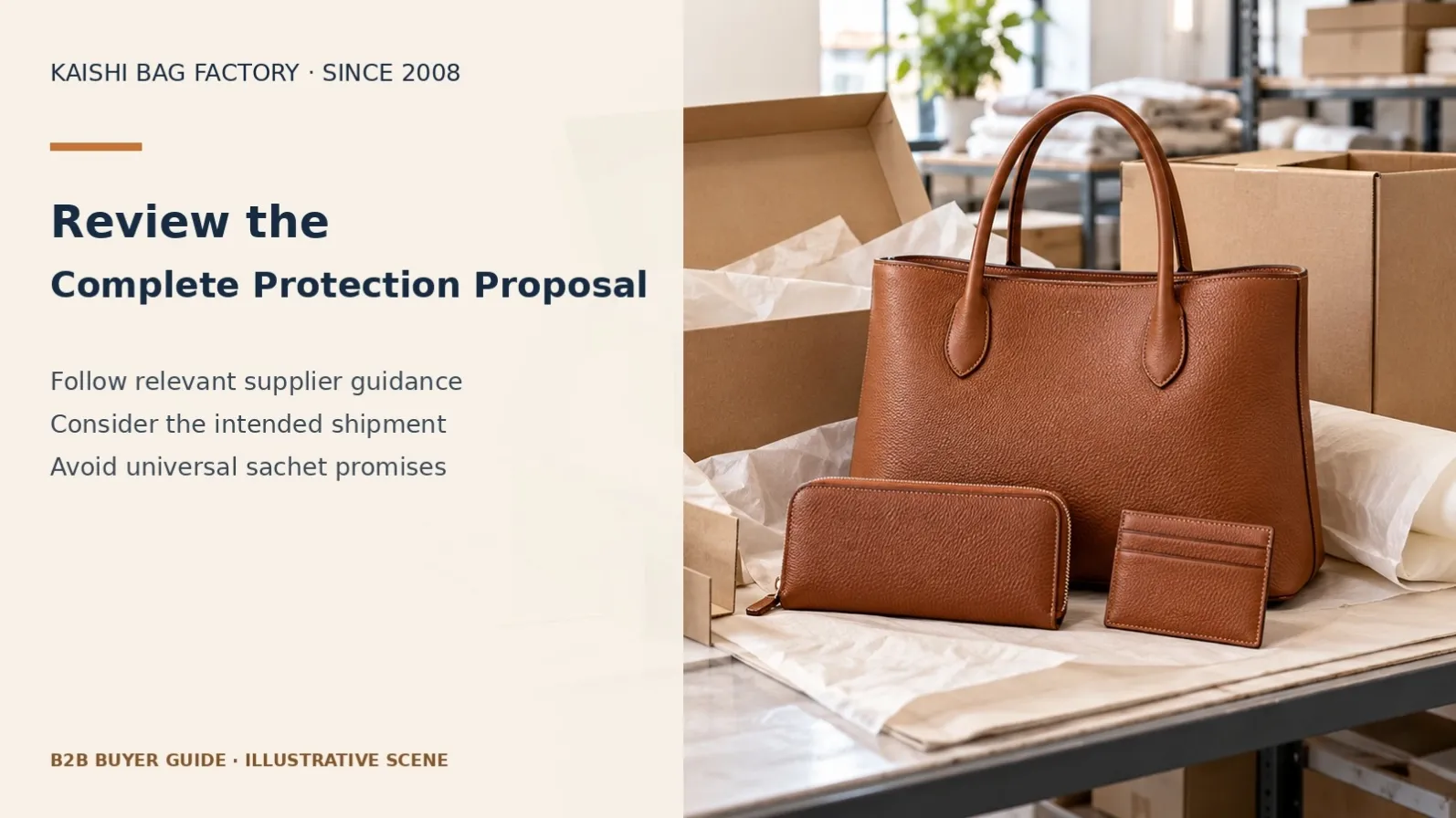
If a desiccant or other moisture-management product is proposed, request the supplier’s instructions, compatibility information and project recommendation. Confirm placement, containment, handling and disposal considerations. Do not invent a universal sachet quantity, replacement interval or capacity from a different packaging application.
Protection depends on more than the presence of a sachet. Review the bag condition, enclosure, carton arrangement and journey assumptions together. Keep product information linked to the selected reference. Do not make consumer-facing claims such as permanently mould-proof or waterproof unless the actual product and permitted claim have suitable support.
5. Keep a route-specific packing record
Record the materials, packing readiness checks, protection reference, carton arrangement and expected handling stages. Include photographs of the trial and the identity of the sample. The table below is a suggested buyer worksheet, not a mandatory international shipping standard or a laboratory test method.
Ask who can approve a substitution and whether a changed sleeve, carton or route requires review. Keep timing assumptions visible: a proposal for one transport route may not suit a later order with extended storage. Confirm logistics details before release rather than use a generic statement that all export packing is the same.
| Stage | Record | Decision |
|---|---|---|
| Before packing | Material condition and exceptions | Ready or requires review |
| Protection proposal | Reference and supplier instructions | Compatible with actual system |
| Dispatch | Carton arrangement and route | Confirmed shipment scope |
| Receiving | Carton and bag observations | Preserve evidence and assess |
| Next order | Findings and changed assumptions | Revised packing trial |
6. Inspect and document goods at receipt
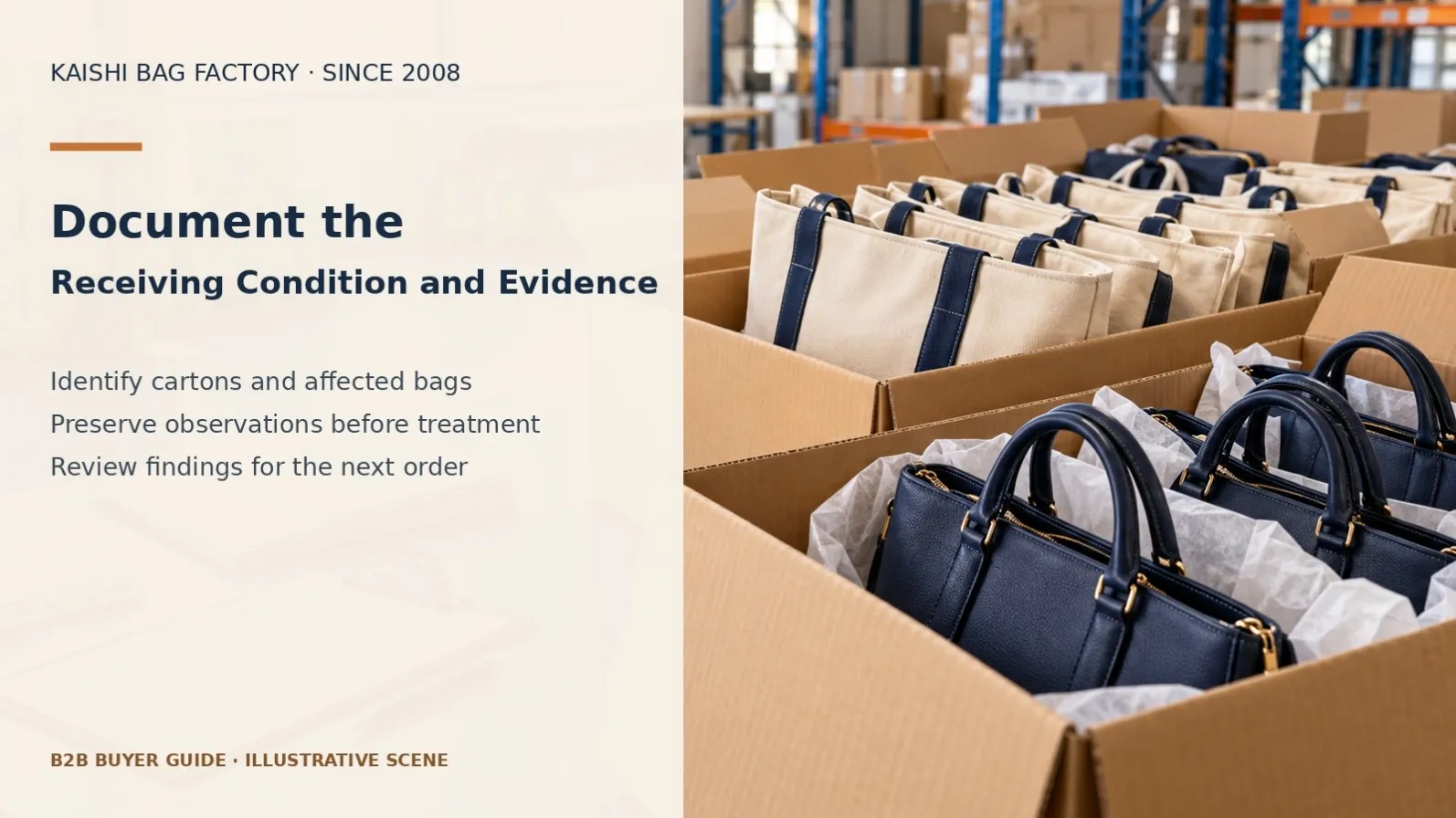
Agree a receiving check with the buyer’s warehouse. Record carton condition, visible damage, unexpected odour and the condition of representative bags before discarding packaging. Retain clear photographs and identifiers for any concern. Separate observations from a diagnosis; staining or smell alone does not establish the cause.
SATRA offers material troubleshooting that includes mould assessment. If specialist assessment is needed, preserve the relevant evidence and obtain qualified advice. Do not prescribe a universal cleaning or repair treatment. The buyer, supplier and relevant specialist should review the actual materials and issue before deciding on disposition or corrective action.
7. Feed findings into the next packing proposal
Compare the receiving observations with the documented packing system and route. Identify whether a change concerns material readiness, protection, handling or storage. Do not assume the same corrective step addresses every case. Review the proposed change through an actual trial and update the packing record.
This topic differs from reducing carton volume: its priority is moisture-related risk and evidence. A smaller package may still need a route-specific review. Avoid claiming a guaranteed reduction in incidents from one change. Retain the receiving evidence and agreed decision for the next order, including any unresolved specialist findings.
Prepare a project-specific enquiry
Send the current drawing or tech pack, measured dimensions, intended carry contents, material references, component list, colour breakdown and proposed order quantities. Identify the sales destination and any buyer-required testing or packaging documentation. Separate mandatory requirements from design preferences, and explain which decisions remain open. This lets the factory review a real development scope rather than make assumptions from a reference photograph.
Ask the quotation to identify the selected construction, sample scope, material exceptions, packaging, delivery basis and validity conditions. Confirm who approves the physical sample and which revision becomes the production baseline. If a component changes, request an impact review before accepting the replacement. Keep commercial approval separate from technical approval: an attractive unit price does not establish that the revised bag meets the agreed use or inspection requirements.
Related buyer guides
Continue with shipping and documents guide, receiving inspection guide.
Frequently asked questions
Does one desiccant sachet prevent mould?
No universal guarantee applies. Review the material condition, protection system, supplier instructions and shipment assumptions together.
Should every bag use a sealed plastic sleeve?
Choose the enclosure through a project-specific review. A sealed sleeve is not automatically appropriate for every material and route.
What humidity target should we use?
Ask qualified material and packaging specialists to define relevant conditions. This guide does not prescribe one figure for all bags.
What should the warehouse record on arrival?
Photograph carton and bag condition, retain identifiers and note relevant observations before discarding packaging or attempting treatment.
Can we clean a problem bag immediately?
Preserve evidence first and seek material-specific guidance. Do not assume an improvised treatment is safe or resolves the cause.
Is this a guarantee of mould-free shipping?
No. It is a suggested risk-review and documentation workflow. Actual protection and any contractual conditions require project agreement.
What are Kaishi’s order, sample and payment terms?
Kaishi Bag Factory is based in Baigou, China and has worked in OEM/ODM since 2008. Standard MOQ is usually 300 pieces per style. A 200-piece first order may be evaluated individually without a guarantee; 100 pieces is usually not feasible. Mixed styles and reorders do not automatically qualify for lower minimums. Samples are prepaid and non-refundable, without automatic bulk-order credit. Payment is T/T only, usually 50% deposit and 50% before shipment. Timing depends on design, materials, sample approval and quantity. Any NDA and project-specific conditions require agreement.
Sources and next step
Sources checked on 7 October 2026: Billerud corrugated packaging FAQ and SATRA material troubleshooting overview. Supplier examples explain general principles, not Kaishi equipment ownership, certification or guaranteed availability. The purchasing worksheets are suggested buyer practices rather than quoted standard requirements.
Contact Kaishi Bag Factory with your specification and quantities for a project review. Email donna@Kaishibagfactory.com or message Donna on WhatsApp.