
How to Choose the Right Lining for Your Custom Bags
How to specify bag lining by use, fibre, construction, colour and test method. A practical OEM buyer checklist for swatches and sample approval.
Quick answer: specify the lining for each compartment
The best lining for a custom bag depends on what touches it, how the bag is used and what the buyer needs to inspect. Name the fibre and fabric construction, approved swatch, colour, finish, position, pocket details and relevant tests in the tech pack. A label such as “standard lining” does not control the result; neither does a denier figure by itself. Approve the material and the complete interior on a production-intent sample before bulk production.
This guide helps brand teams and importers compare interior options and write a usable specification. Kaishi Bag Factory is based in Baigou, China and has worked on OEM/ODM bags since 2008. Material availability and a suitable construction are confirmed for each project. For outer-shell trade-offs, see our material comparison guide.
Start with function, not a fibre ranking
A handbag main compartment, a laptop sleeve and a wet-item pocket perform different jobs. The handbag interior may need a smooth hand and stable appearance; a device pocket may need a soft contact face and padding; a spill-prone pocket may call for a cleanable material. Their seam allowances, openings and colour choices can also differ. The lining does not automatically provide the bag's overall structure: shell, interlining, reinforcement and construction all matter.
| Location | Buyer priority | Sample check |
|---|---|---|
| Main compartment | Hand feel, cleanability, colour | Surface, fit and wrinkles after use |
| Device sleeve | Soft contact, padding, clearance | Actual device fit and bottom protection |
| Small pocket | Access and secure stitching | Opening size and edge finish |
| Wet-item area | Agreed exposure and cleaning | Seams as well as fabric performance |
Compare fabric constructions and finishes
Polyester or nylon woven linings can be light and smooth, but performance varies with yarn, weave, finishing, backing and supplier. Cotton or cotton blends can give a different touch and visual character, yet need their own care and colour checks. Satin describes a weave and appearance, not a guarantee that the fibre is silk or that the fabric resists snagging. A brushed surface can be useful around devices, but it does not replace cushioning or a finished-bag impact assessment.
Ask for a physical swatch with its composition, fabric designation, construction, usable width and colour reference. If a coating, lamination or other treatment is proposed, identify where it is applied and what claim it supports. Do not call an entire bag waterproof on the strength of a lining swatch. If the brand wants recycled or organic content, verify the specific material and supporting transaction documents before making a marketing claim.
What denier and GSM can, and cannot, tell you
Denier refers to linear density of yarn; GSM refers to fabric mass per unit area. They describe different things, and neither alone predicts abrasion, tear strength, colour transfer or finished-bag durability. A “210D lining” may differ significantly by weave, yarn, coating and quality. Therefore do not apply one default 210D fabric to every bag category or treat a larger number as automatic proof of quality.
Define a reference swatch and measured properties appropriate to the product. Record tolerances and the method of verification with the supplier, rather than quoting a number without a test plan. The lab, buyer or destination-market requirement can help choose a suitable method and acceptance value.
Plan colour, branding and cleanability
A lighter interior can make contents easier to find; dark colours may hide some visible marks. Neither is inherently better. Look at the lining against the exterior, handles, zipper tape and intended contents in daylight and under the lighting buyers expect. For printed or branded linings, use artwork you are authorized to reproduce and agree a physical colour or strike-off standard. Printing method, fabric base and minimum material purchase affect cost and schedule; availability is not guaranteed without review.
Where colour transfer could affect contents or neighbouring fabrics, agree a test. ISO 105-X12:2016 sets out a method for colour fastness to rubbing. A test method is not a universal pass grade. If abrasion matters, ISO 12947-2:2016 concerns specimen breakdown under the Martindale method for applicable fabrics. ISO 13934-1:2013 describes a strip method for fabric maximum force and elongation. Select tests and acceptance criteria for the actual material and use case; a fabric result cannot substitute for inspecting sewn pockets and attachment seams.
Check the complete interior on a sample
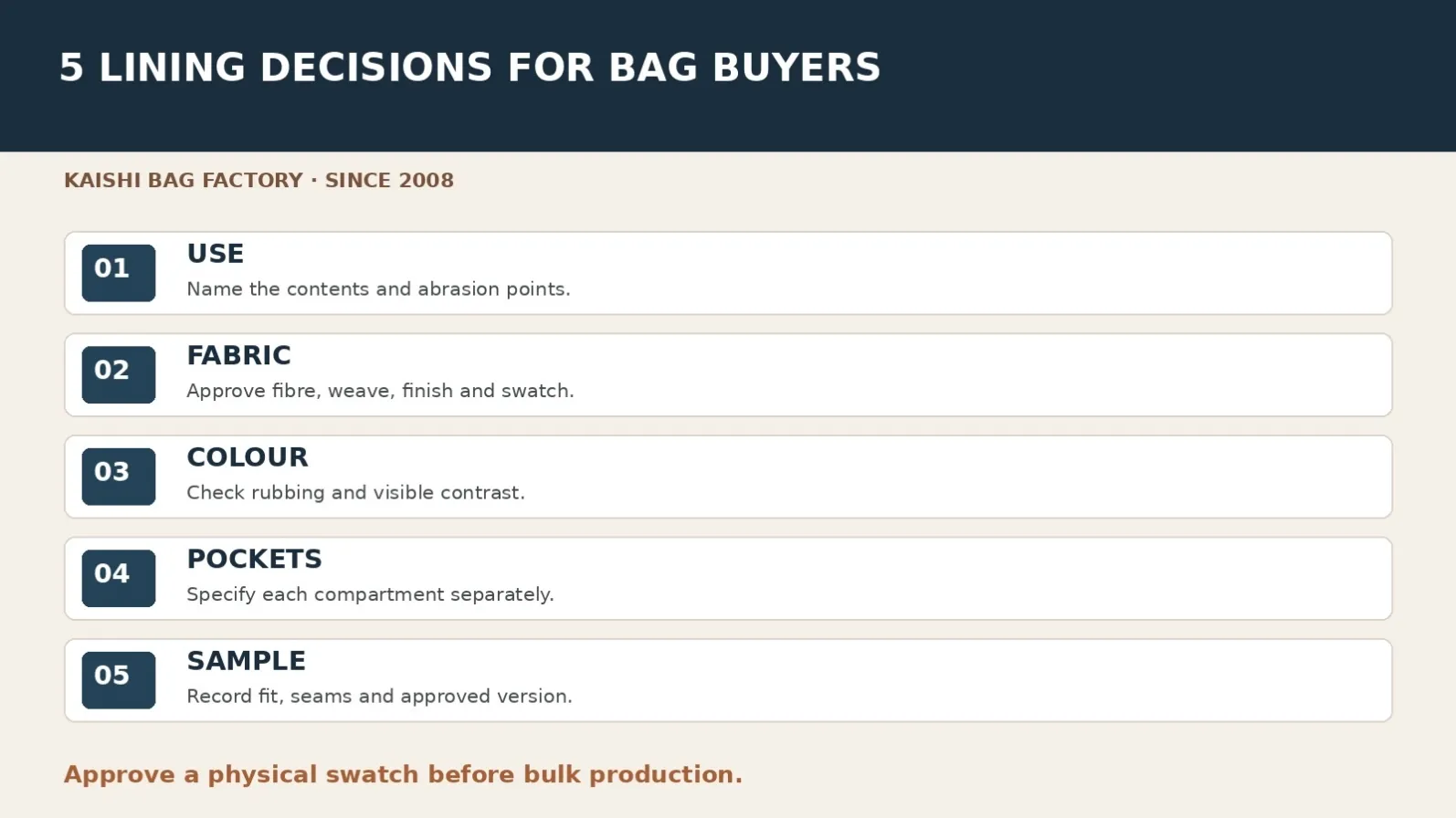
- Compare fabric and colour to the signed-off swatch.
- Turn the bag inside out where possible; inspect seam allowances, raw edges and thread ends.
- Open and close the bag repeatedly to identify lining pull, bunching or exposed stitching.
- Load representative objects and inspect pocket dimensions and attachment points.
- Check device contact surfaces, padding and clearance with the intended device.
- Record discrepancies and approve a dated sample revision and written tolerances.
Changes to fabric, coating, colour, pocket layout or supplier after approval should trigger a review of the sample and any relevant testing. Keep a physical swatch and reference sample for inspection. This helps both parties compare bulk goods with the agreed version.
Cost, MOQ and quotation
Unit cost reflects lining consumption, cutting, printing, compartment count, complexity and the availability of the chosen material. A lower-priced fabric may still increase cost if it requires extra backing or creates waste. Ask for a quote based on the same bag drawing and lining specification when comparing options.Kaishi's MOQ is a fixed 300 pieces per style. A first order is also 300 pieces per style, with no exceptions. An order of 100 pieces is not workable for custom production. Samples are paid in advance. Payment is by T/T only, typically 50% deposit and 50% before shipment. Sampling and production timing depend on design, materials, approval and quantity.
Frequently asked questions
What is the best lining material for a handbag?
There is no universal best. Compare approved swatches against the intended hand feel, colour, care, price and interior construction.
Is 210D lining always suitable?
No. Yarn denier does not define the weave, finish, mass, strength or application. Approve the actual fabric and sample.
Does the lining give a bag its shape?
It can affect interior feel and drape, but shell fabric, interlining, reinforcement and pattern construction also determine shape.
Can one bag use more than one lining?
Yes. Different compartments can use different materials when the specification and sample clearly identify each placement.
Does coated lining make the bag waterproof?
No. Seams, openings and other components also affect finished-bag performance. Define any claim and verification separately.
How should a buyer test colour transfer?
Agree relevant methods and acceptance criteria with the buyer or lab. ISO 105-X12:2016 is a rubbing colour-fastness method, not an automatic pass grade.
What information is needed for a lining quotation?
Send bag drawings, intended use, compartment layout, preferred swatch or material direction, colour, quantity per style and target market.
Sources and next step
- ISO 105-X12:2016 — colour fastness to rubbing
- ISO 12947-2:2016 — abrasion-related specimen breakdown
- ISO 13934-1:2013 — tensile properties of fabrics
Share your bag drawing, compartment plan, quantity and desired interior feel through the Kaishi contact page. We can review lining options and confirm a project-specific sampling path.