
Digital Sewing in Bag Manufacturing: What It Can and Cannot Improve
Review digital bag sewing by operation, material, setup and sample evidence. Understand what digital controls can improve and what still needs validation.
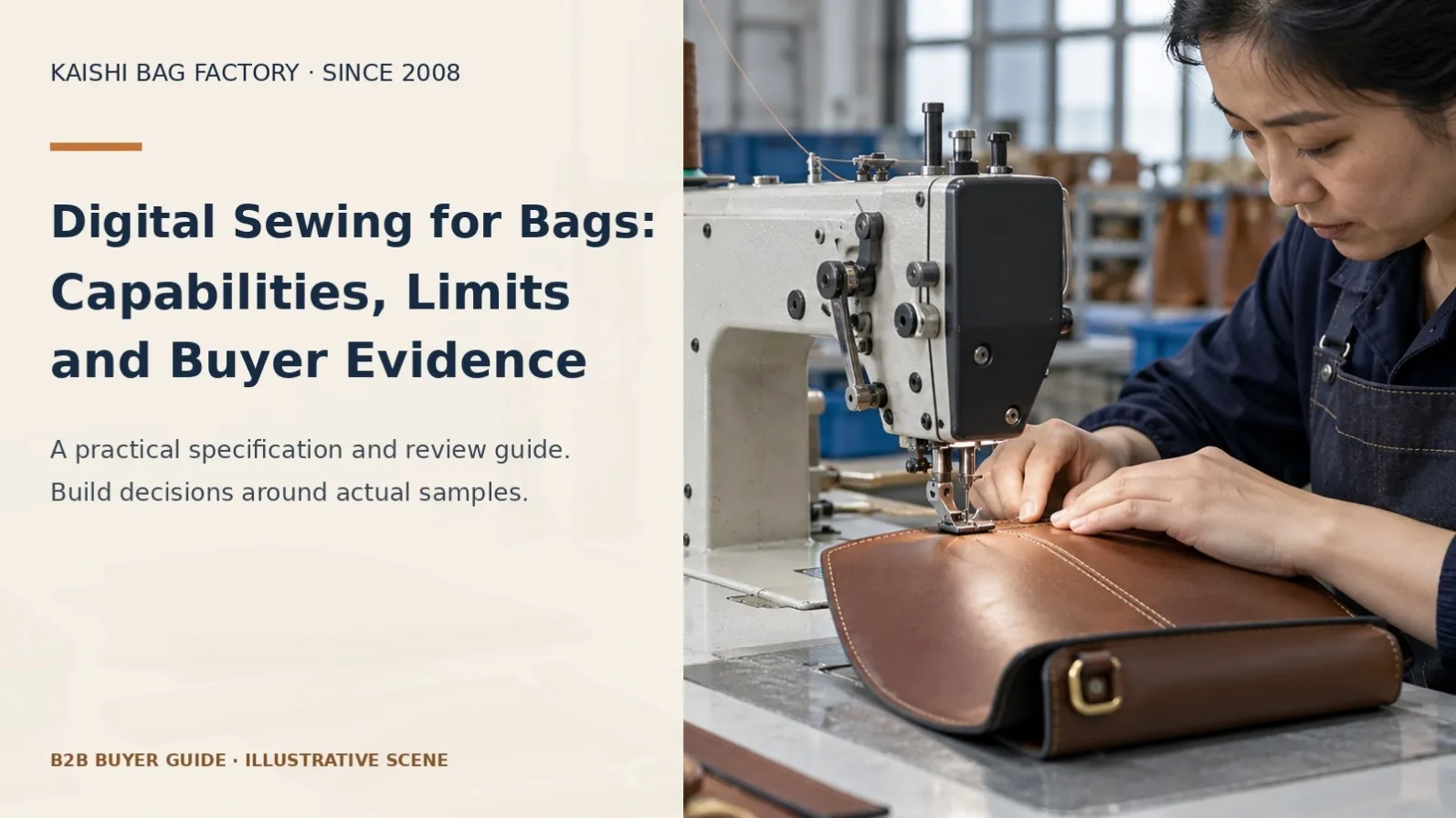
Digital sewing can support controlled settings and repeatable operations, but bag quality still depends on material, thread, fixtures, operator handling and inspection. Review evidence from the actual operation.
This guide is for OEM/ODM brand teams, importers and wholesale buyers developing an original bag specification. It addresses digital sewing for bags through decisions that can be documented, sampled and reviewed. A photograph or generic material name is not an approval standard. Define the intended use, compare the actual proposed construction and keep a controlled physical reference before authorizing production.
1. Define the operation before asking about automation
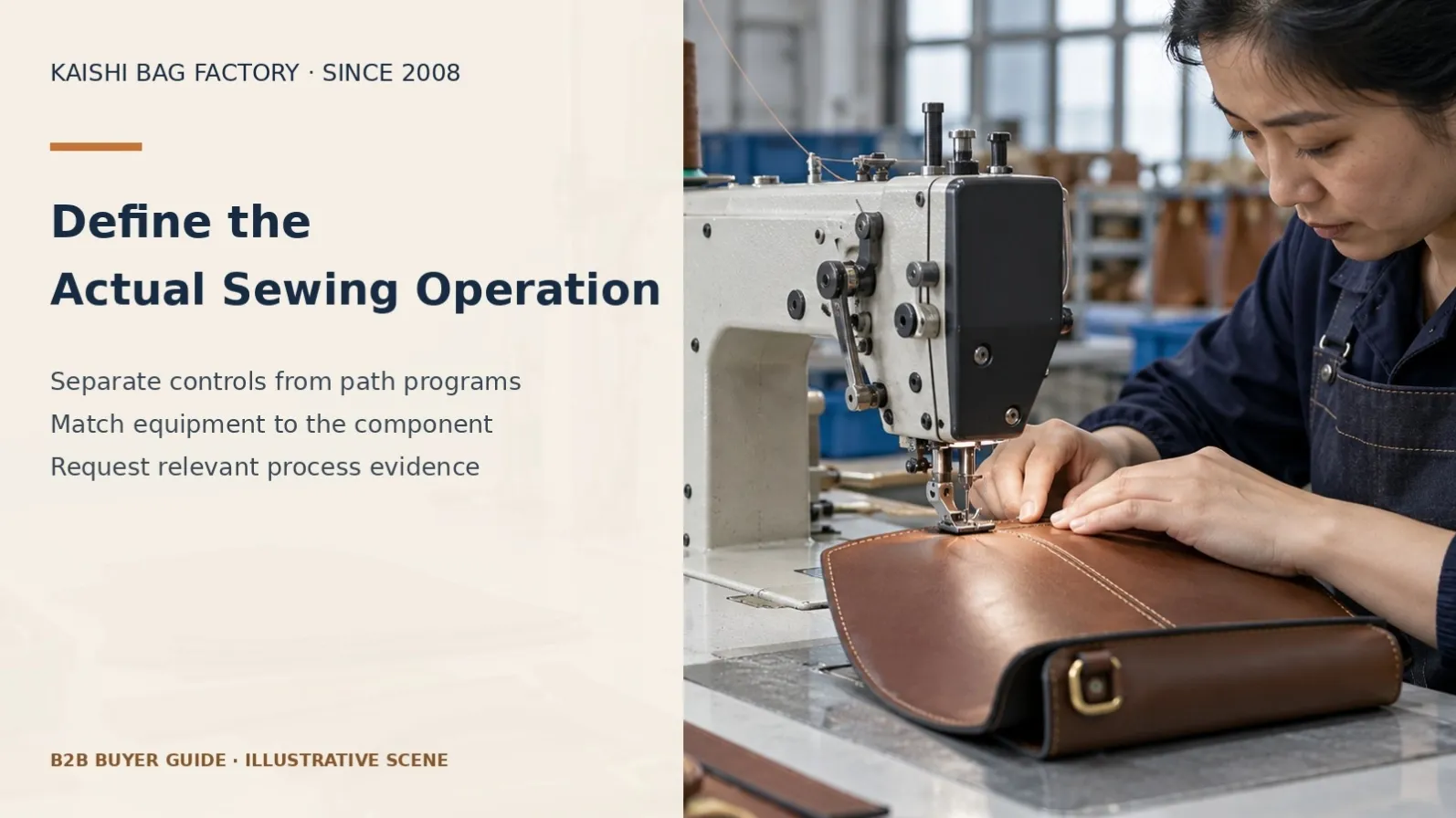
List the seam operations that matter: flat panel joining, visible topstitching, handle attachment, a tight corner or a bulky junction. Ask which operation the proposed digital feature addresses. “Computerized production” does not explain how the bag is built or how a difficult curved seam is controlled.
Separate machine settings from programmed sewing paths and production monitoring. They are different functions and may exist on different equipment. A supplier should describe the available process for your component, not rely on a generic machine photograph. This article discusses industry options; it does not assert that Kaishi owns a particular model or offers every automation route.
2. Distinguish digital settings from an automatic sewing path
JUKI lists digital non-apparel systems including post-bed and unison-feed equipment. Its product descriptions show why machine configuration must be discussed by operation. Digitally controlled settings can help retain a selected setup, but the presence of a control screen does not mean the entire bag seam is automatically programmed.
For a programmed operation, ask how the workpiece is located and held, how the path file is identified and how the finished seam is checked. For an operator-guided operation, ask how the setup is recorded and material feeding is controlled. Document the process actually proposed instead of treating these two routes as the same technology.
3. Material variation still needs a sewing trial
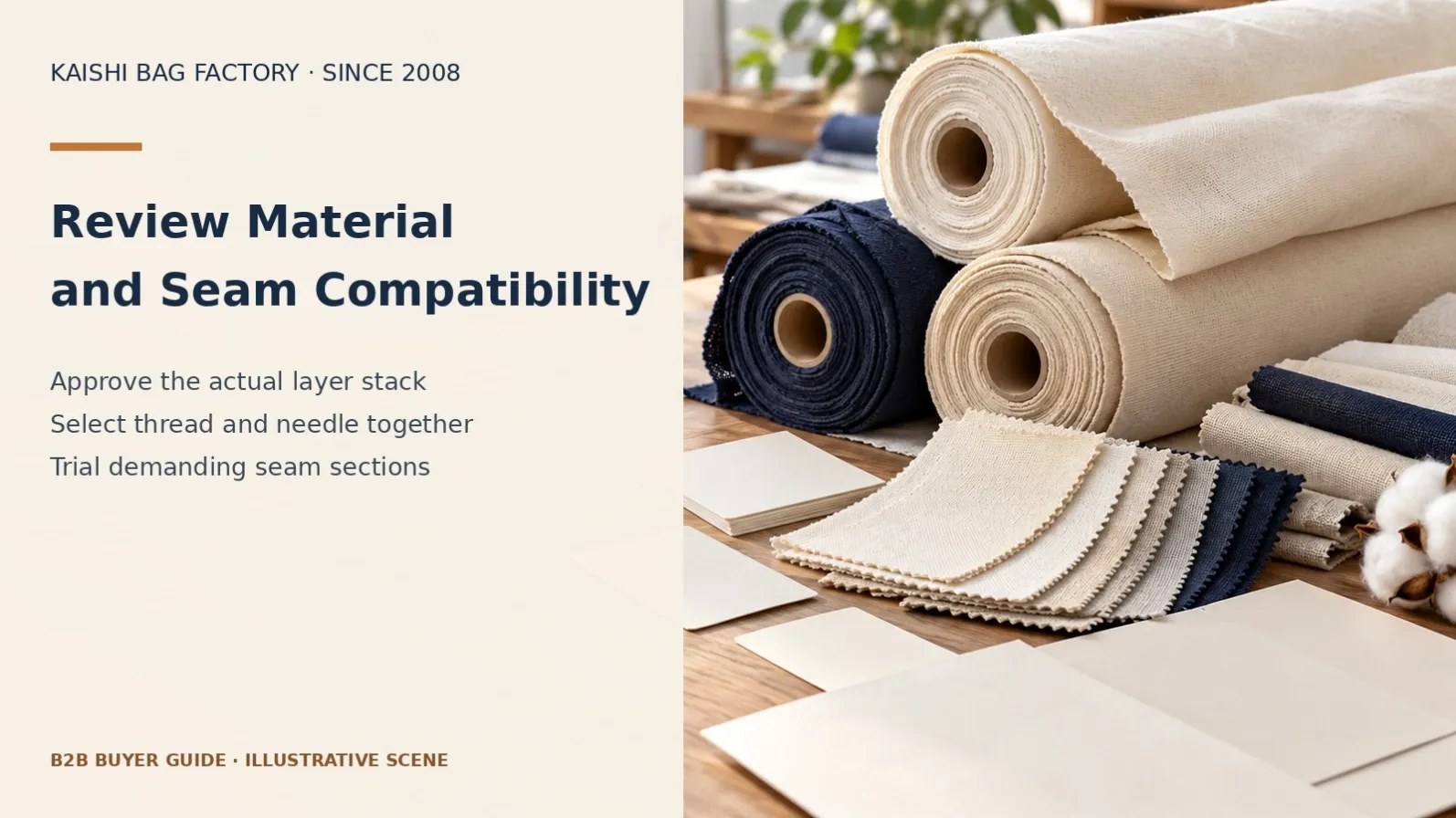
Panel thickness, coating, softness and multiple layers can affect feeding and stitch formation. A setting that works on a flat swatch may not work at a reinforced attachment or a bulky seam crossing. Ask for a trial that includes the demanding sections of the actual construction.
AMANN’s bag guidance describes thread selection as a combination of material, seam position, stitch, needle and expected loading. It does not prescribe one thread for all bags. Digital settings cannot remove that selection task. Approve the intended material and thread combination, and request review when a replacement changes thickness, stretch or surface behaviour.
4. Compare seam evidence, not a speed headline
A machine’s published maximum speed is not the output rate of an assembled bag. Loading, alignment, curves, thread changes, inspection and rework remain part of the operation. Avoid translating a machine specification into a promised percentage reduction in price or production time.
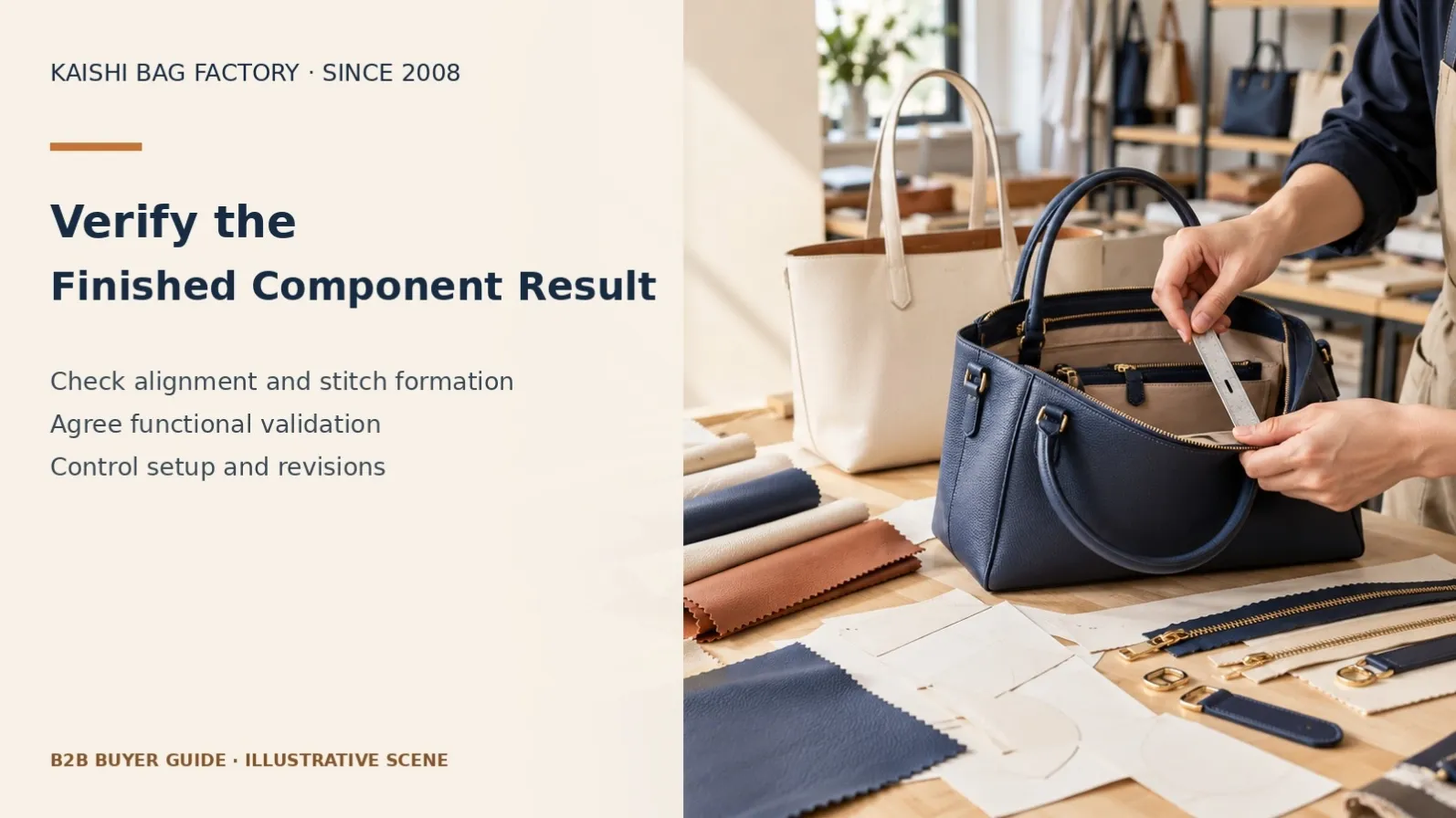
Review stitch consistency, seam placement, panel alignment, puckering and visible marks on a representative sample. For attachment seams, appearance and structural performance are separate questions. Ask what evidence supports the intended use and whether laboratory testing is required. A neat seam photographed once is not proof of repeatability across every colour and material batch.
5. Ask practical questions about repeatability
A useful process discussion connects settings and workholding to an identifiable approved component. The buyer does not need confidential programming files to ask for evidence that the correct revision is being used. Agree which records or sample demonstrations can be shared without exposing unrelated customers’ information.
Use the worksheet below when evaluating a proposed automation route. Request a clear response for each relevant operation rather than scoring every supplier by equipment count. Older suitable equipment and a controlled manual operation may be appropriate for a particular seam. Conversely, a sophisticated machine without the right fixture or setup does not establish that the component will meet the drawing.
| Question | Useful evidence | Avoid assuming |
|---|---|---|
| Which seam is controlled? | Named operation and component | Every seam is automated |
| How is setup identified? | Revision-linked process record | A screen ensures correctness |
| How is material held? | Fixture or handling demonstration | All substrates feed identically |
| What validates the result? | Sample and agreed inspection | Maximum speed proves output |
6. Review changeover and exception handling
Ask what happens when the material colour, thickness or reinforcement changes. A digital recipe should be linked to the correct component and revision. Confirm who verifies setup after maintenance, adjustment or a tooling change. The point is to control the transition, not assume that recalling a file automatically authorizes production.
Discuss what happens when a panel is outside the expected condition or a seam needs rework. Define which changes require technical review and which are routine adjustments within the approved process. Avoid instructing an operator to compensate for a material substitution while retaining the old approval record. Keep exceptions visible so inspection uses the actual produced version.
7. Use equipment information as one part of sourcing
For a remote factory discussion, request a demonstration of the relevant operation and a view of the resulting component. Respect confidentiality and do not ask for another brand’s identifiable product. A short representative demonstration can explain process suitability, but cannot replace sample approval or a complete supplier assessment.
Compare suppliers on their ability to explain the construction, produce a representative sample and manage revisions. Include price, minimum quantity, testing and timing in the project discussion. Digital equipment is a potential process tool, not a certification of the whole factory or a guarantee of zero defects. The commercial decision should rest on documented product evidence.
Prepare a project-specific enquiry
Send the current drawing or tech pack, measured dimensions, intended carry contents, material references, component list, colour breakdown and proposed order quantities. Identify the sales destination and any buyer-required testing or packaging documentation. Separate mandatory requirements from design preferences, and explain which decisions remain open. This lets the factory review a real development scope rather than make assumptions from a reference photograph.
Ask the quotation to identify the selected construction, sample scope, material exceptions, packaging, delivery basis and validity conditions. Confirm who approves the physical sample and which revision becomes the production baseline. If a component changes, request an impact review before accepting the replacement. Keep commercial approval separate from technical approval: an attractive unit price does not establish that the revised bag meets the agreed use or inspection requirements.
Related buyer guides
Prepare the operation details with the tech pack checklist and review the manufacturer selection guide.
Frequently asked questions
Does a digital machine guarantee better bags?
No. Machine suitability, material, thread, tooling, operator handling and inspection still matter. Assess the component result and the controlled process.
Is digital sewing the same as robotic assembly?
No. Digital controls, programmed sewing paths and broader automated handling are separate capabilities. Ask which specific function is proposed.
Can automation lower my MOQ?
Do not assume it. Material purchasing, setup, components and production planning still affect minimums. Confirm the project quantity separately.
Can the factory quote from a machine speed?
Machine speed alone does not capture loading, alignment, assembly or inspection. Request a quotation for the complete specified bag.
Should I insist on one equipment brand?
Focus first on operation suitability and product evidence. A brand preference should have a clear technical reason rather than substitute for sample review.
Do settings need review after a material change?
Yes, a change can affect feeding and seam formation. Ask for a documented trial or review decision before treating the previous setup as approved.
What are Kaishi’s order, sample and payment terms?
Kaishi Bag Factory is based in Baigou, China and has worked in OEM/ODM since 2008. Standard MOQ is usually 300 pieces per style. A 200-piece first order may be evaluated individually without a guarantee; 100 pieces is usually not feasible. Mixed styles and reorders do not automatically qualify for lower minimums. Samples are prepaid and non-refundable, without automatic bulk-order credit. Payment is T/T only, usually 50% deposit and 50% before shipment. Timing depends on design, materials, sample approval and quantity. Any NDA and project-specific conditions require agreement.
Sources and next step
Sources checked on 7 October 2026: JUKI digital non-apparel systems and AMANN sewing threads for bags. Supplier examples explain general principles, not Kaishi equipment ownership, certification or guaranteed availability. The purchasing worksheets are suggested buyer practices rather than quoted standard requirements.
Contact Kaishi Bag Factory with your specification and quantities for a project review. Email donna@Kaishibagfactory.com or message Donna on WhatsApp.