
How to Start a Handbag Brand: Plan Your First Order
Plan your first handbag brand order with an original product brief, complete cost worksheet, sample approval checklist and clear OEM purchasing conditions.
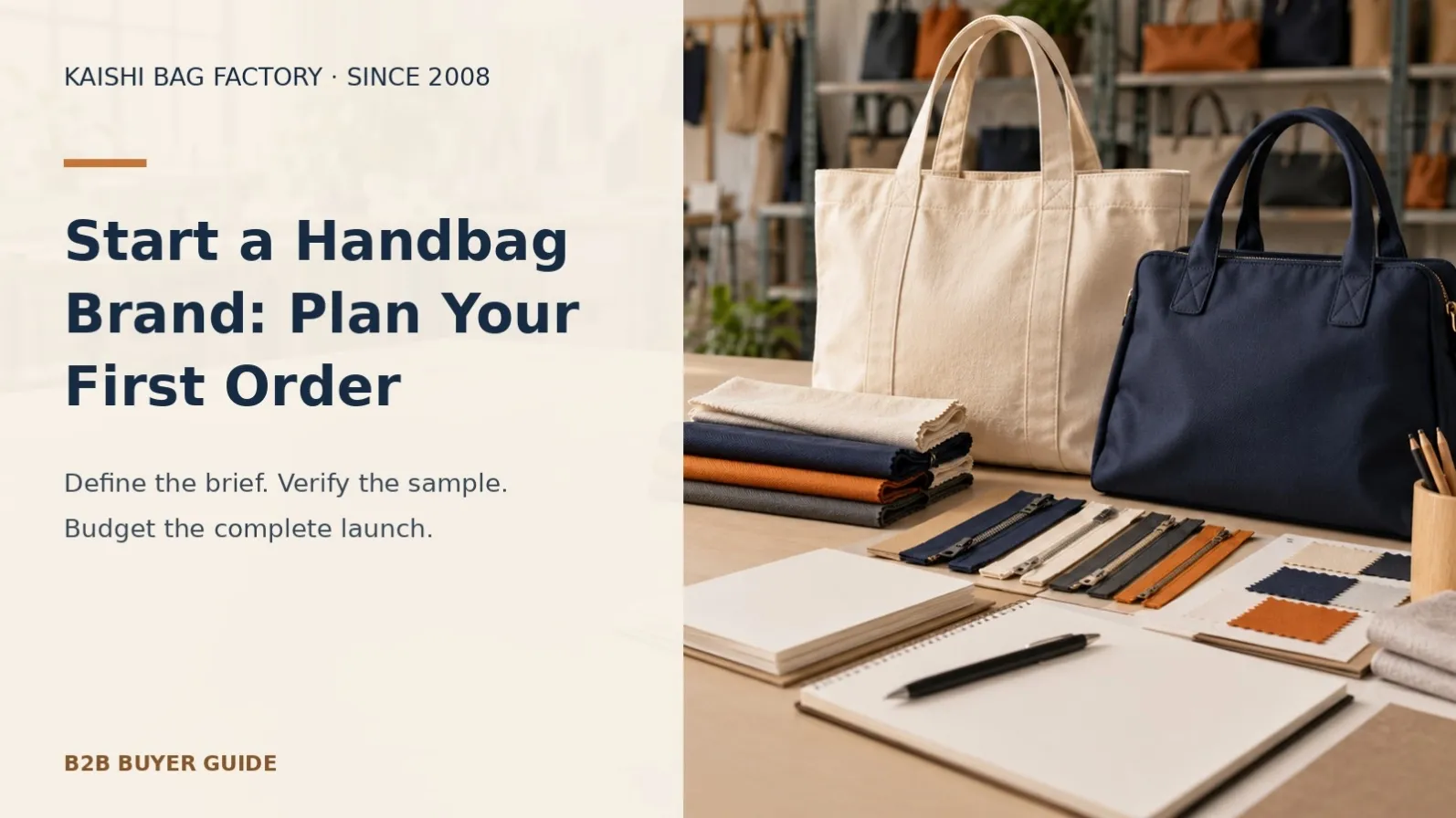
To start a handbag brand, define a specific customer and use case, develop an original product brief, compare complete quotations, validate a physical sample and plan the first order alongside your sales and fulfilment costs. A factory-ready design and an approved sample reduce uncertainty; they do not guarantee demand, profit or a successful launch.
This guide helps founders prepare for their first OEM/ODM purchase. It focuses on decisions before committing to production, rather than promising a universal start-up budget or delivery calendar. Brand owners in Europe, North America, Nigeria and India should adapt the plan to their selling channel, import responsibilities and customer expectations.
Define a customer problem before selecting styles
Write a brief explaining who will carry the bag, what it must carry and where it will be used. A commuter handbag, a casual crossbody and a promotional tote solve different problems. Specify useful features such as opening access, carrying options and interior organisation instead of relying only on a mood board.
Gather direct feedback from potential customers or retail buyers. Record the questions asked, preferred features and objections. Interest in a photograph is different from a confirmed purchase commitment. Use research to narrow the product brief, and avoid treating general market-growth forecasts as evidence that your particular style will sell.
For a wholesale range, describe the retailer or distributor and the intended price position. Do not assume that all buyers in Nigeria or India want the same colours or construction. Local feedback and your own order history are more useful than a country-wide stereotype.
Choose a manageable development scope
Start with the number of styles you can fund, review and sell responsibly. A focused first project can simplify decisions, but one style is not automatically the lowest-risk commercial choice. Compare quantities, minimums, material options and your channel requirements before deciding the assortment.
Distinguish adapting an available design from developing a new construction. Confirm what changes are included, whether components need development and what can be shared across styles. Shared materials may simplify sourcing, but they do not automatically allow quantities to be combined to satisfy minimums.
Develop an original design and review rights
Reference images can communicate shape, proportions or material direction. They are not permission to copy another brand's protected appearance, logos or signature hardware. Explain the particular feature you want to study and develop your own solution. AI renders also require a buildability and rights review; a convincing image may omit seams or structural support.
WIPO explains that trademarks distinguish one enterprise's goods or services, while industrial designs concern ornamental appearance. These are different rights. Review the brand name and product appearance in intended markets before public launch, with suitable professional advice when needed. Do not assume that registering a company name clears every relevant right.
Agree ownership and permitted use of drawings, artwork, tooling and modifications in writing. Confidentiality arrangements can be discussed for the project; an NDA should not be presented as a universal guarantee against every disclosure or third-party claim.
Create a brief that can support a quotation
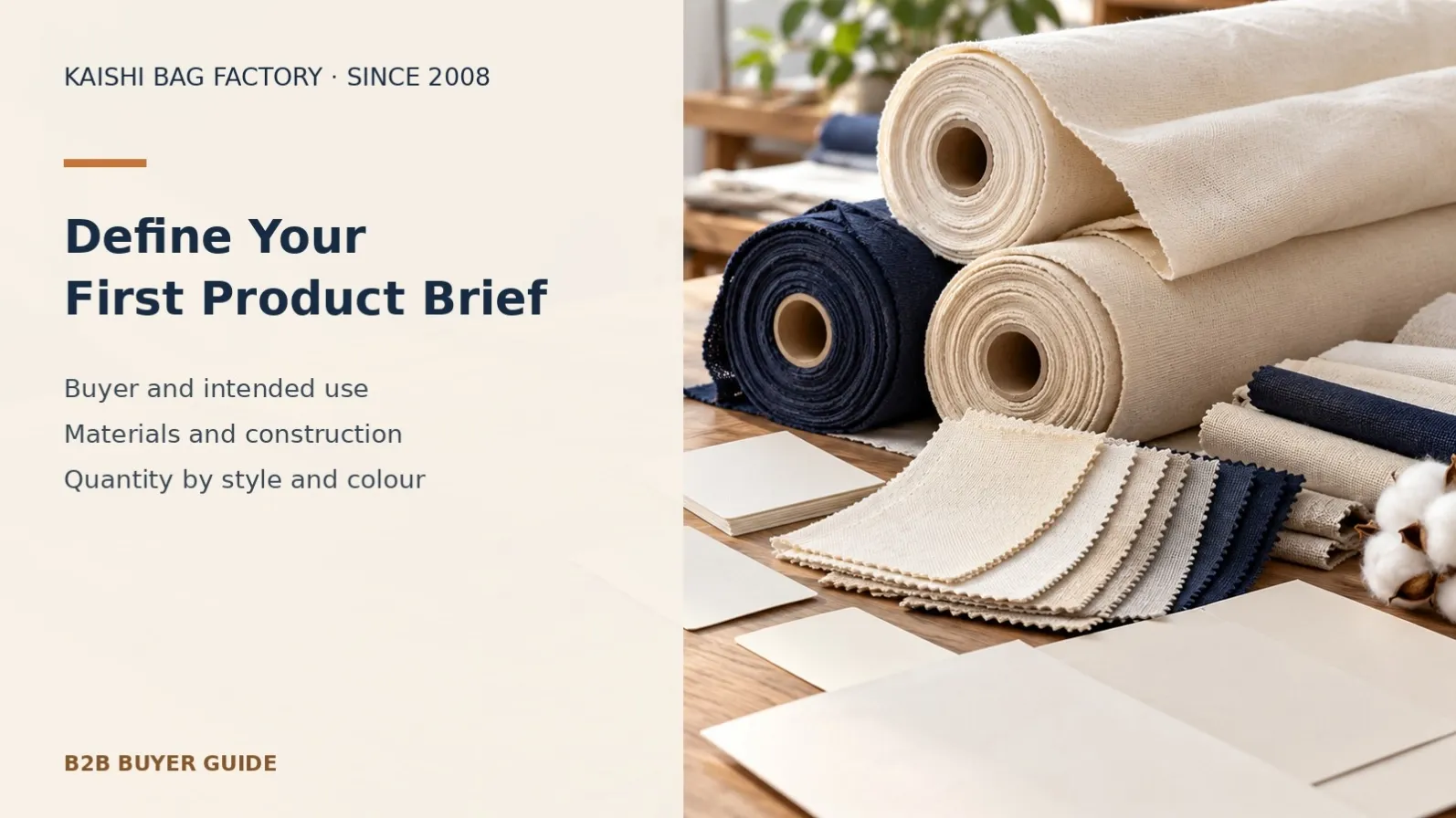
Provide front, back and interior views, key measurements, proposed materials, lining, closures, handles, hardware, branding and packaging. Describe what is essential and what the supplier may propose. Mark unknown details as provisional instead of allowing a polished drawing to imply that every component is approved.
For each material, identify a physical reference where possible. A colour name or screenshot does not fully specify a substrate, finish or achievable match. Clarify artwork size and placement. Ask whether the proposed decoration needs a trial on the selected material.
Include quantities by style and colour, destination and the receiving objective. Ask the supplier to identify assumptions and exclusions. A preliminary quote based on incomplete information should be labelled accordingly and reviewed when the specification becomes clearer.
Budget the full launch, not just the bag
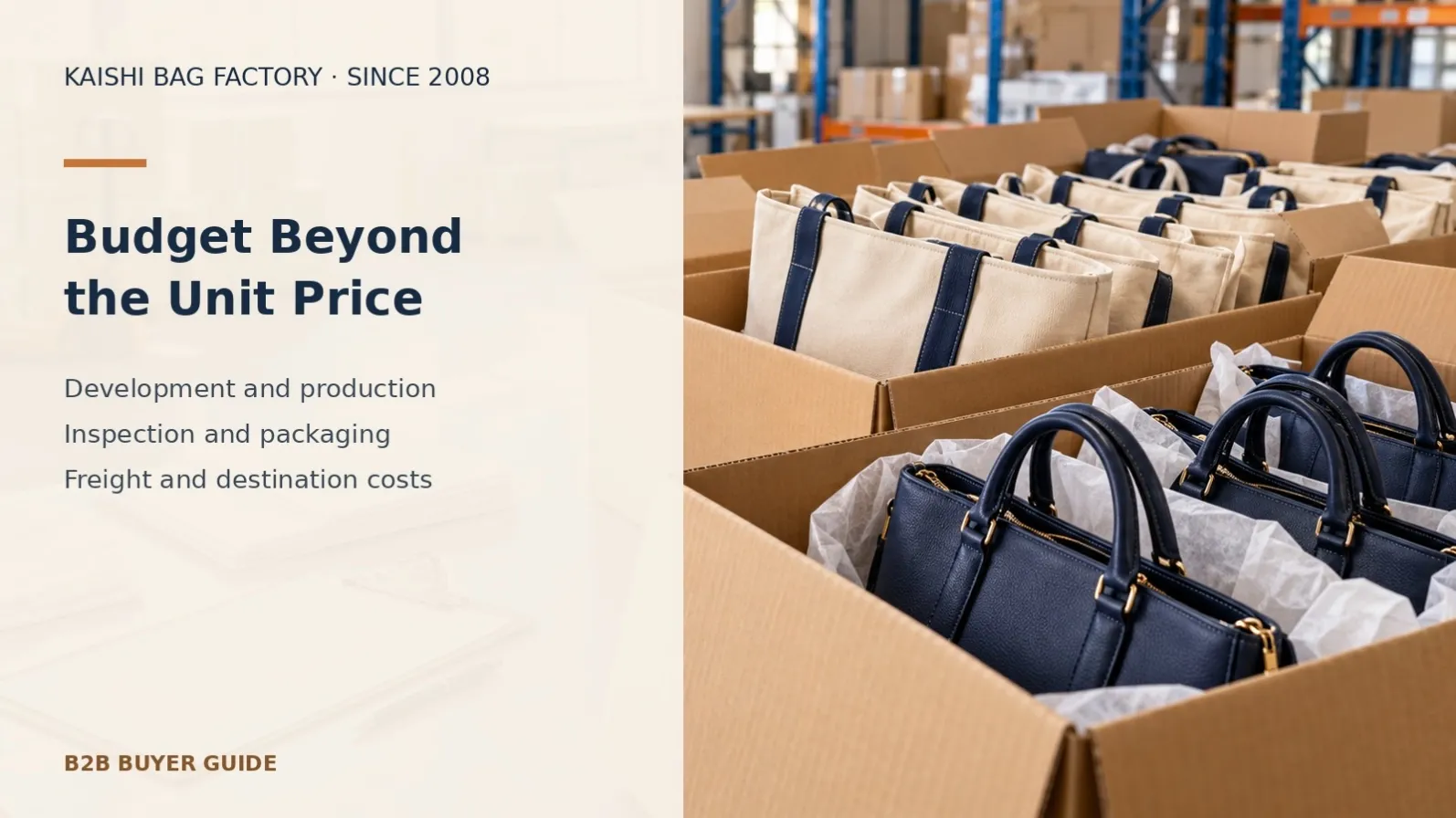
Use a worksheet with separate estimates for development, production, inspection, packing, transport and destination costs. Add selling-channel costs relevant to your business. Avoid fixed rules such as landed cost always being twice the factory price or retail always being three times landed cost.
| Budget area | Confirm before committing | Who supplies the input? |
|---|---|---|
| Development | Sample fee, revisions, tooling and delivery of samples | Factory and relevant service providers |
| Production | Approved construction, quantity breakdown and exclusions | Factory quotation |
| Quality and testing | Inspection scope and any application or compliance tests | Inspector or laboratory |
| Transport and import | Freight, destination charges and applicable import costs | Forwarder and customs adviser |
| Launch operations | Photography, listings, storage, fulfilment and returns handling | Your channel and operating plan |
Record the date and scope of each estimate. Keep cash for unresolved costs and future operating needs according to your own financial plan. A budget is a planning tool, not a promise that all charges or sales outcomes are known.
Approve a sample with measurable feedback
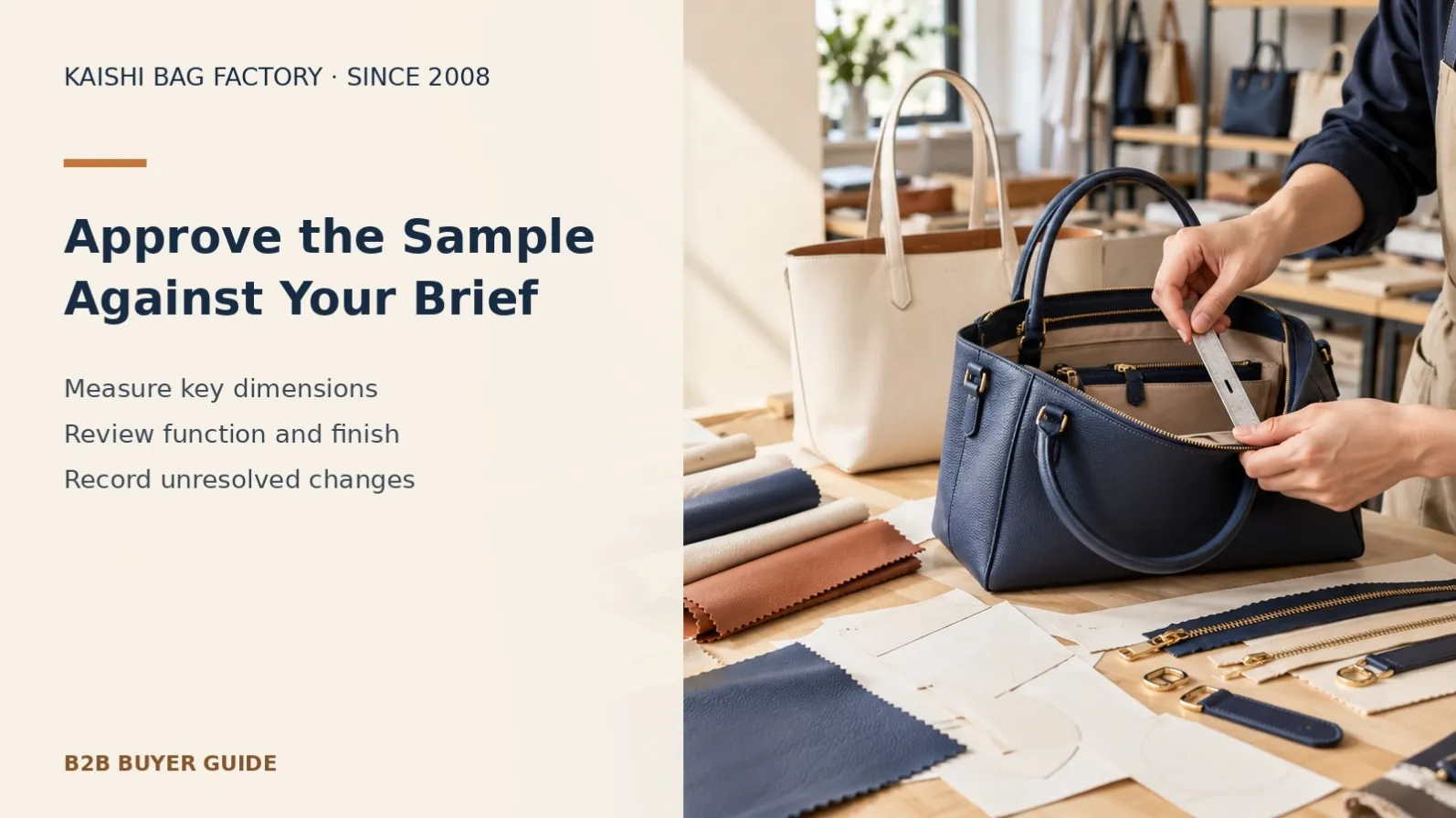
Inspect the physical sample against your brief. Check dimensions, access, carrying function, handle attachments, closure operation, finish and branding. Assess the intended contents and use conditions without inventing an unsupported load rating. Relevant testing should be agreed for the actual design and market.
Send measured feedback and annotated photographs rather than asking for the bag to feel more premium. Identify the feature, required change and acceptance reference. Record provisional materials or hardware so that a visually approved prototype is not mistaken for approval of every production component.
Keep one current specification and one agreed approval record. When a change affects construction, material or artwork, review its consequences before production. A sample approval is an important decision point; it does not replace production inspection.
Confirm the order and receiving plan
Confirm the final specification, quantities, payment terms, packaging, inspection arrangements and delivery responsibilities in the order documents. ICC describes Incoterms rules as allocating delivery tasks, costs and risks. They do not by themselves establish a guaranteed arrival date or replace the rest of the purchase agreement.
Ask for a project-specific timeline after design and material decisions are understood. Account for sample review, sourcing, production, inspection and transport as distinct steps. Confirm dates with the parties responsible rather than assuming a fixed number of days from a generic article.
Prepare product descriptions and care information from verified specifications. Arrange storage, fulfilment and customer support before receiving stock. Review actual feedback and returns by style and colour before considering a repeat order; do not assume that reordering automatically lowers the MOQ.
Understand Kaishi's first-order conditions
Kaishi Bag Factory is based in Baigou, China, and has worked in OEM/ODM since 2008. Standard MOQ is usually 300 pieces per style. A first order of 200 pieces may be evaluated individually without guarantee; 100 pieces is generally not feasible. Mixed styles are not automatically accepted toward a minimum.
Samples are paid upfront, non-refundable and not automatically credited. Payment is T/T only, usually 50% deposit and 50% before shipment. Timing depends on design, materials, sample approval and quantity. Material availability, custom components and any special requirements need project-specific confirmation.
Frequently asked questions
How much does it cost to start a handbag brand?
There is no universal figure. Build an itemised budget from your product specification, development scope, order size, import arrangements and sales operations.
Can a new brand order 100 pieces per style?
That is generally not feasible at Kaishi. Standard MOQ is usually 300 per style; a 200-piece first order may be assessed individually and is not guaranteed.
Do I need a completed tech pack to make initial contact?
A clear brief can begin the discussion. Missing details must be identified, and quotations remain provisional until their assumptions and specifications are agreed.
Can I reproduce a bag from a competitor photograph?
A photograph does not grant rights. Use references to explain a design direction and review originality, trademarks and relevant design rights before development.
How long will sampling and production take?
Request a project-specific schedule. Design complexity, material sourcing, approvals and order quantities affect timing; this guide promises no fixed duration.
Are sample fees refundable or credited?
Kaishi samples are paid upfront and non-refundable, without automatic credit against the production order.
Does a good sample guarantee a successful launch?
No. Product approval addresses agreed specifications. Demand, pricing, marketing, fulfilment and customer experience still require your own planning and evidence.
Prepare your first handbag project
Explore product examples, Kaishi's background, the payment terms guide and the import planning guide. Send your customer brief, original design direction and quantity breakdown through the contact page, email donna@Kaishibagfactory.com or WhatsApp Donna.
Sources and scope
- WIPO: trademarks—brand identification and protection context.
- WIPO: industrial design FAQs—appearance rights and territorial considerations.
- ICC: Incoterms rules—delivery responsibilities, costs and risks.
Reviewed 4 October 2026. Procurement recommendations are a planning framework, not sales or investment guarantees. Images are generated workshop and material illustrations, not documentary Kaishi photographs.