
Natural Leather Grain Variation: Set Handbag Panel and Appearance Approval Limits
Approve leather grain variation with identified material samples, panel placement rules and appearance limits. A single showroom bag is not a complete standard.
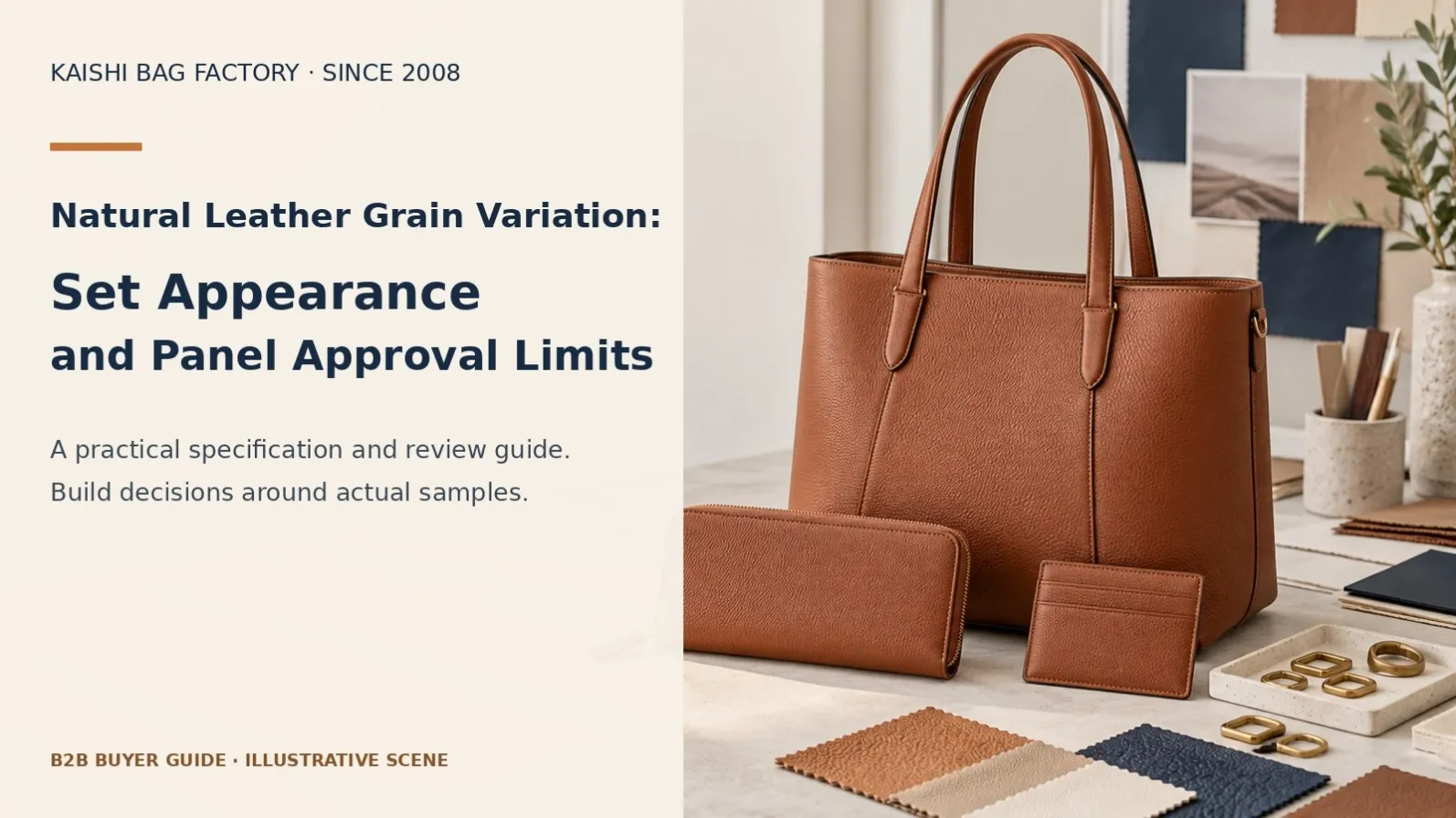
Approve leather grain variation with identified material samples, panel placement rules and appearance limits. A single showroom bag is not a complete standard.
This guide is for OEM/ODM brand teams, importers and wholesale buyers developing an original bag specification. It addresses leather grain variation handbag approval through decisions that can be documented, sampled and reviewed. A photograph or generic material name is not an approval standard. Define the intended use, compare the actual proposed construction and keep a controlled physical reference before authorizing production.
1. Clarify the actual leather description
Ask for the leather type, finish, colour and supplier reference included in the proposal. Terms such as natural, full grain or premium should not replace an identified material record. Leather Working Group’s overview describes hide selection and finishing as separate stages that influence the resulting appearance. It does not justify a claim that all leather surfaces are identical.
Keep grain appearance separate from thickness, softness and performance. A surface can look similar while other properties differ. Request the actual proposed material sample and record what remains unconfirmed. Do not infer certification or traceability from the word leather, a tannery photograph or the presence of an industry source in this article.
2. Use a range of samples for appearance approval
A small swatch can communicate colour and finish but may not show the range of appearance the buyer will encounter. Ask the factory and material supplier to propose representative references for the intended selection. Review them under agreed lighting and identify which features are acceptable, need review or are excluded.
Do not define natural variation as permission to accept every mark. Equally, do not demand identical grain everywhere while selecting a material intended to show variation. The buyer and supplier need a practical boundary tied to the actual material. Photographs can support discussion, but retain the physical reference used for approval.
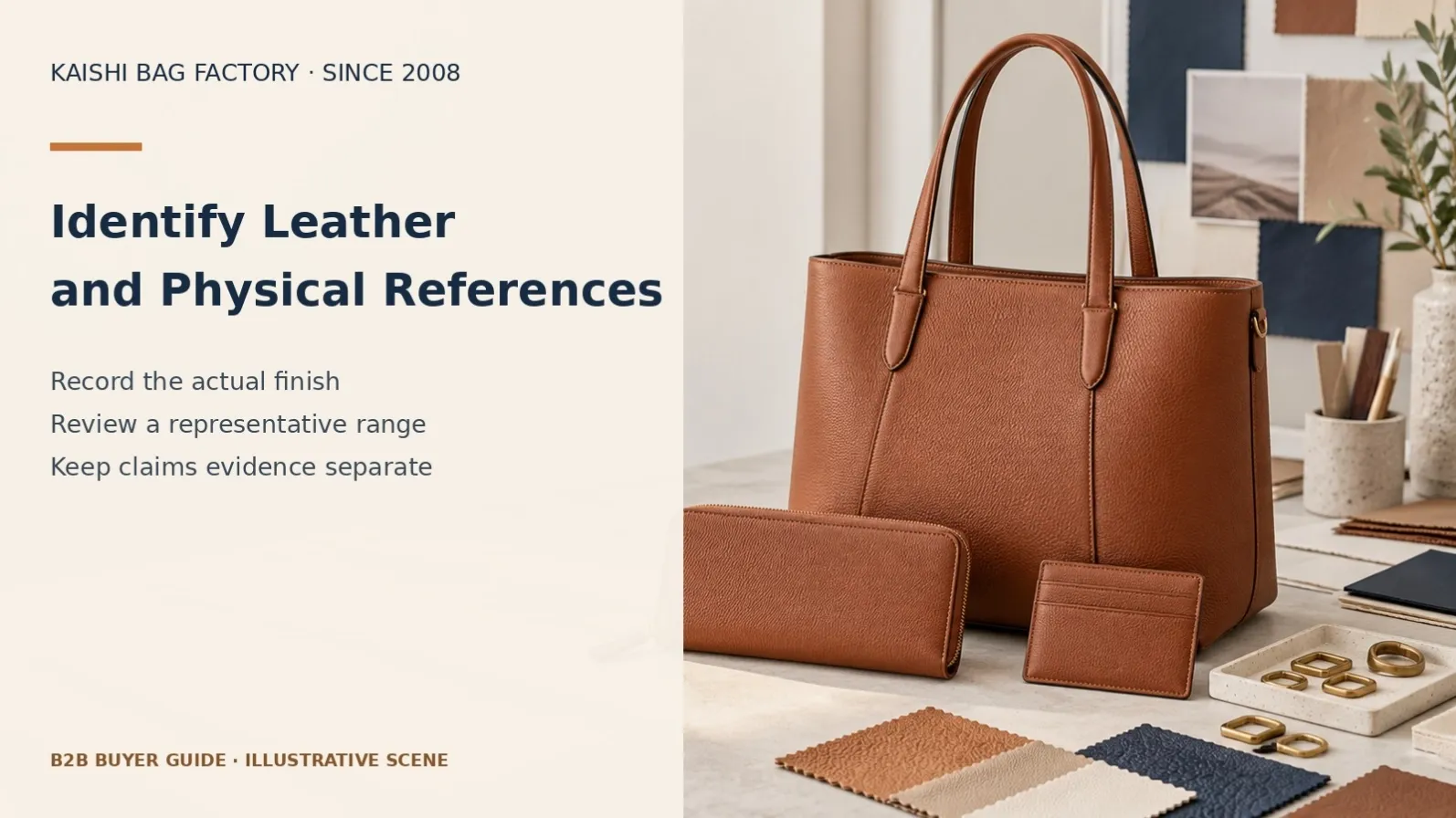
3. Mark the visible panel hierarchy
Identify front panels, side panels, handles, tabs and less prominent areas on the drawing. Explain where visual consistency matters most and where a broader appearance range may be acceptable. A front-facing panel requirement can differ from an internal or covered area, but these decisions must be explicit.
Review paired panels and matching accessories together. If the collection includes a pouch or strap, decide whether it requires close visual matching or a coordinated appearance. Ask for a cutting and placement proposal rather than assume the material permits every requested arrangement without affecting selection, cost or feasibility.
4. Separate appearance from functional concerns
Write clear descriptions for texture, gloss, colour relationship and visible marks. Then list functional requirements separately. A pleasing grain photograph does not establish flexing, seam or colour-transfer behaviour. SATRA’s handbag guidance discusses contact-related staining risks and material assessment, which should be evaluated on the actual selected combination.
If a concern may affect use, obtain appropriate technical review before classifying it as cosmetic. Do not invent a universal test result or promise that a finish never transfers colour. Identify the method, sample and conditions for any performance evidence. Keep the appearance approval and the functional decision connected but distinct.
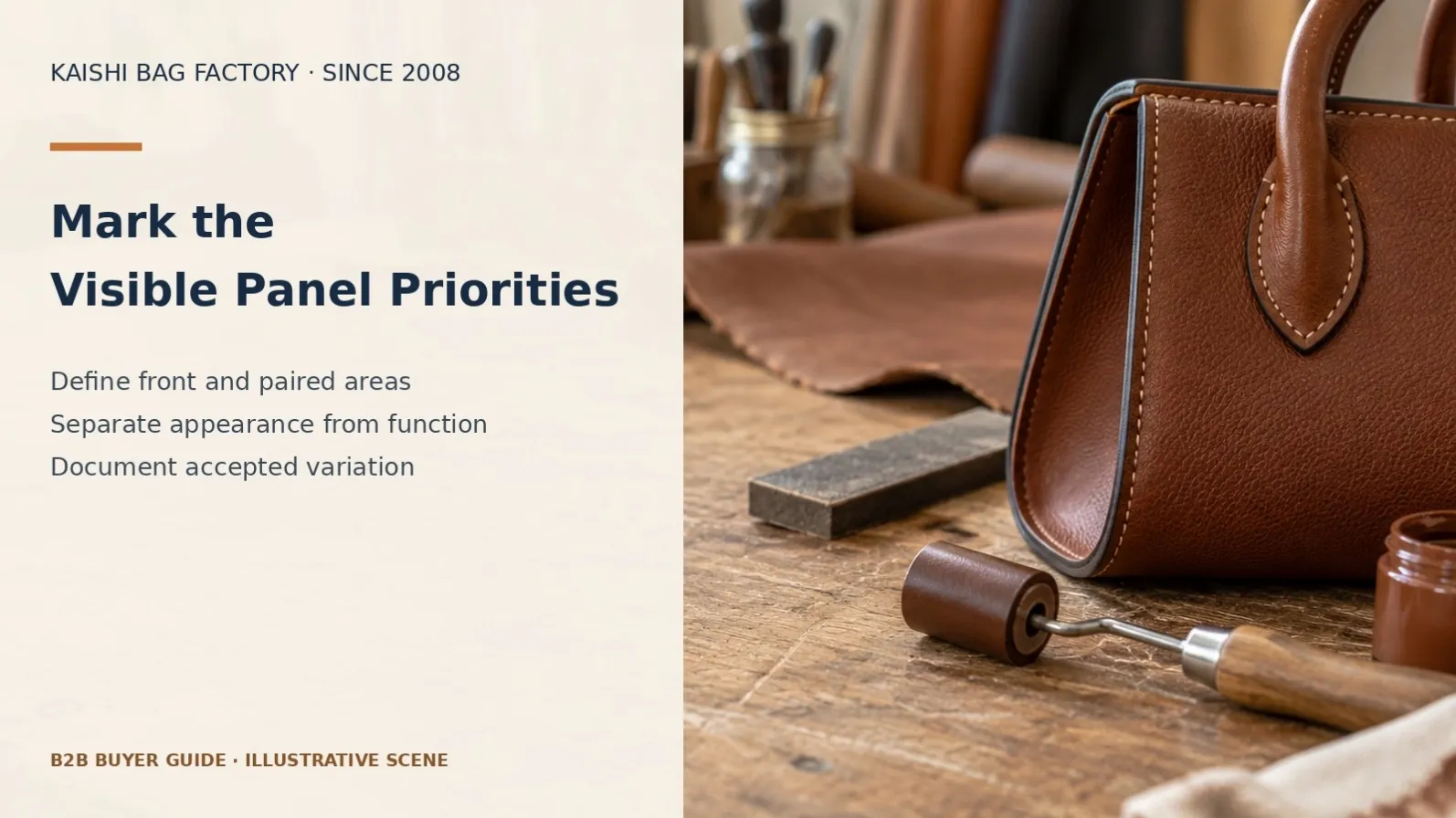
5. Create a panel appearance matrix
For each location, list its visual role, material reference, acceptable range and review method. Include whole-bag photographs and close views at a consistent scale. Avoid an approval note that says only match the sample, because it leaves the acceptable range and panel priority unclear.
The table below is a buyer worksheet rather than an official leather grading rule. Agree the references with the factory before bulk cutting. Record who can accept a borderline appearance and how that decision is documented. Inspectors should not have to infer the buyer’s preferences from a single marketing image.
| Area | Buyer decision | Evidence |
|---|---|---|
| Front panel | Preferred appearance range | Identified physical references |
| Paired panels | Matching expectation | Side-by-side assembled review |
| Handles and tabs | Location-specific limits | Close photographs and actual parts |
| Functional concern | Appropriate validation | Method, sample and conditions |
| Claims | Permitted material wording | Shipment-relevant documentation |
6. Review the completed bag and collection
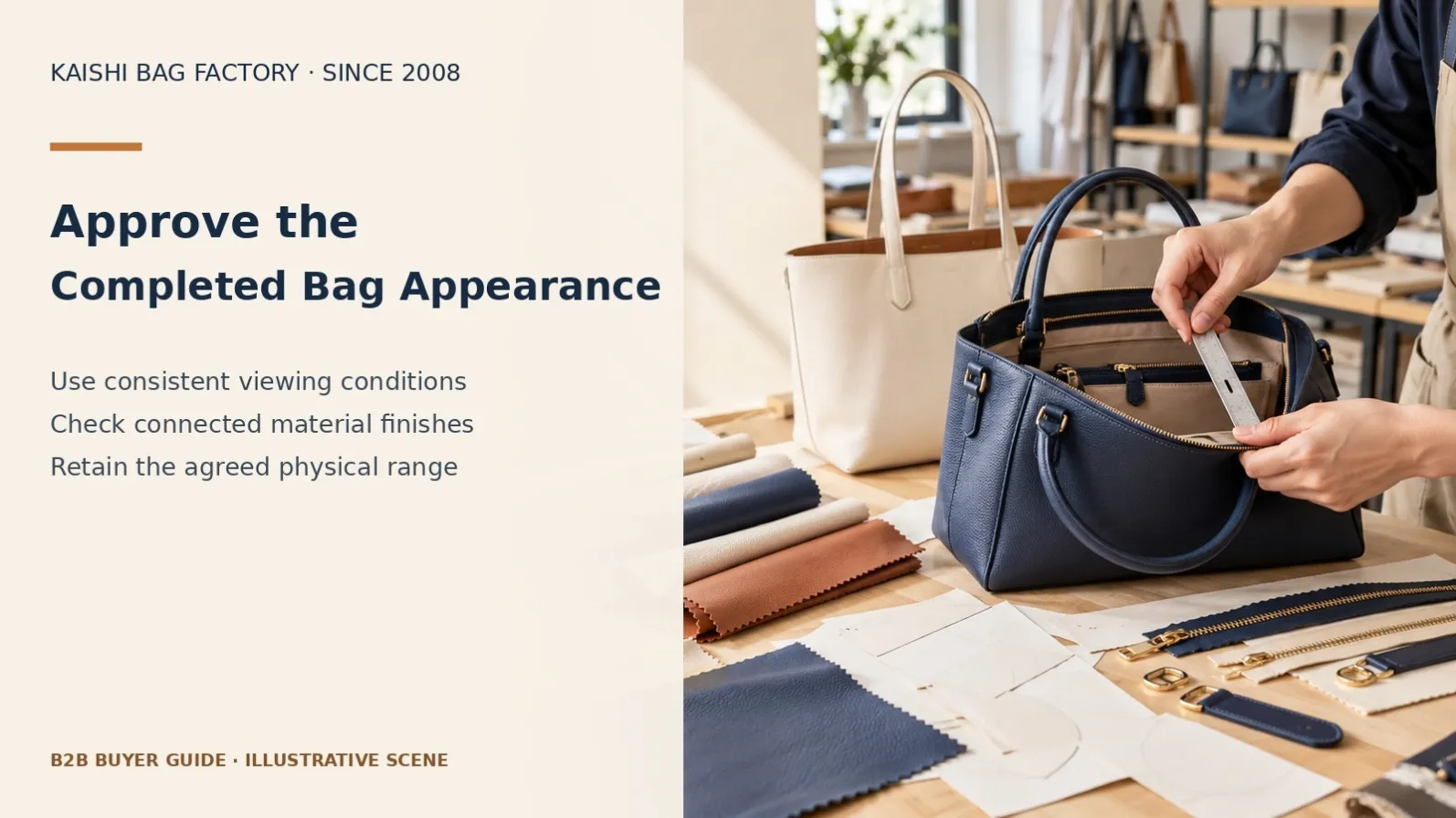
Grain approval should include the assembled bag, where panel curvature, joins and lighting change the visual effect. Compare the intended variants together without assuming every colour will look identical in texture or gloss. Review how the selected finish interacts with hardware and edge treatment.
Keep the observation conditions consistent, and separate a deliberate design difference from an unintended mismatch. If a variation is accepted, note its location and scope. Do not use one approved bag to imply unlimited acceptance across unrelated material batches. Ask whether the next order needs a renewed material review.
7. Document claims and replacement decisions
Use only supported material descriptions in customer-facing copy. Do not label leather certified, responsibly sourced or traceable unless the specific evidence and permitted claim have been reviewed. An industry association’s explanation of leather production is not proof of Kaishi’s certification or of a particular shipment.
For an alternative material, compare the appearance range, panel selection and relevant performance before approval. Record the impact on price and sample scope. This article focuses on grain and placement approval, not broad leather market forecasts. Keep the actual physical range and final drawing with the production record.
Prepare a project-specific enquiry
Send the current drawing or tech pack, measured dimensions, intended carry contents, material references, component list, colour breakdown and proposed order quantities. Identify the sales destination and any buyer-required testing or packaging documentation. Separate mandatory requirements from design preferences, and explain which decisions remain open. This lets the factory review a real development scope rather than make assumptions from a reference photograph.
Ask the quotation to identify the selected construction, sample scope, material exceptions, packaging, delivery basis and validity conditions. Confirm who approves the physical sample and which revision becomes the production baseline. If a component changes, request an impact review before accepting the replacement. Keep commercial approval separate from technical approval: an attractive unit price does not establish that the revised bag meets the agreed use or inspection requirements.
Related buyer guides
Continue with material selection guide, inspection guide.
Frequently asked questions
Does natural variation mean every mark is acceptable?
No. Agree appearance limits, panel priorities and relevant functional concerns for the selected material.
Can one swatch approve all panels?
A swatch is a starting reference. Review representative material and the completed bag, especially where panel matching matters.
Must both sides have identical grain?
Set a realistic matching expectation with the factory and material supplier. Document the agreed visual range rather than assume perfect identity.
Is grain appearance proof of leather quality?
It is one appearance characteristic, not complete evidence of construction or performance. Review the actual material and relevant requirements.
Can we claim LWG certification from this guide?
No. Association sources explain general principles. A certification claim needs applicable verified evidence and permitted wording.
What should we retain for a reorder?
Keep the identified material references, range approval, panel rules and completed sample. Reconfirm the next proposed material before release.
What are Kaishi’s order, sample and payment terms?
Kaishi Bag Factory is based in Baigou, China and has worked in OEM/ODM since 2008. Standard MOQ is usually 300 pieces per style. A 200-piece first order may be evaluated individually without a guarantee; 100 pieces is usually not feasible. Mixed styles and reorders do not automatically qualify for lower minimums. Samples are prepaid and non-refundable, without automatic bulk-order credit. Payment is T/T only, usually 50% deposit and 50% before shipment. Timing depends on design, materials, sample approval and quantity. Any NDA and project-specific conditions require agreement.
Sources and next step
Sources checked on 7 October 2026: Leather Working Group leather-making overview and SATRA handbag contact and colour-transfer guidance. Supplier examples explain general principles, not Kaishi equipment ownership, certification or guaranteed availability. The purchasing worksheets are suggested buyer practices rather than quoted standard requirements.
Contact Kaishi Bag Factory with your specification and quantities for a project review. Email donna@Kaishibagfactory.com or message Donna on WhatsApp.