
US Tariffs on Chinese Bags: A Landed-Cost Planning Guide
Plan US bag import costs with a broker-reviewed tariff classification, customs value, freight and destination-cost worksheet. Includes FAQs and buying checks.
To calculate the landed cost of bags imported from China into the United States, confirm the product classification, customs value and applicable tariff measures with your customs broker, then add freight, insurance, clearance and destination delivery costs. A factory unit price or a headline tariff percentage alone cannot establish your final cost. Different bag constructions, origins and entry circumstances can produce different results.
This guide helps brand owners, importers and wholesale buyers build a repeatable purchasing worksheet. It does not assign a tariff rate to your shipment. Technical descriptions should come from the approved product specification; classification and entry treatment need shipment-specific review.
What buyers should confirm first
- Describe the bag's function, outer surface, material composition and construction.
- Ask your broker to document the classification and any additional tariff provisions.
- Separate the customs value calculation from your transport quotation.
- Record the trade term, named place, included costs and quotation validity.
- Update the estimate when specifications, packing or tariff measures change.
Research checked: 3 October 2026. The US International Trade Commission's tariff information page lists the publication of 2026 HTS Revision 20 on 28 September 2026. Always use the schedule and effective provisions relevant to the actual entry, rather than assuming a September estimate remains valid indefinitely.
Start with a product description, not a generic bag code
Give your broker photographs, dimensions, intended use, outer-surface details, fibre or polymer composition, lining and construction notes. A fashion handbag, shopping tote and travel bag should not automatically share a classification because their shapes look similar. A marketing label such as “vegan leather” also leaves important material questions unanswered.
Many familiar bags fall within heading 4202, but do not assume that every product called a bag belongs there. Classification depends on the tariff language, relevant notes and the actual product. Ask for the complete reporting number and supporting explanation, rather than copying a short code from a supplier invoice or an unrelated shipment.
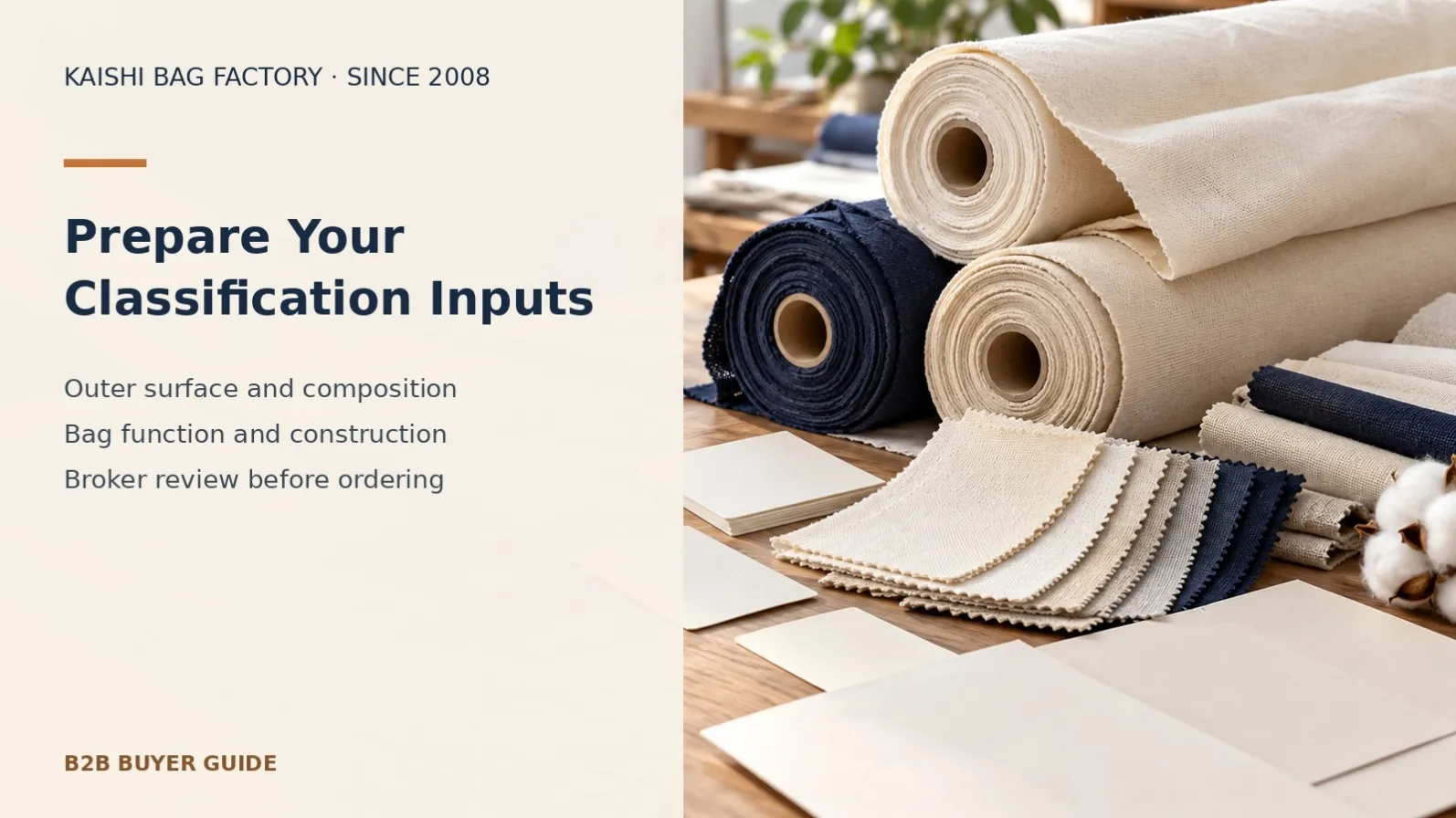
If you change the outer material after sampling, revisit the classification inputs. Keep the material description consistent across the approved specification, purchase order and commercial invoice. Our bag product categories can help you describe the intended product, but catalogue names are not customs classifications.
Check the applicable duty measures separately
Ask your broker to verify the ordinary tariff treatment and any additional measures applicable to the origin, product and entry circumstances. The current HTS, including relevant Chapter 99 provisions and notes, is the starting reference. Official implementation instructions and exclusions may also matter.
Do not assume that one published percentage covers every Chinese handbag or tote. Equally, do not add together percentages from different news articles without checking their legal interaction. A measure may have specific coverage, exclusions or an effective-date rule. A supplier's earlier estimate is not evidence that a new measure does, or does not, apply.
Record the source, review date and assumptions beside each tariff line. If an exclusion is relevant, ask how it is documented and whether it remains available for the planned entry. Resolve uncertain treatment before committing to a retail price that leaves no margin for additional import costs.
Customs value is not automatically the FOB quotation
The USITC identifies transaction value—the price actually paid or payable—as the primary basis for customs value. Your broker should determine the applicable valuation method and any required adjustments using the transaction documents. A quotation labelled FOB is not, by itself, a complete valuation analysis.
Tell the broker about buyer-supplied materials, tooling, development arrangements and other payments connected with the order. Ask which amounts require review and which supported costs can be excluded. Do not understate the invoice or use a nominal value to make the worksheet appear cheaper.
Keep freight and insurance charges identifiable in the supporting records. When a supplier gives a bundled delivered quotation, request sufficient detail to understand both the commercial cost and the proposed customs treatment. The two calculations serve different purposes and should reconcile without being confused.
Build a complete landed-cost worksheet
Use one worksheet for each product and shipment scenario. Include the quantity, currency, destination, shipping mode, carton measurements and trade term at the top. For mixed shipments, allocate shared costs using a documented method that reflects the cost driver, such as carton volume or shipment weight.
| Cost line | Input to obtain | Common mistake |
|---|---|---|
| Goods | Approved unit price, quantity and included packaging | Comparing different specifications as if they were equivalent |
| Import duties | Broker-reviewed classification, value and applicable measures | Applying one headline rate to every bag |
| Origin handling | Costs excluded from the chosen supplier quotation | Counting the same expense twice |
| International transport | Forwarder quotation and validity period | Using sample-parcel rates for bulk cargo |
| Insurance | Coverage and premium where arranged | Assuming freight includes cargo insurance |
| Entry and destination costs | Brokerage, applicable fees, terminal handling and delivery | Stopping the calculation at the arrival port |
| Contingency | Clearly labelled planning allowance | Treating possible storage or examination costs as guaranteed fees |
Estimated landed cost per unit = total relevant goods, import and logistics costs divided by the units in the scenario. Identify whether this means ordered units or expected saleable units. Keep any allowance for defects separate from the customs calculation.
For example, an additional $500 of verified shipment cost allocated across 500 units adds $1 per unit. This is arithmetic only, not a freight quotation or tariff estimate. It illustrates why missing destination costs can erase a small apparent saving in the factory price.
Write the trade term and cost responsibilities clearly
ICC explains that Incoterms rules allocate delivery tasks, costs and risks between buyer and seller. State the chosen rule, named place or port and edition in the order documents. Do not assume that the three-letter term explains payment timing or resolves every future rate change.
Confirm who arranges transport, who handles clearance and which destination expenses are included. Select the rule to suit the transport arrangement rather than treating FOB as the automatic answer for every shipment. Ask the forwarder and broker to reconcile their quotations with the supplier's stated scope.
For a delivered quotation, identify the importer-of-record arrangement and duty assumptions in writing. A low delivered price with unclear responsibilities is difficult to compare with a transparent alternative. See our bag importing and shipping guide for the wider purchasing workflow.
Review changes before shipment
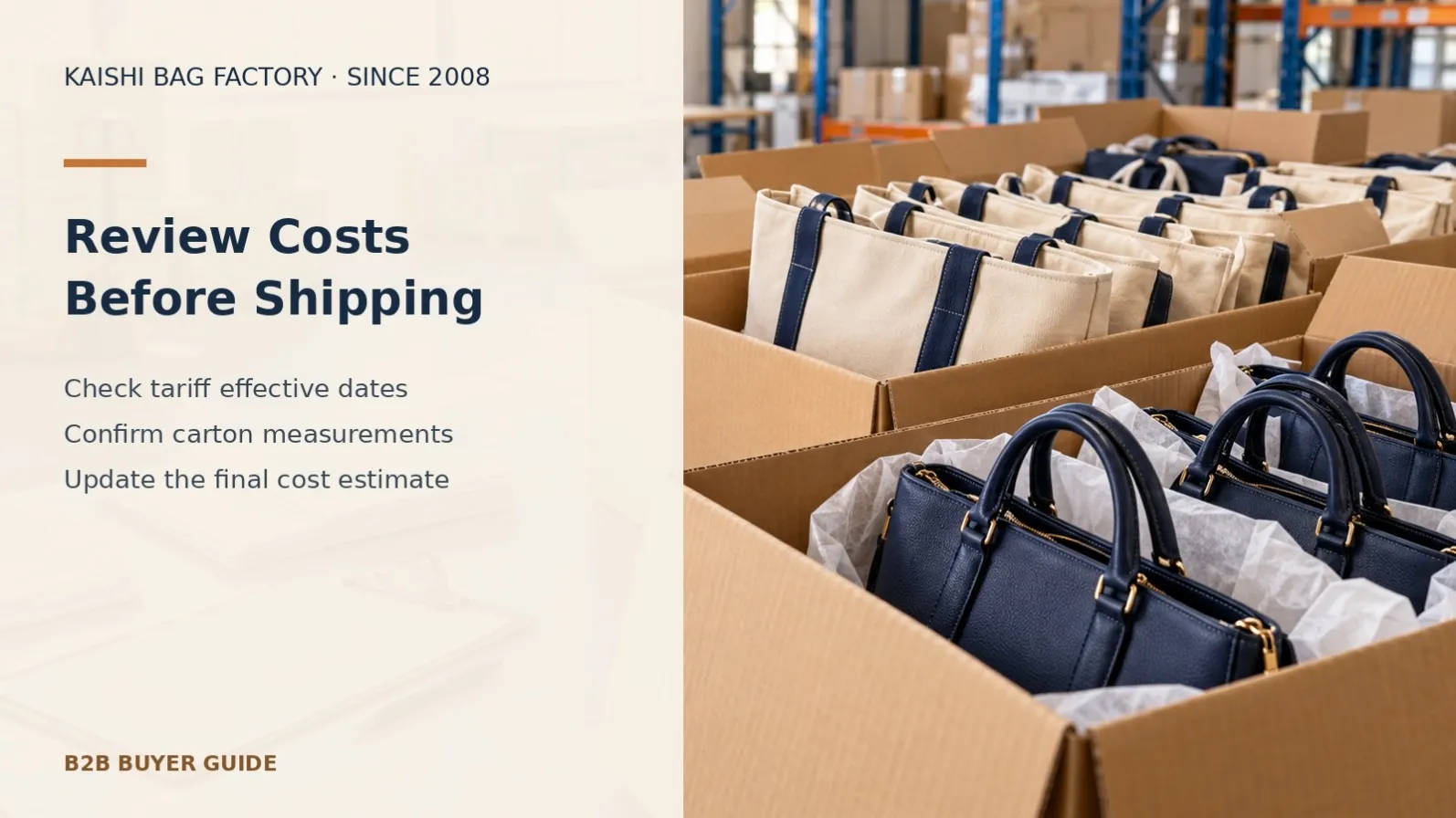
Recalculate after changes to materials, quantity, carton size, route or delivery requirements. Ask the broker which tariff effective-date and entry rules govern the shipment; do not use the quotation date or deposit date as a universal answer.
Discuss who bears additional commercial costs if assumptions change. The allocation needs to be understood in the contract; it should not be inferred from the timing of the factory balance payment. Keep tariff planning separate from forced-labor admissibility and other product-compliance checks: paying a duty does not establish that goods meet all entry requirements.
Kaishi ordering information
Kaishi Bag Factory is based in Baigou, China and has worked in OEM/ODM since 2008. The standard MOQ is usually 300 pieces per style. A 200-piece first order may be assessed individually; it is not guaranteed. Orders of 100 pieces are generally not feasible, and mixed styles or lower repeat-order quantities require separate agreement.
Payment is by T/T only, normally 50% deposit and 50% before shipment. Samples are paid upfront and fees are non-refundable; do not assume free samples or automatic sample-fee credit. Timing depends on design, materials, sample approval and quantity. Review our custom bag payment guide when preparing your purchase plan.
Frequently asked questions
What is the tariff rate on bags from China?
There is no single reliable rate for every bag. Confirm the full classification, origin and applicable additional measures with your broker using current official references.
Can the factory assign my US tariff code?
The factory can provide product information for review. Do not treat a supplier's proposed code as a binding US customs decision.
Is duty always calculated on the FOB price?
No. The applicable customs valuation method and adjustments must be reviewed. A trade-term label alone does not settle customs value.
Does a cheaper material always reduce landed cost?
No. Material changes can affect construction, classification, packing and performance. Compare the complete approved product and import scenario.
How should I compare delivered and port-based quotations?
Request their included and excluded cost lines, importer responsibilities, named location and validity. Normalize the scope before comparing totals.
When should I update the cost estimate?
Before the order commitment and again when specifications, logistics or relevant tariff measures change, including a final review before shipment.
What should I send for a bag quotation?
Send drawings or photographs, dimensions, materials, branding, quantities by style and colour, packaging and destination. Identify any broker-required technical information early.
Sources and next step
Planning a custom bag order? Send your specification and destination to Kaishi Bag Factory for a project quotation. Ask your customs broker to verify classification and import costs separately. Email donna@Kaishibagfactory.com or contact Donna on WhatsApp.