
Alternative Bag Materials Before Ordering: Compare Proposals Without Losing the Brief
Compare alternative bag materials against the intended look, construction, performance and documented claims before ordering. Similar appearance does not establish equivalence.
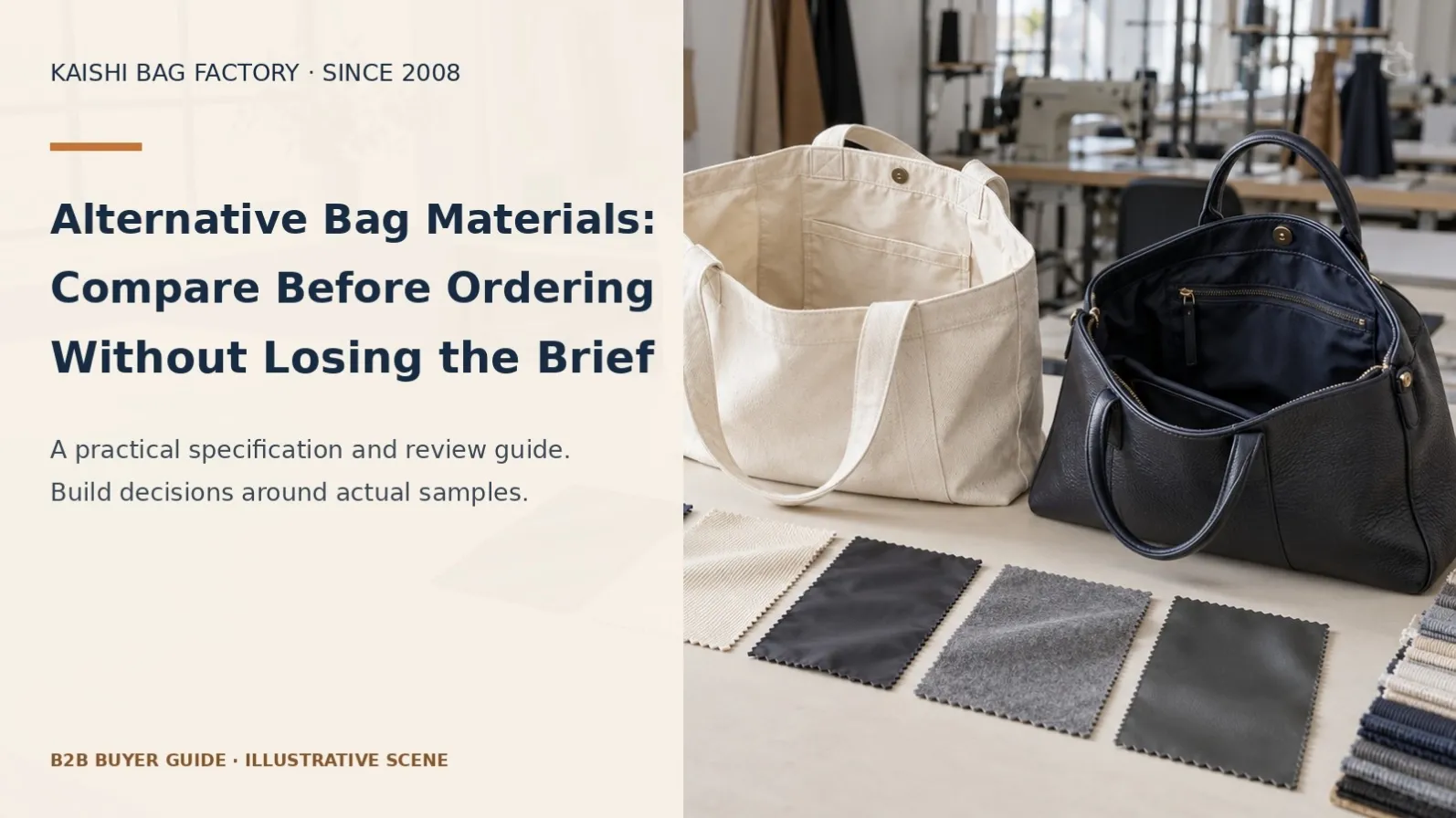
Compare alternative bag materials against the intended look, construction, performance and documented claims before ordering. Similar appearance does not establish equivalence.
This guide is for OEM/ODM brand teams, importers and wholesale buyers developing an original bag specification. It addresses alternative bag material comparison before ordering through decisions that can be documented, sampled and reviewed. A photograph or generic material name is not an approval standard. Define the intended use, compare the actual proposed construction and keep a controlled physical reference before authorizing production.
1. Define why an alternative is being considered
State whether the proposal addresses cost, feel, appearance, availability or a documented buyer requirement. Keep the target separate from the candidate material. A lower price may be useful, but it does not establish that the alternative meets the original development brief. Identify which requirements remain mandatory.
This article focuses on comparing proposals before an order or sample baseline is approved. It differs from controlling production changes after approval. Do not call a proposed alternative a replacement already accepted by the buyer. Keep the decision open until its relevant construction and sample evidence have been reviewed.
2. Identify both material references clearly
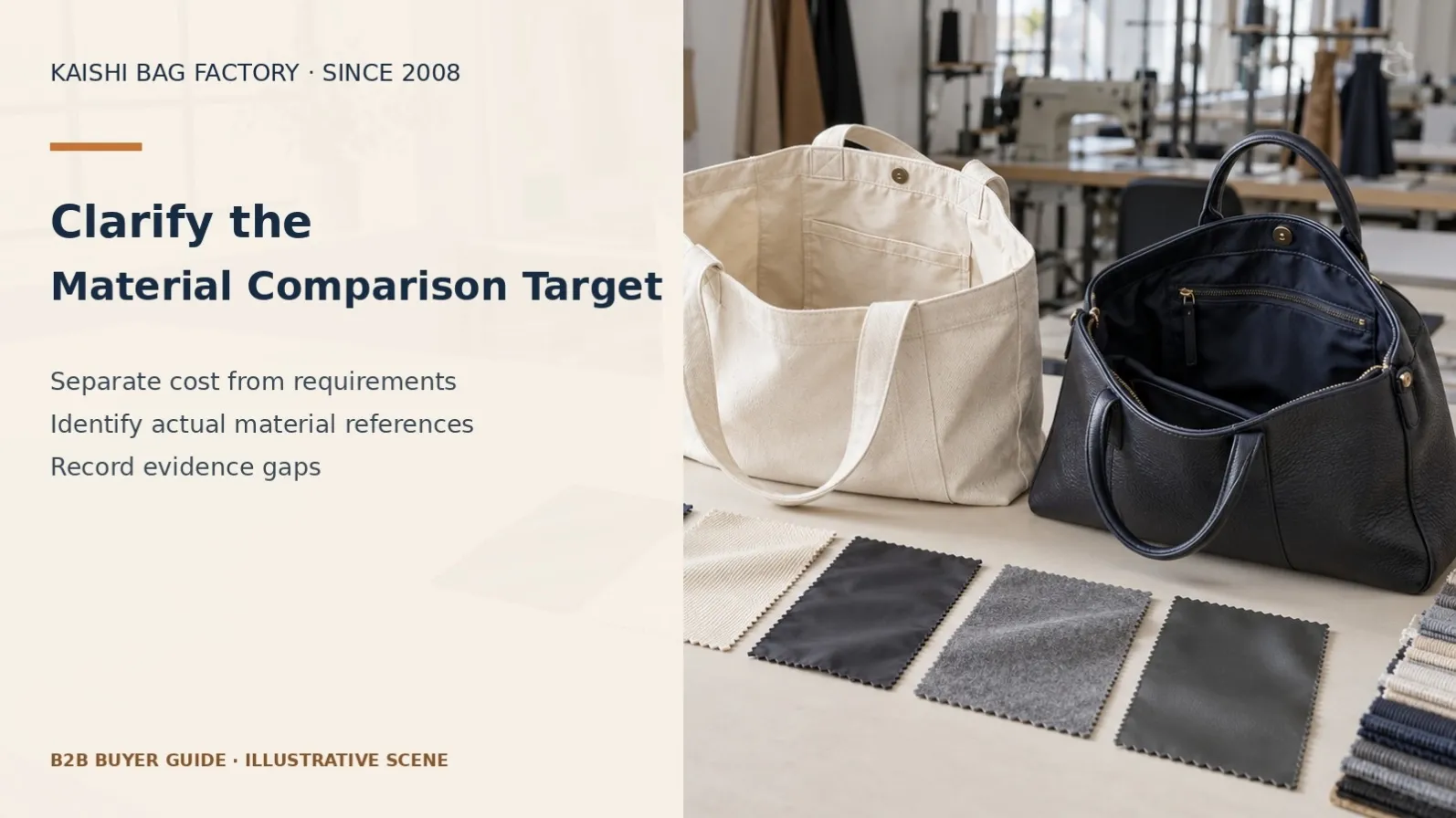
Ask for the original and proposed material descriptions, supplier references and actual swatches. Record the fibre or substrate information, finish and relevant supporting documents available for each. Avoid a comparison built only around marketing labels such as eco, premium or vegan. These labels do not define a complete construction specification.
Keep the appearance decision separate from claims about certification or composition. Where documentation is incomplete, identify the gap rather than infer a property from a supplier photograph. A material supplier’s general catalogue is useful background but does not prove the exact specification or availability of the proposed project material.
3. Compare feel and appearance on equal terms
Use the same lighting, viewing scale and handling conditions when comparing references. Review drape, surface texture, gloss and how the material responds around the intended bag geometry. A flat swatch that resembles another can form a different silhouette once sewn and supported.
Leather Working Group’s manufacturing overview distinguishes finishing operations that influence appearance. The useful lesson is to identify the actual finish, not assign one universal behaviour to every leather or coated material. Record the buyer’s observations as observations. Avoid turning a preferred hand feel into an unsupported durability or environmental conclusion.
4. Review construction compatibility
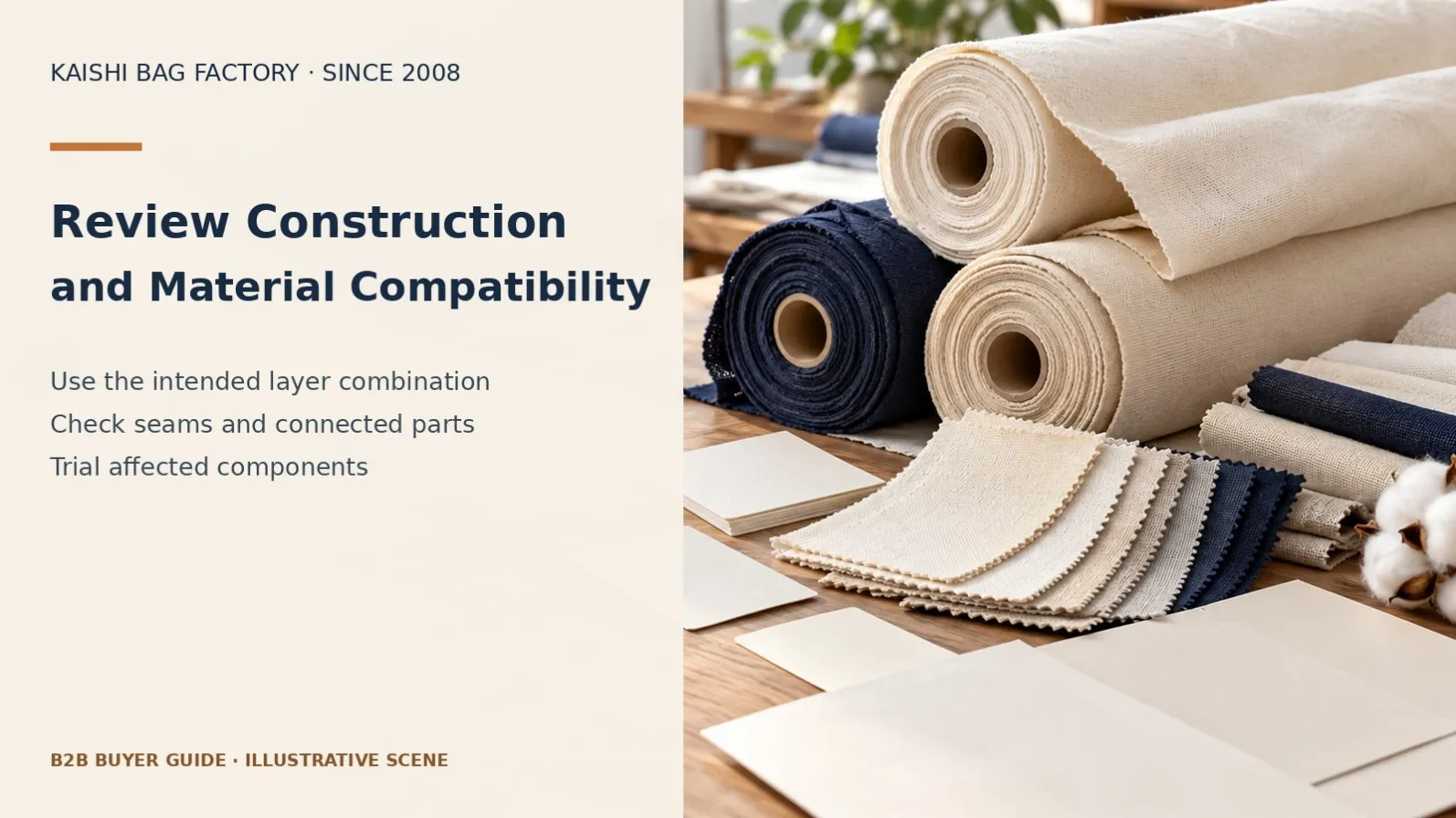
Ask how the alternative interacts with seams, reinforcement, lining, adhesive interfaces, decoration and edge treatment. Identify which trial components must use the proposed material. An isolated strip does not reproduce a folded handle or a multilayer zipper facing. The factory should review feasibility before the buyer assumes a like-for-like substitution.
AMANN describes thread and seam choices as related to materials and application. Apply that principle to the actual bag locations. Do not prescribe one needle, thread size or adhesive for all alternatives. Ask for appropriate technical review and a sample scope that addresses the parts most affected by the material choice.
5. Use a decision matrix rather than a price-only comparison
List mandatory requirements, preferences, evidence gaps and commercial differences. Separate observed results from supplier claims and items still awaiting validation. Assign a clear decision to each unresolved point: obtain a document, review a sample, request suitable testing or reject the proposal.
The table below is a buyer worksheet. It should not produce an automatic score that overrides a critical requirement. A candidate that is cheaper but lacks necessary evidence remains unapproved. Record the quotation assumptions, sample scope and quantity conditions so the commercial comparison uses the same development basis.
| Comparison | Evidence | Buyer action |
|---|---|---|
| Identity | Swatches and exact references | Clarify missing information |
| Appearance | Same-condition comparison | Record preferences and limits |
| Construction | Relevant component trials | Review connected parts |
| Performance and claims | Applicable documents or testing | Validate before using claims |
| Commercial scope | Matched quotation assumptions | Approve the final proposal |
6. Approve a production-intent sample
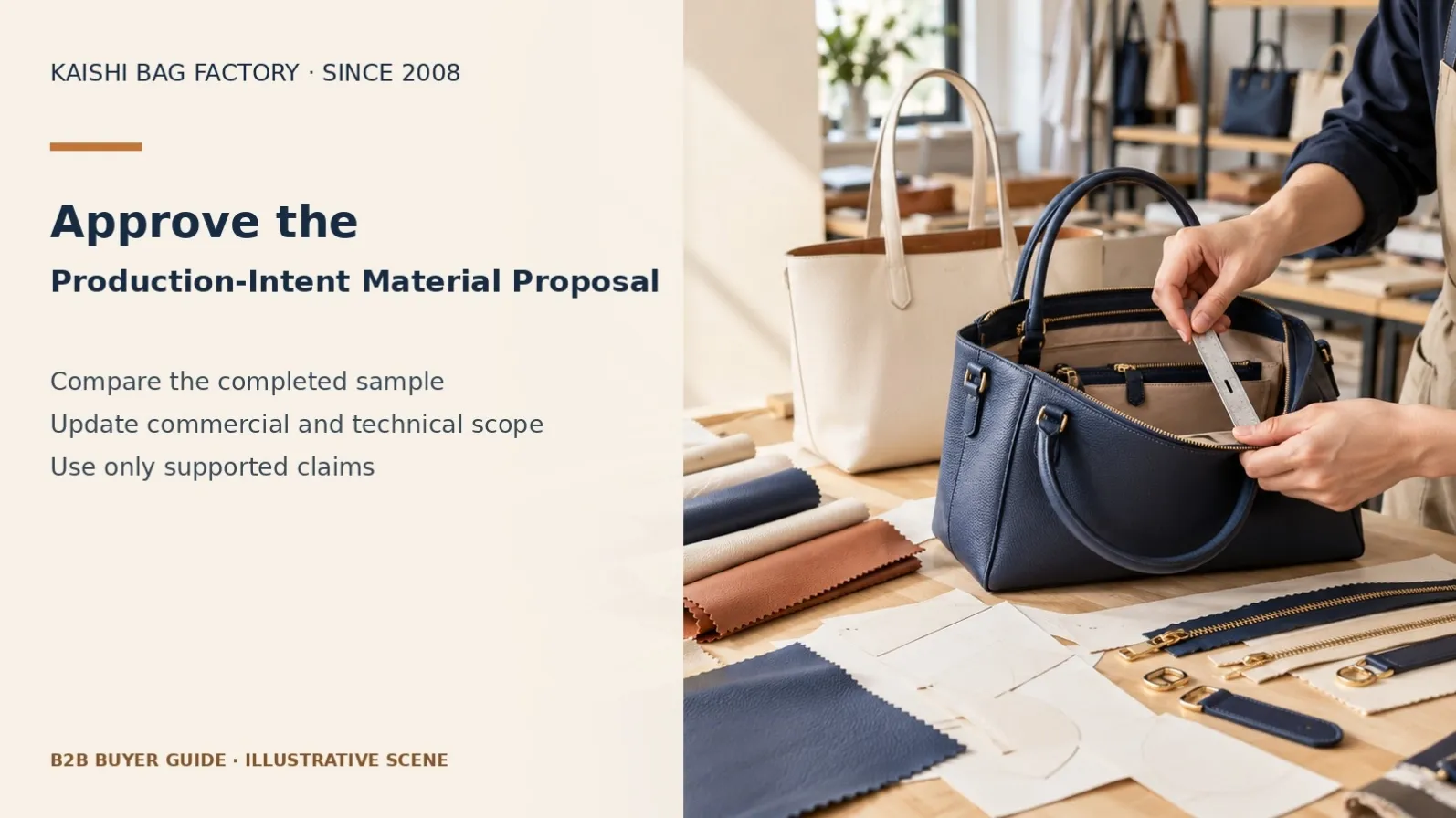
Review the finished sample with the intended components and representative use conditions. Check the original design goals and connected features, not only the reason the alternative was proposed. A softer material can affect opening behaviour, shape or pocket access, even if it meets the preferred touch.
If the sample uses temporary components, identify the limitations and the remaining approval steps. Do not describe a development prototype as fully validated for every performance requirement. Retain the accepted material reference and sample revision. The final decision should say which proposal is approved and which specific requirements or exceptions it covers.
7. Carry the accepted proposal into the quotation and order
Update the material list, drawing and commercial scope to match the accepted proposal. Confirm whether sample cost, timing, packing or required evidence has changed. Avoid leaving an old material name in one document and a new supplier reference in another, since that creates ambiguity during inspection.
For customer-facing copy, use only supported descriptions. Do not add certification, recycled content, bio-based percentages or broad environmental benefits simply because an alternative was chosen. This guide does not promise that Kaishi can source every requested material. Availability and suitability require review for the specific project.
Prepare a project-specific enquiry
Send the current drawing or tech pack, measured dimensions, intended carry contents, material references, component list, colour breakdown and proposed order quantities. Identify the sales destination and any buyer-required testing or packaging documentation. Separate mandatory requirements from design preferences, and explain which decisions remain open. This lets the factory review a real development scope rather than make assumptions from a reference photograph.
Ask the quotation to identify the selected construction, sample scope, material exceptions, packaging, delivery basis and validity conditions. Confirm who approves the physical sample and which revision becomes the production baseline. If a component changes, request an impact review before accepting the replacement. Keep commercial approval separate from technical approval: an attractive unit price does not establish that the revised bag meets the agreed use or inspection requirements.
Related buyer guides
Continue with material comparison guide, quotation input checklist.
Frequently asked questions
Can a similar swatch replace the original material?
Not automatically. Review identity, construction, appearance and relevant performance on the intended bag before approval.
Should the lowest price decide the material?
Compare prices on the same scope, then check mandatory requirements and evidence gaps. Cost alone does not establish suitability.
Is a softer material always better?
Softness is a design preference. Review shape, access and construction on the completed sample rather than treat it as a universal improvement.
Does an eco label prove environmental benefits?
No. Review the actual evidence and permitted wording for the proposed material. Avoid unsupported broad claims.
Is this a post-approval change process?
No. It addresses choosing among proposals before the baseline is approved. Later changes need their own controlled impact review.
Can Kaishi provide every alternative mentioned?
No blanket availability claim is made. Ask Donna to review the actual material requirement and project scope.
What are Kaishi’s order, sample and payment terms?
Kaishi Bag Factory is based in Baigou, China and has worked in OEM/ODM since 2008. Standard MOQ is usually 300 pieces per style. A 200-piece first order may be evaluated individually without a guarantee; 100 pieces is usually not feasible. Mixed styles and reorders do not automatically qualify for lower minimums. Samples are prepaid and non-refundable, without automatic bulk-order credit. Payment is T/T only, usually 50% deposit and 50% before shipment. Timing depends on design, materials, sample approval and quantity. Any NDA and project-specific conditions require agreement.
Sources and next step
Sources checked on 7 October 2026: Leather Working Group leather-making overview and AMANN bag seam guidance. Supplier examples explain general principles, not Kaishi equipment ownership, certification or guaranteed availability. The purchasing worksheets are suggested buyer practices rather than quoted standard requirements.
Contact Kaishi Bag Factory with your specification and quantities for a project review. Email donna@Kaishibagfactory.com or message Donna on WhatsApp.