
Custom Bag Handles and Straps: Comfort, Attachment and Sample Checks
Specify bag handles and straps as a complete carry system: dimensions, contact feel, adjustment, attachment and performance checks. Approve the loaded sample, not the strap material alone.
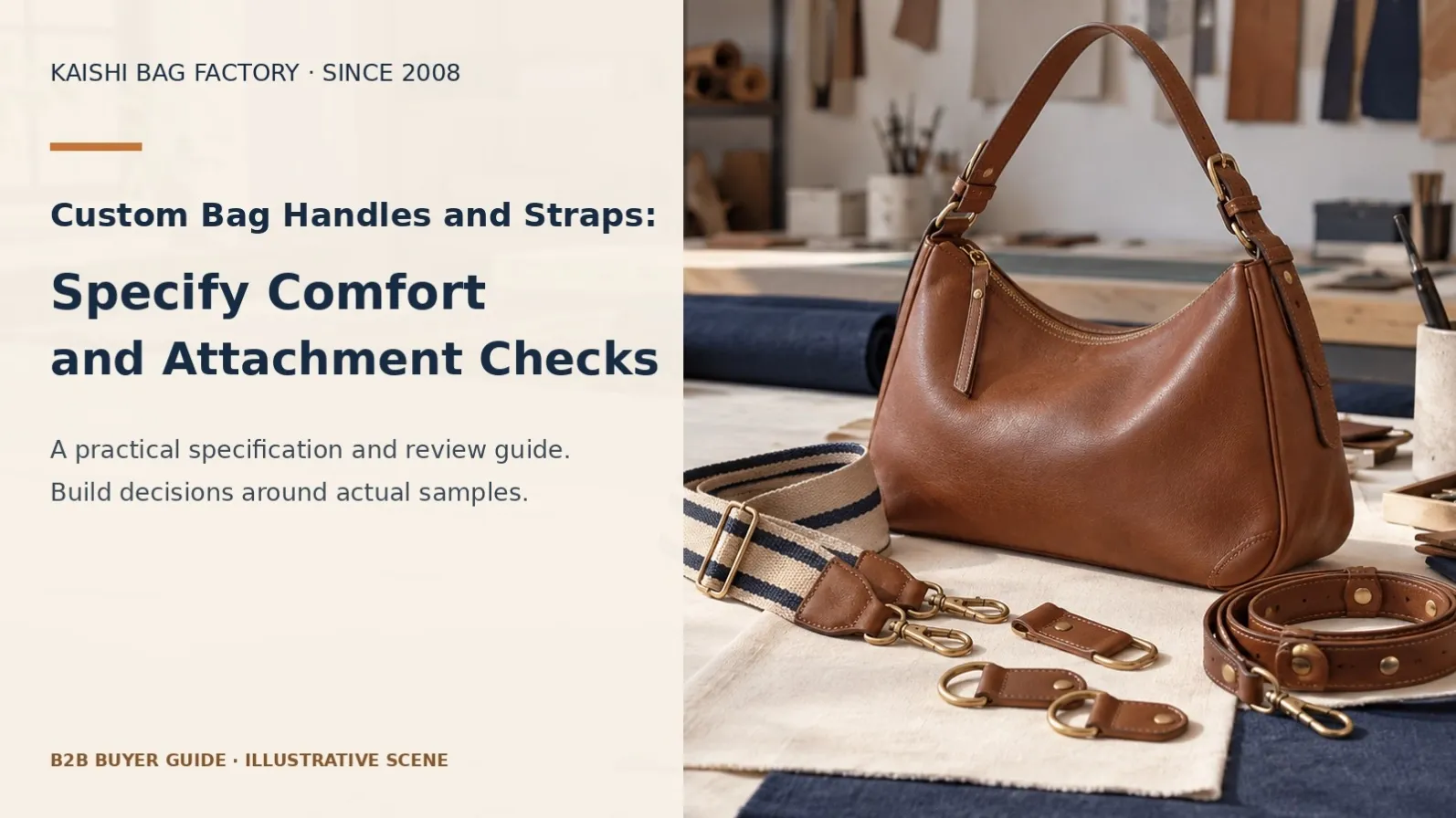
Specify bag handles and straps as a complete carry system: dimensions, contact feel, adjustment, attachment and performance checks. Approve the loaded sample, not the strap material alone.
This guide is for OEM/ODM brand teams, importers and wholesale buyers developing an original bag specification. It addresses custom bag handles and straps through decisions that can be documented, sampled and reviewed. A photograph or generic material name is not an approval standard. Define the intended use, compare the actual proposed construction and keep a controlled physical reference before authorizing production.
1. Define the carrying task and user context
Describe whether the bag is held in the hand, worn on the shoulder or across the body. Explain typical contents and how the bag is opened while carried. A strap that looks balanced in an empty studio photograph may behave differently when the bag is loaded or worn over clothing.
Identify which carry modes are mandatory and which are optional. Note whether a removable strap must fit inside the bag, whether a short handle interferes with the opening and whether adjustment should be usable with one hand. These are design inputs to sample, not proof that one strap style is universally comfortable. Keep the intended customer context in the specification.
2. Measure length, drop and width unambiguously
Define the measurement points for handle drop and strap length. State whether adjustment measurements include clips, buckles or attachment loops. Show the usable shortest and longest settings on a drawing rather than describing the strap as long. Width should be measured at the relevant contact and attachment locations when those differ.
Review the dimensions on a completed sample and in the intended carry mode. A paper pattern does not reveal how a soft strap bends around a shoulder or how a rolled handle sits in a hand. Keep measurement conventions consistent between the quotation, sample and inspection sheet, so a factory and buyer are not measuring different spans while using the same number.
3. Review contact feel and adjustment as design choices
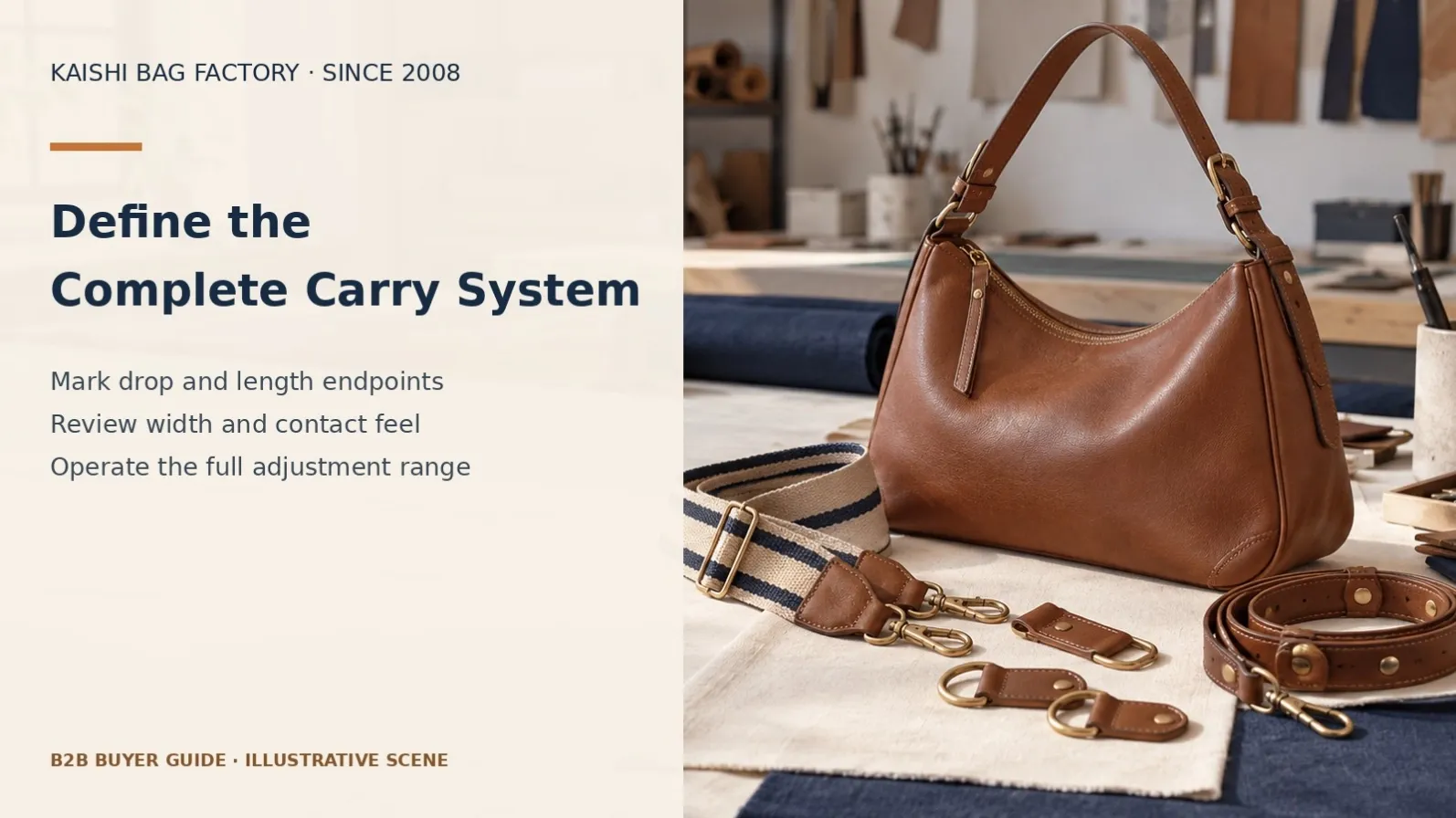
Compare a flat leather strap, a woven strap and a padded or rolled component according to the brief. Inspect the contact face, edge finish, stiffness, twist and how the strap sits under the intended load. A wider strap may be worth evaluating, but width alone does not establish comfort for every user.
Operate the adjuster through its intended range and check whether material bunches, slips, twists or obstructs the hardware. Review exposed ends and any keeper. Include relevant clothing conditions in the wear review without claiming medical or ergonomic performance. Record observed preferences separately from measured dimensions and formal performance results, so subjective approval is not mistaken for a laboratory rating.
4. Follow the load path into the bag
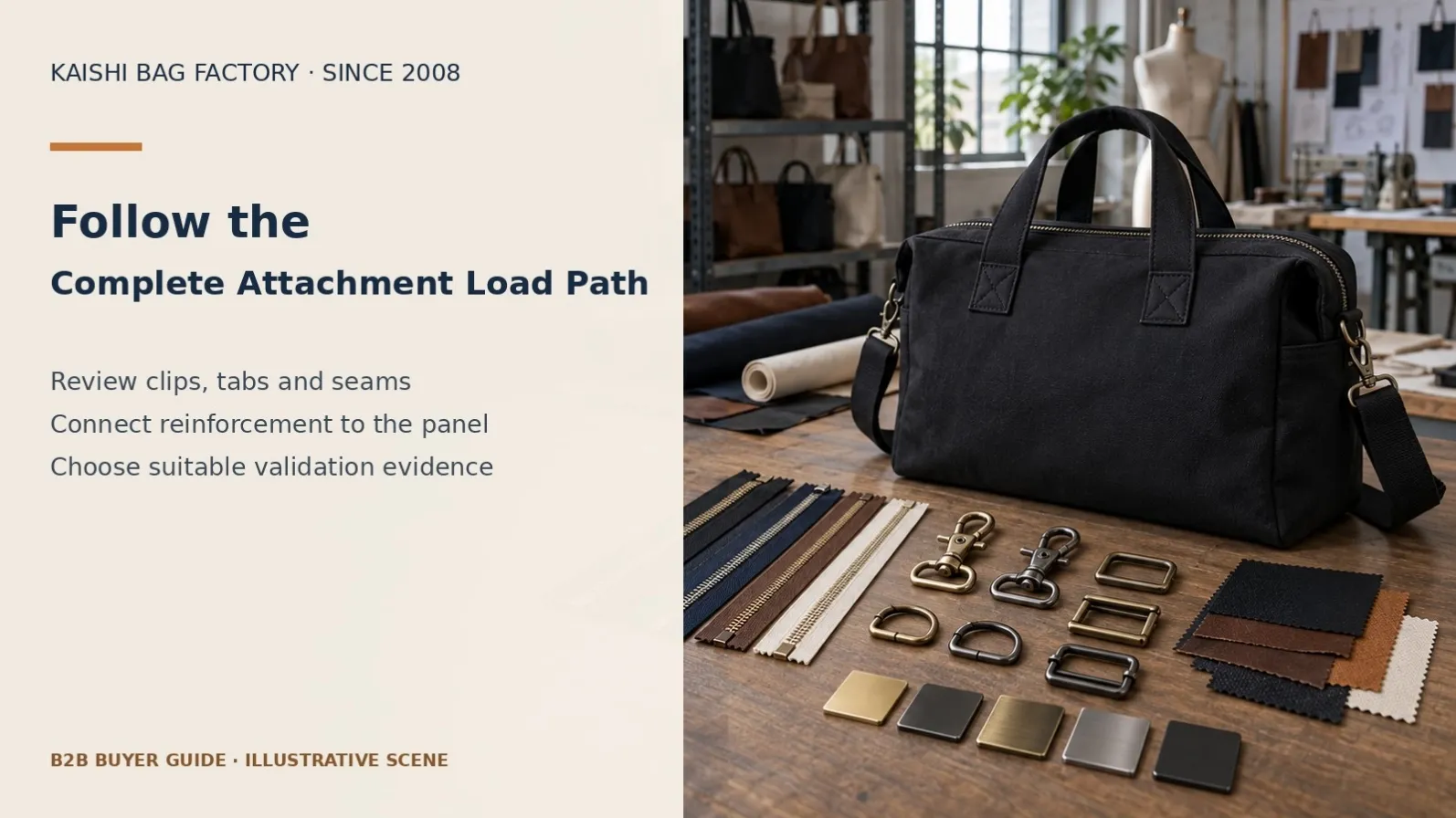
The carrying system includes the strap, stitching, clips, rings, tabs, reinforcement and bag body. Ask how the attachment transfers load into the panel. A strong webbing strip cannot compensate automatically for an inadequately reviewed tab or seam. Inspect the reverse side and internal construction where the sample review permits.
AMANN’s bag guidance explains that thread and seam choices depend on position, material and mechanical loading. Use that principle to ask about the complete attachment, not to specify one universal thread size. Keep decorative stitching distinct from the attachment’s functional construction. If hardware or reinforcement changes, review the connected components rather than approving only the replacement part in isolation.
5. Create a carry-system approval sheet
Link each measurement, component and review condition to the correct sample. Include the material reference, adjustment range, hardware reference, attachment drawing and intended contents. Identify whether the sample used temporary components and which matters still need confirmation. A visually acceptable development prototype should not silently become approval for an untested final attachment.
The table below is a buyer worksheet, not a universal performance standard. Decide with the factory and laboratory which tests apply. SATRA publishes different handle methods for static loading, snatch loading and repeated lifting; these are different questions. Do not invent one load or cycle count for all handbags, or copy luggage figures into a fashion bag specification without a suitability review.
| Element | Specify | Check on sample |
|---|---|---|
| Handle | Drop, width, contact face and edge | Grip, opening access and balance |
| Shoulder strap | Measured range and adjustment | Fit, twist and keeper behaviour |
| Attachment | Tabs, reinforcement and seam reference | Complete load path |
| Hardware | Clip/ring reference and fit | Operation and contact |
| Performance | Suitable method and agreed criteria | Documented representative sample |
6. Check the finished sample and the packed arrangement
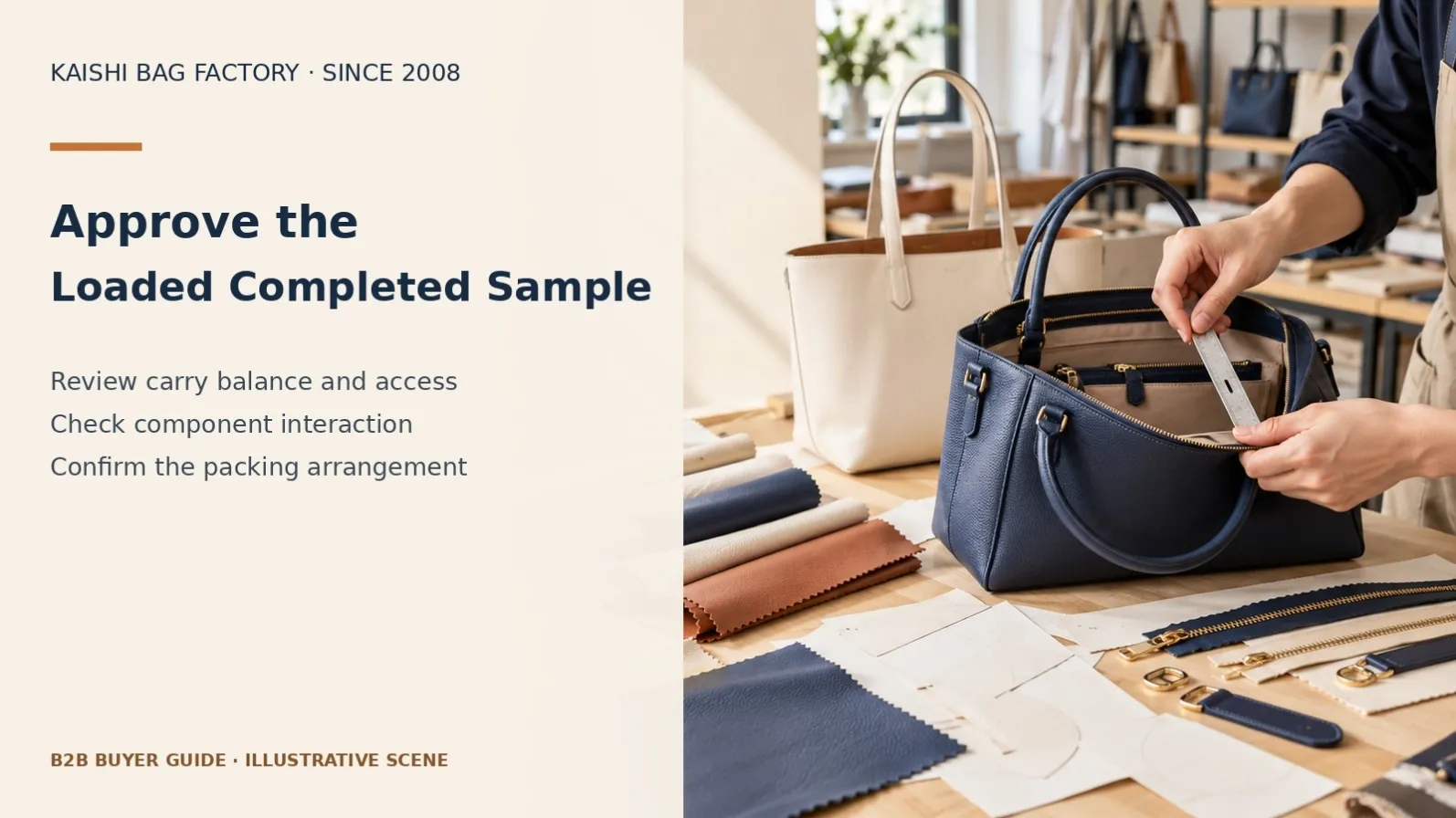
Review the complete bag under an agreed representative load and document what was used. Check carry balance, opening access, clip orientation and interaction between short handles and a long strap. Inspect movement at attachment points before and after relevant agreed checks. Keep the observation conditions with the result rather than saying simply that the handle passed.
Then review how straps are packed. Metal clips can contact the face material, and a folded handle can create a presentation issue. Confirm whether removable parts are attached, wrapped or stored separately, and whether the buyer can assemble them without ambiguity. Packing approval should preserve the intended carry components as well as the bag silhouette.
7. Control cosmetic and functional revisions together
A new strap colour, alternative weave, different clip or shorter attachment tab may affect more than appearance. Request a review of dimensions, fit, load path, material contact and quotation before accepting a change. Record the revised reference and whether a new completed sample is required.
For feedback from use, collect the affected component, sample or batch identity and photographs with context. Separate discomfort preferences from functional failures. Review a proposed correction on the complete bag, since improving one feature can create another issue at the opening or attachment. Do not promise a universal repair, rating or comfort improvement without the relevant sample evidence.
Prepare a project-specific enquiry
Send the current drawing or tech pack, measured dimensions, intended carry contents, material references, component list, colour breakdown and proposed order quantities. Identify the sales destination and any buyer-required testing or packaging documentation. Separate mandatory requirements from design preferences, and explain which decisions remain open. This lets the factory review a real development scope rather than make assumptions from a reference photograph.
Ask the quotation to identify the selected construction, sample scope, material exceptions, packaging, delivery basis and validity conditions. Confirm who approves the physical sample and which revision becomes the production baseline. If a component changes, request an impact review before accepting the replacement. Keep commercial approval separate from technical approval: an attractive unit price does not establish that the revised bag meets the agreed use or inspection requirements.
Related buyer guides
Coordinate carry-system approval with the bag hardware guide and the custom tote and handbag guide.
Frequently asked questions
Can I approve a strap from a swatch?
A swatch helps select material, but the full strap, adjustment and attachment need review on the completed bag.
Does a wider strap guarantee comfort?
No universal guarantee applies. Contact feel, stiffness, bag load, carry mode and user preference all need an appropriate wear review.
What is the right handle drop?
Define it from the intended carry mode and the actual bag. Mark measurement points and compare completed samples rather than copying an unrelated product.
Is webbing strength the bag’s load rating?
No. The complete load path includes seams, tabs, hardware and bag panels. Any rating requires relevant evidence and defined conditions.
Which handle test should I request?
Ask a competent laboratory to choose a method suited to the product and use. Static, repeated and sudden-loading checks address different behaviour.
Do replacement clips need a new review?
Yes. Check fit, operation, contact and the attachment system, and document whether further sample or performance validation is needed.
What are Kaishi’s order, sample and payment terms?
Kaishi Bag Factory is based in Baigou, China and has worked in OEM/ODM since 2008. Standard MOQ is usually 300 pieces per style. A 200-piece first order may be evaluated individually without a guarantee; 100 pieces is usually not feasible. Mixed styles and reorders do not automatically qualify for lower minimums. Samples are prepaid and non-refundable, without automatic bulk-order credit. Payment is T/T only, usually 50% deposit and 50% before shipment. Timing depends on design, materials, sample approval and quantity. Any NDA and project-specific conditions require agreement.
Sources and next step
Sources checked on 7 October 2026: SATRA TM241 static handle loading scope, SATRA TM247 repeated lifting scope and AMANN bag seam guidance. Supplier examples explain general principles, not Kaishi equipment ownership, certification or guaranteed availability. The purchasing worksheets are suggested buyer practices rather than quoted standard requirements.
Contact Kaishi Bag Factory with your specification and quantities for a project review. Email donna@Kaishibagfactory.com or message Donna on WhatsApp.