
Custom Bag Printing: Screen Printing, Heat Transfer or Embroidery?
Choose bag decoration by fabric, artwork, feel and construction. Compare screen printing, heat transfer and embroidery with sample checks and buyer FAQs.
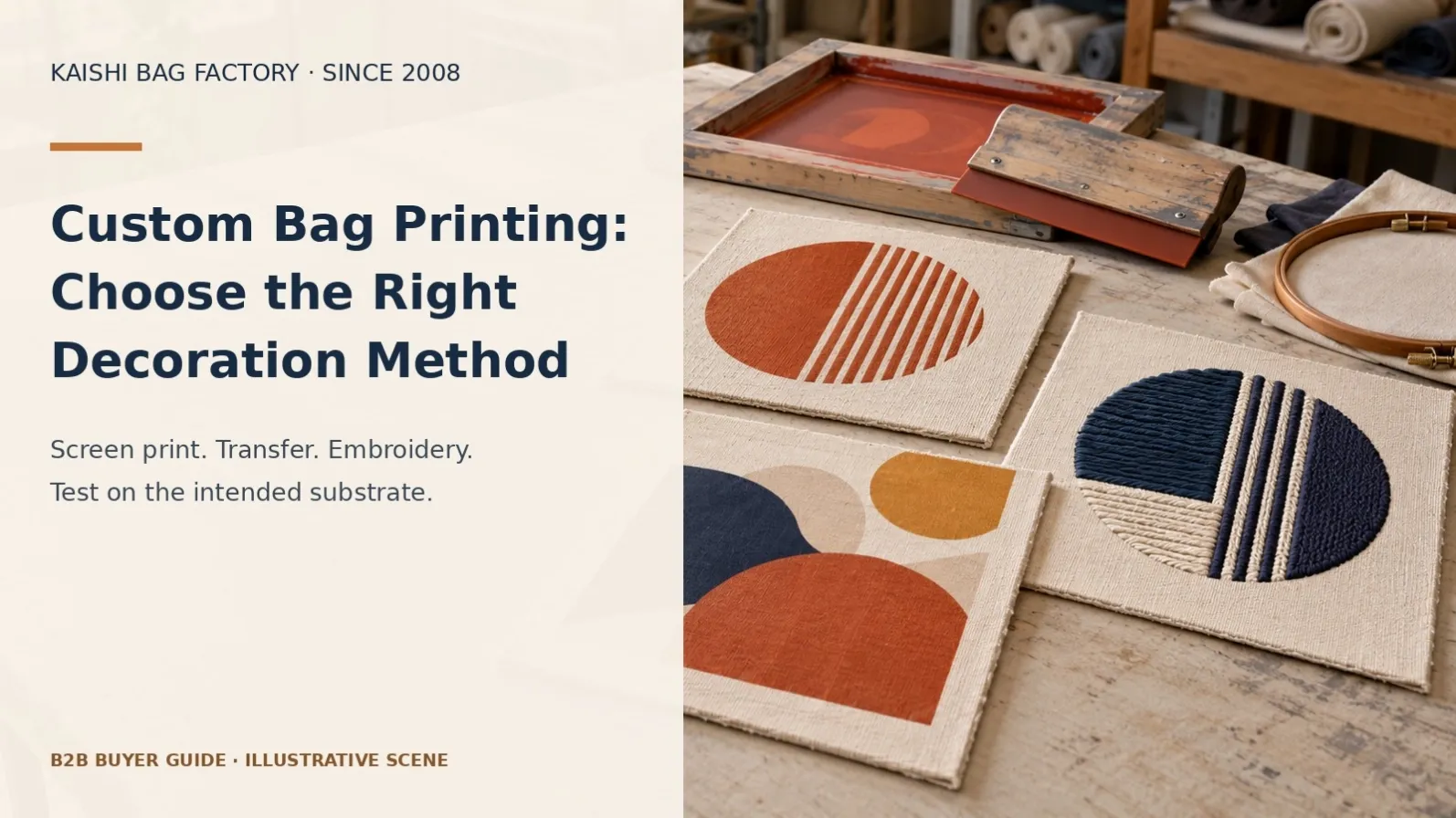
Choose a bag decoration method by the actual substrate, artwork, placement, desired surface effect and required validation. Screen printing, heat transfer and embroidery are different production routes, not interchangeable quality grades. Ask for a sample on the intended material before approving colour, touch or durability. Embroidery is a stitched decoration rather than a printing process, although buyers often compare it with printing when sourcing branded bags.
This guide helps OEM brand teams, promotional buyers and wholesalers specify decoration for canvas totes, fabric bags and compatible coated materials. It focuses on method selection, not a promise that every technique is available on every Kaishi product. Confirm material compatibility, equipment access and order economics for the individual project.
1. Start with a decoration brief, not just a logo
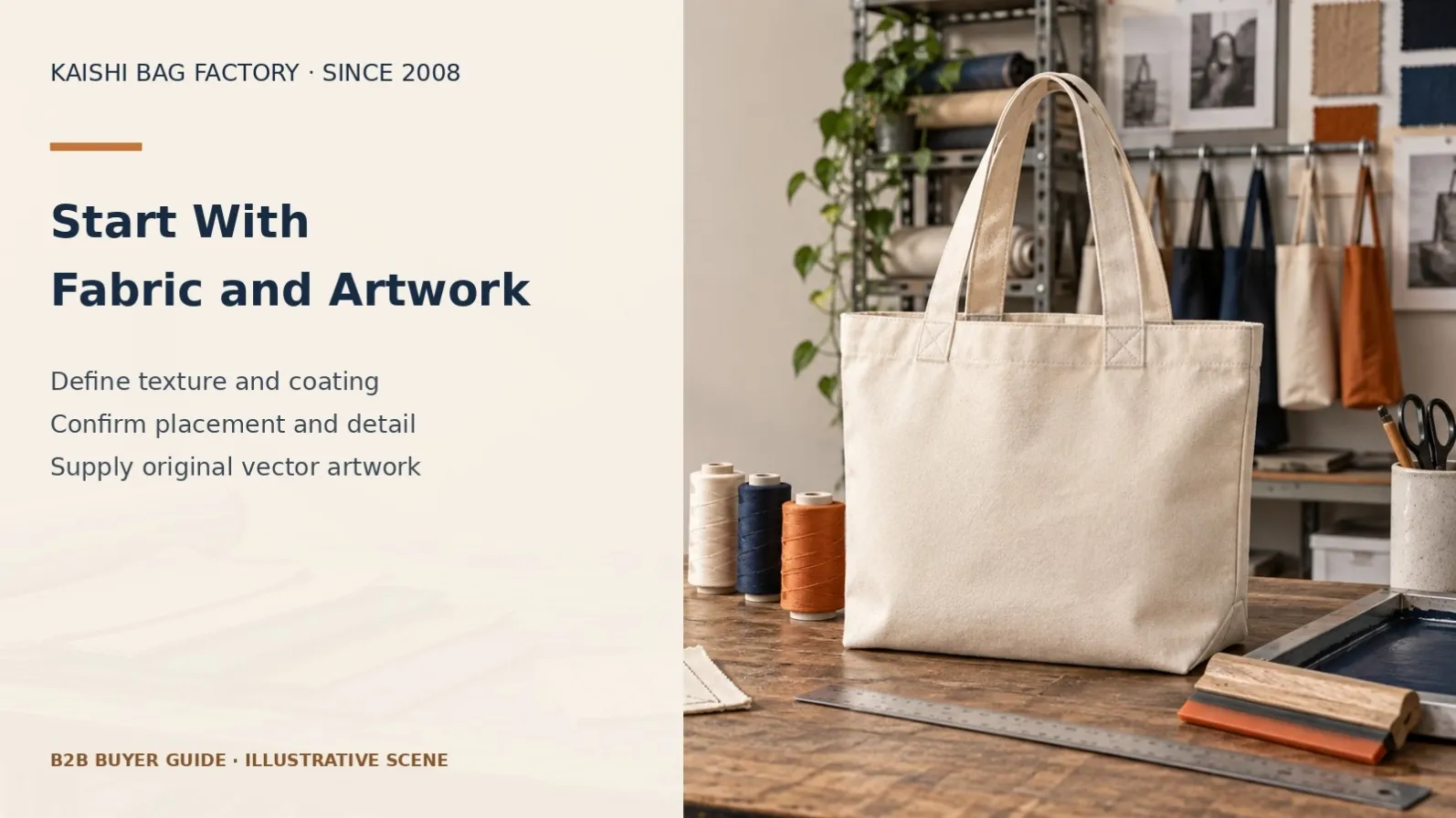
Supply original artwork, the final dimensions, the placement from identifiable edges and the intended viewing distance. Include colour references and identify which details are essential. A tiny line in a digital logo can become difficult to reproduce on a textured bag panel. Do not authorize the factory to simplify brand artwork without an approved revision.
Describe the hand feel you want: a relatively flat print, a visible film surface or raised thread. Specify whether decoration is applied before assembly or to a finished bag. Pockets, seams, zippers and gussets can restrict access. A visually centred logo also needs a measurement rule that a production team can inspect.
2. Match the method to the real material
Confirm the fibre or coating, weave, surface texture, backing and colour of the actual material. Cotton canvas, polyester fabric and coated PU are not one substrate category. A process suitable for one fabric cannot automatically be transferred to another. Test on a production-intent panel with the same finish and backing, rather than on an unrelated white swatch.
Stahls provides material-and-fabric selection guidance and application instructions for its heat-transfer products. The useful principle is to match the transfer system to the substrate and follow the specific supplier instructions. It does not establish a universal heat setting for all bags. Heat-sensitive coatings, layers and trims require project review before pressing.
3. When screen printing is worth evaluating
Screen printing is a useful candidate for defined artwork and controlled colour areas where the panel and ink system are compatible. Discuss the number of colours, registration, opacity on the selected base colour and the printable area. A simple one-colour mark and a detailed multicolour composition can involve different preparation and handling requirements.
The approved sample should show edge clarity, coverage over the material texture, position and cured surface feel. Ask how the ink and curing process will be validated for the intended use. Avoid statements such as “screen printing never cracks” or “it is always the cheapest option.” Cost and performance depend on the job, ink, preparation and quantity.
4. What “heat transfer” needs to mean in the quote
Heat transfer is an umbrella term covering different media and application systems. The quotation should identify the proposed route sufficiently for approval; a generic label does not describe the resulting feel or artwork capability. Compare visible edges, opacity, colour transitions and flexibility on the intended material.
Ask the supplier to confirm the process conditions and the panel’s response, including discoloration, pressure marks or distortion where relevant. Do not write a universal temperature into a tech pack copied from another product. Review an applied sample, then document the approved transfer reference, artwork revision and location. Revalidate when the base material or finish changes.
5. Evaluate embroidery as a construction decision
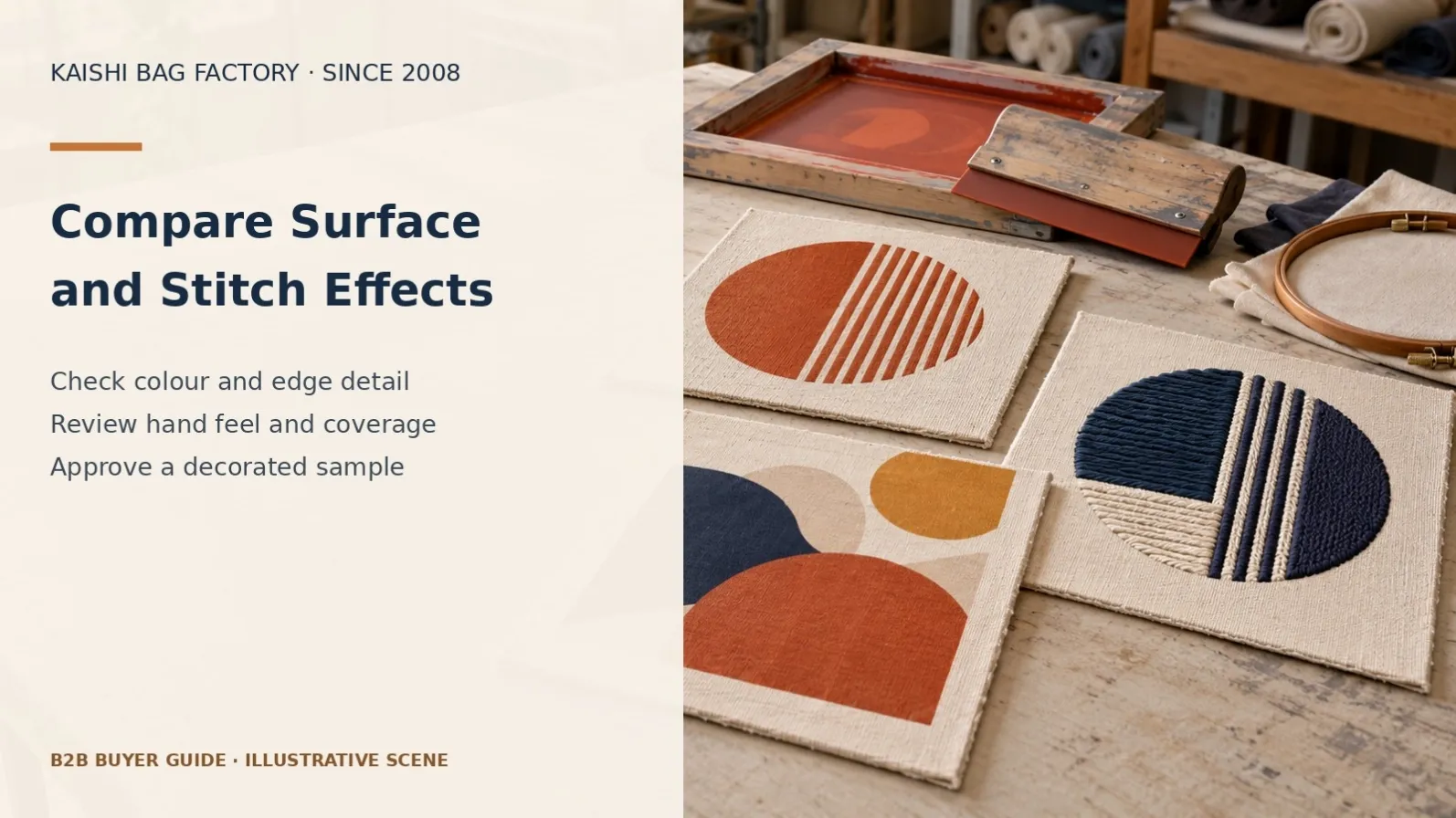
Embroidery adds thread and needle penetrations to the panel. Artwork normally needs digitization into a stitch file; a vector logo alone does not define stitch density, sequence or backing. Review a stitch-out at the actual size. Fine lettering and large filled areas can require different design decisions, and a raised result may not suit every minimalist concept.
Coats describes embroidery thread solutions and product-specific properties. Select a suitable thread and support system with the production team rather than assuming that all thread performs alike. Check puckering, reverse-side finish, panel distortion and whether backing interferes with the lining or a pocket. Stitch decoration should be reviewed within the completed bag, not only in a hoop.
| Candidate | Useful review focus | Approval evidence |
|---|---|---|
| Screen printing | Colour areas, texture coverage and registration | Print on actual panel; agreed curing and checks |
| Heat transfer | Media compatibility, edges, feel and press response | Applied sample and product-specific instructions |
| Embroidery | Detail, stitch effect, backing and distortion | Actual-size stitch-out and completed panel |
| All methods | Position, dimensions and revision control | Signed artwork and production-intent sample |
6. Approve appearance and relevant performance
Compare the decorated sample under agreed lighting and normal handling. Inspect colour, placement, dimensions, detail, surface feel and component interference. Photograph the approved version and retain a physical reference where practical. A product image can communicate design, but it cannot prove rubbing, flexing or washing performance.
Agree checks relevant to the product’s actual care and use. A bag that is not designed to be washed should not receive an unsupported machine-wash claim. If a laboratory test is required, agree the method, substrate, conditions and acceptance criteria. Record the scope of the result; testing one panel does not automatically validate every colour or future material substitution.
7. Compare quotations on the same approved scope
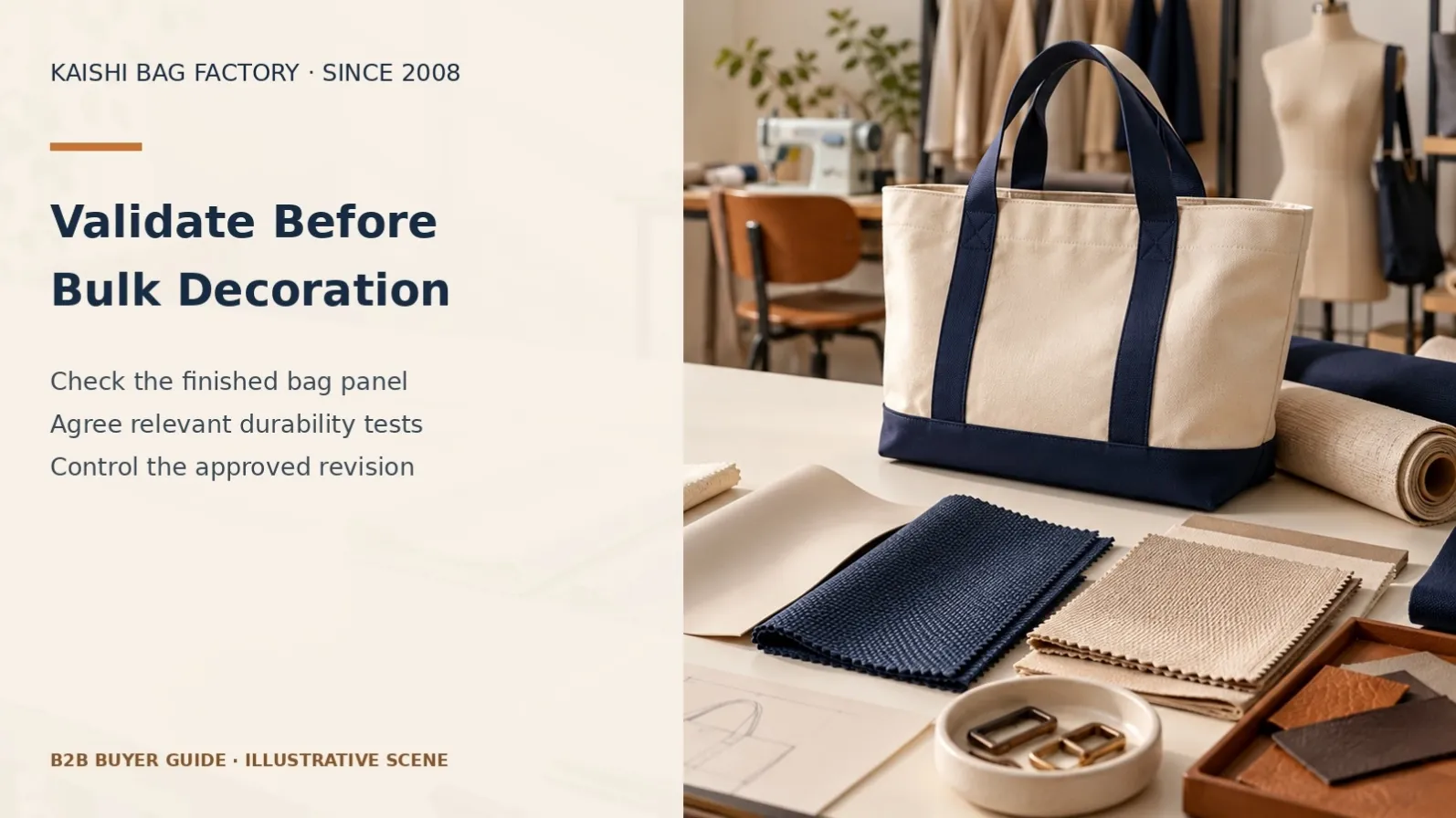
Ask each quotation to separate or explain artwork preparation, method, placement, number of decorated areas, material assumptions and sample requirements. Compare total order cost, not only a decoration price per piece. Small details, extra placements and assembly constraints can change the work involved even when the front photograph looks similar.
For a revision after sample approval, identify whether artwork, material, placement or the method is changing. Obtain an impact review before bulk processing starts. Confirm any new sample requirement and the timing implications. A controlled written approval avoids a production team having to choose between an old stitch file and a newly emailed logo.
Related buyer guides
Use our private-label preparation list for brand inputs, the custom canvas bag guide for substrate decisions, and the tech pack checklist to consolidate the approved decoration specification.
Frequently asked questions
Which method is best for a detailed multicolour logo?
Evaluate a suitable transfer or screen-print route with the artwork supplier and factory. Artwork size, gradients, substrate and surface effect matter. A decorated sample is more useful than choosing from a generic ranking.
Can every canvas tote be embroidered?
No universal answer applies. The panel, backing, access, artwork and construction need review. Confirm the process on the selected material and inspect puckering and reverse-side finish.
Can I print across a seam?
Seams can interrupt contact, registration or stitching access. Mark the proposed area and ask the factory to evaluate it before quoting. Do not assume a flat-panel sample validates a seam-crossing location.
Will the factory match an on-screen colour exactly?
A screen is not a physical colour standard. Supply the intended reference system and approve the actual decorated material under agreed conditions.
Do I need a new sample if the material changes?
A material or finish change can affect adhesion, curing, heat response or stitching. Request a documented revalidation decision rather than treating the old sample as automatic approval.
Is embroidery always more premium?
That is a design judgment, not a technical rule. The suitable result depends on brand style, artwork, feel, construction and intended use.
What are Kaishi’s MOQ and project terms?
Kaishi Bag Factory is based in Baigou, China and has worked in OEM/ODM since 2008. Standard MOQ is usually 300 pieces per style. A 200-piece first order may be reviewed individually, without a guarantee; 100 pieces is usually not feasible. Mixed styles do not automatically share one minimum, and a reorder does not automatically qualify for a lower MOQ. Samples are prepaid and non-refundable, without an automatic credit against bulk orders. Payment is T/T only, usually 50% deposit and 50% before shipment. Development and production timing depends on design, materials, sample approval and quantity. Confirm project terms before committing to a launch date.
Sources and project enquiry
References checked on 6 October 2026: Stahls heat-transfer material selection and Coats embroidery solutions. These sources support general guidance; they are not evidence of a Kaishi certification, supplier relationship or guaranteed project capability.
Contact Kaishi Bag Factory with your original artwork, material reference, decoration dimensions, placement and proposed quantities for a method review and quotation. Email donna@Kaishibagfactory.com or message Donna on WhatsApp.