
Handbag Edge Finishing: What Buyers Should Specify and Inspect
Specify handbag edge finishing by edge construction, substrate, colour, gloss and sample evidence. Inspect the actual finished edge, not a promised number of paint coats.
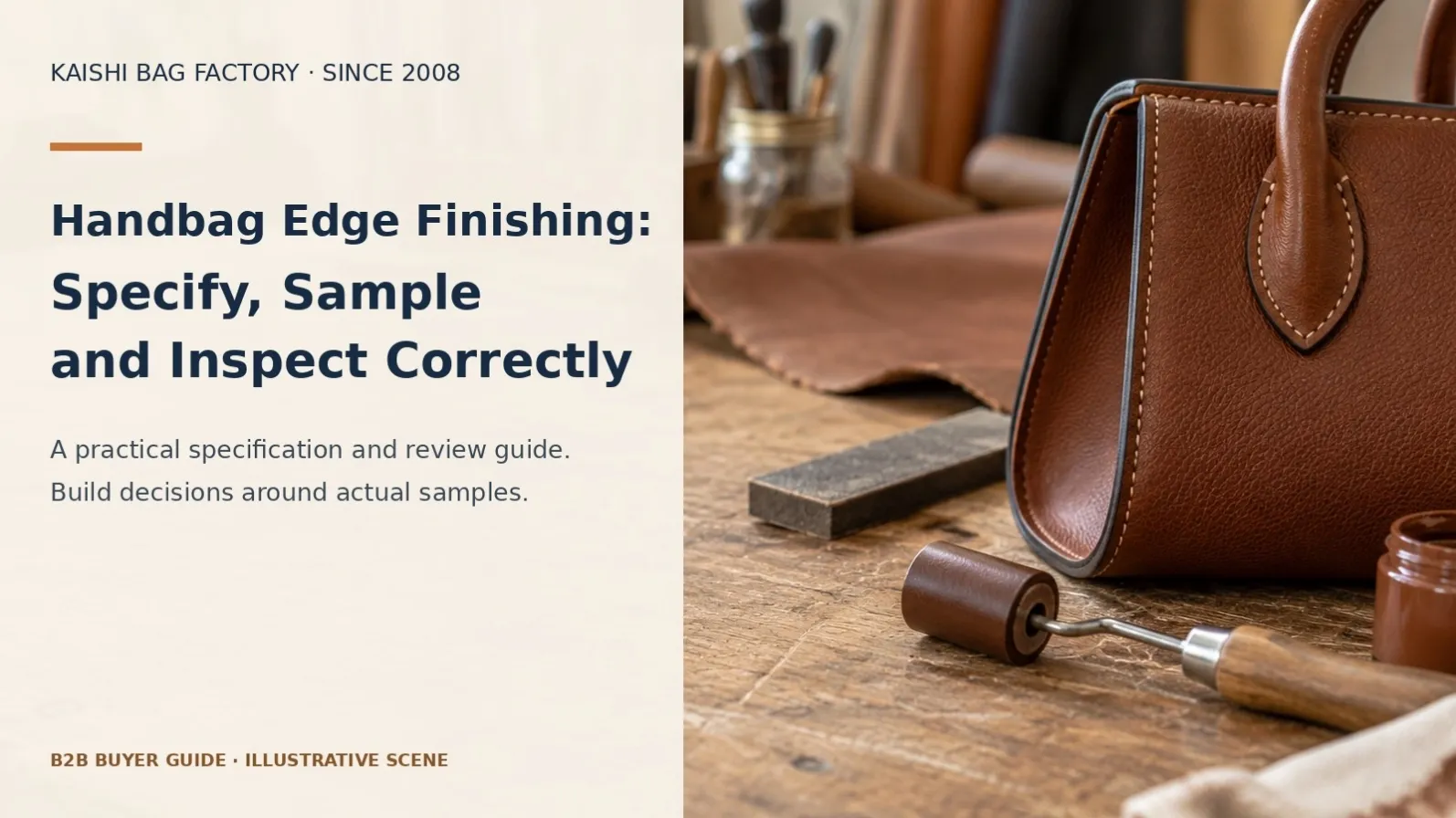
Specify handbag edge finishing by edge construction, substrate, colour, gloss and sample evidence. Inspect the actual finished edge, not a promised number of paint coats.
This guide is for OEM/ODM brand teams, importers and wholesale buyers developing an original bag specification. It addresses handbag edge finishing through decisions that can be documented, sampled and reviewed. A photograph or generic material name is not an approval standard. Define the intended use, compare the actual proposed construction and keep a controlled physical reference before authorizing production.
1. Identify which edges the buyer will actually see
Mark exposed panel edges, handle edges, strap ends and attachment tabs on the drawing. A bag can combine painted edges with turned or bound edges; do not describe the whole product with one finishing label. Note areas that flex in use and areas that rub against clothing. Show the viewing surfaces with close photographs and measured locations.
A turned edge conceals a cut edge through construction, while binding introduces a separate finishing material. Edge paint forms a finish on an exposed prepared edge. These choices affect appearance and assembly. Ask the factory to explain the proposed route for each location, especially where several layers meet or a hardware loop creates a tight bend.
2. Approve the substrate and layer combination
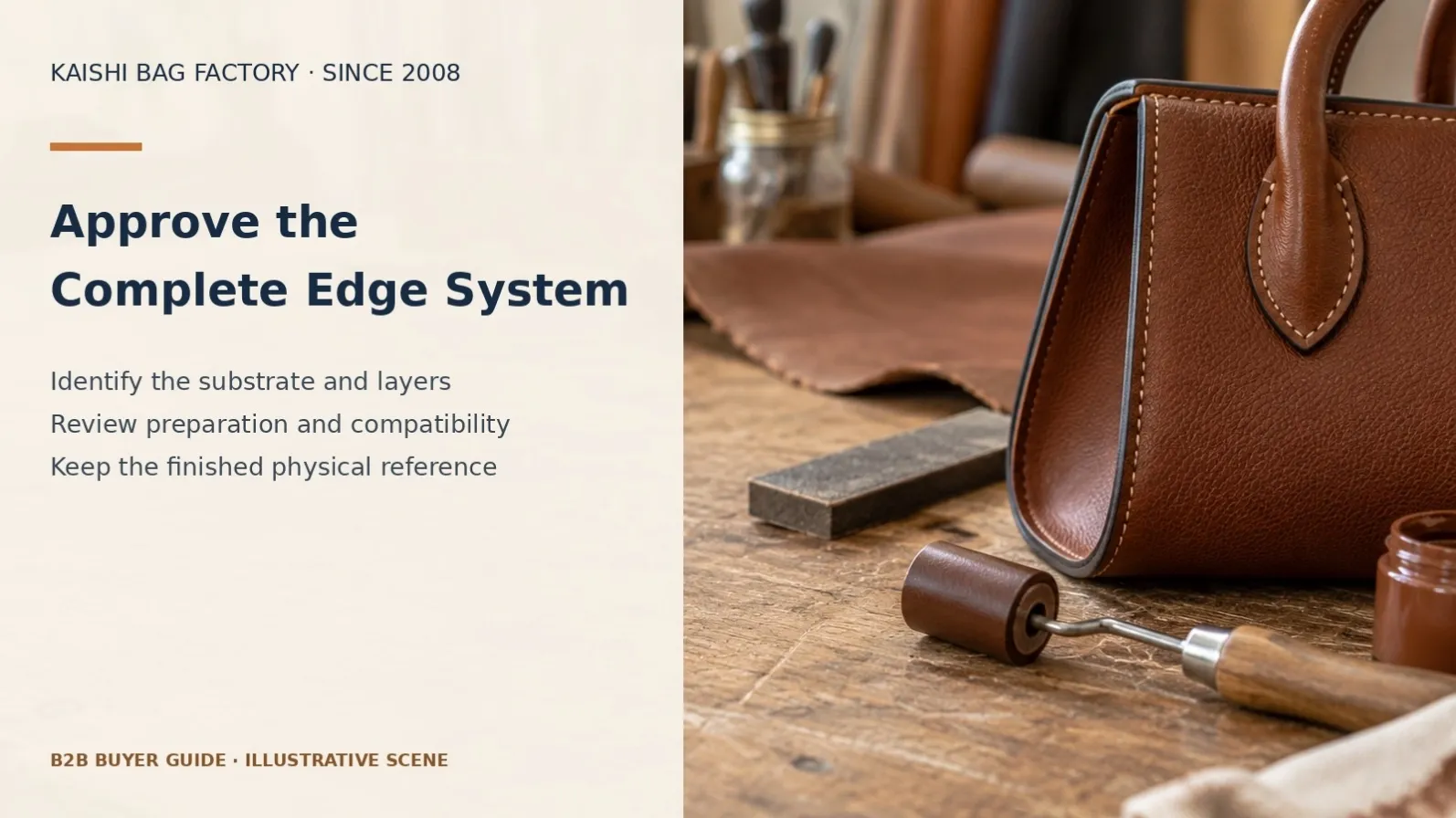
The exposed edge can include outer leather or coated material, lining, reinforcement and adhesive interfaces. Ask for a sample using the intended layer stack rather than a single unrelated leather strip. A clean finish on one substrate does not prove compatibility with a different coating, backing or flexible handle construction.
Giardini’s published basecoat guide describes preparation, sanding and coloured finishing as parts of its own system. The useful procurement lesson is to ask about preparation and compatibility, not copy a universal recipe. Drying, application and handling conditions should follow the chosen product instructions and a validated sample. Do not impose one coat count or temperature on every bag.
3. Write appearance requirements that inspectors can use
Define whether the edge should visually match the outer material or form a deliberate contrast. Specify the intended gloss and the acceptable edge profile through a physical reference. Include transitions at corners, joins and strap ends. Screens can illustrate intent, but the approved finish must be evaluated on the actual material under agreed lighting.
Create photographs showing acceptable and unacceptable examples at a consistent scale. Useful defect descriptions include exposed substrate, uneven coverage, overflow onto the face, rough protrusions and unintended gaps. Avoid the vague instruction “perfect premium edge.” Identify what affects appearance, what affects use and which issues require rejection or review rather than leaving those decisions to inspectors.
4. Review flexing and contact separately from appearance
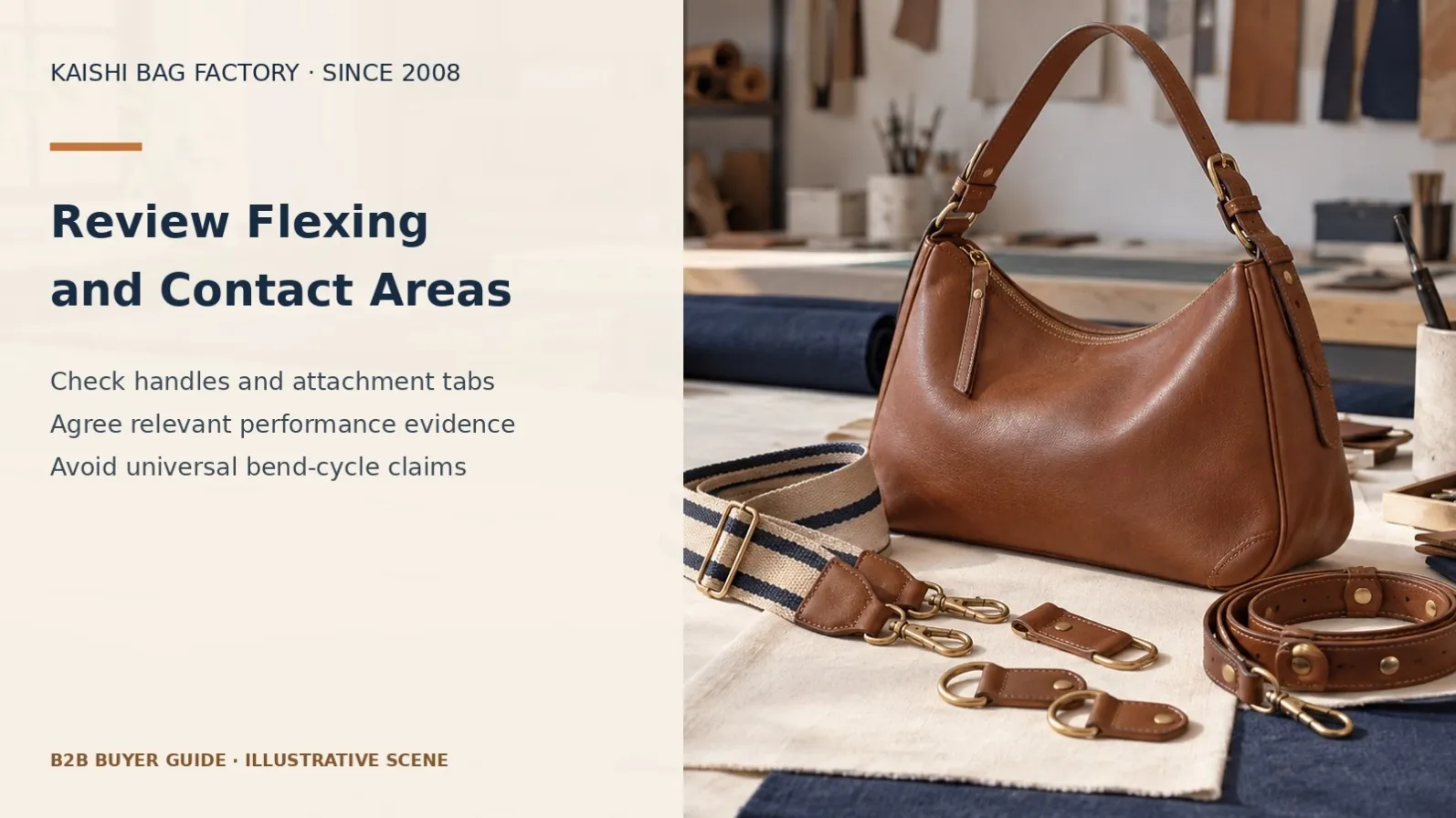
A smooth photograph does not establish durability. Identify where the finish bends, where fingers repeatedly touch it and where it contacts another component during packing. Review the complete handle, tab or panel in its normal movement range. Do not force unrealistic folds simply to create a dramatic test result.
Agree whether laboratory evaluation is needed for the intended use. SATRA’s leathergoods resources discuss material and construction performance, including flexing and strap durability. Ask a competent laboratory to select the applicable method, conditioning and acceptance criteria. There is no justified universal number of bend cycles for every handbag. Record tested substrates and finish references so a later substitution receives a review.
5. Use a focused edge approval record
Keep the approval record small enough to use at the bench. For each edge location, connect the construction to a physical reference, appearance criteria and agreed performance evidence. Identify which sample is production-intent and whether a development sample used temporary materials. A signed colour strip alone cannot approve a complete layered strap.
The buyer worksheet below is an operational proposal, not a mandated standard. Add project-specific tolerances only after the factory and inspector agree they can be measured consistently. Retain the sample and photographs with the tech pack revision. When an issue arises, compare against the same reference instead of relying on memory or a different sample from a showroom.
| Edge location | Specify | Approval evidence |
|---|---|---|
| Handle and strap | Layer stack, finish, flexible areas | Complete production-intent component |
| Panel perimeter | Profile, colour and gloss | Physical sample and close photographs |
| Joins and holes | Coverage and permitted transitions | Location-specific defect reference |
| Packed bag | Contact and protection arrangement | Unpacked sample review |
6. Inspect joins, corners and packed samples
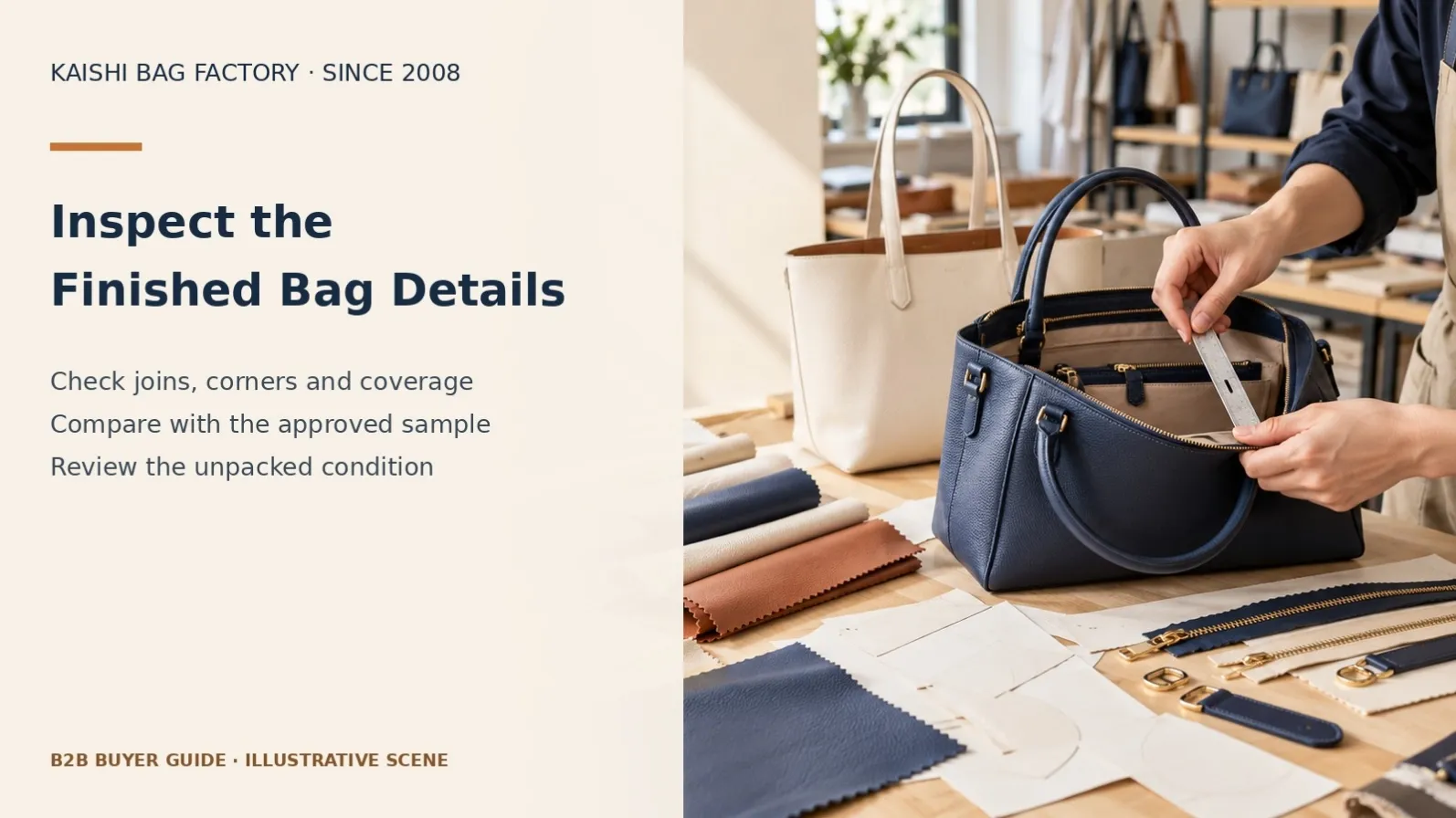
Check the straight edges first, then the more demanding changes of direction and layer thickness. Examine the finish beside clips, folded tabs and strap holes. Review both visible faces of a handle. A front-view photograph may conceal roughness or overflow on the reverse side, so the inspection plan should identify the necessary views.
Also examine a packed and unpacked sample. Contact with hardware, neighbouring bags or support materials can reveal marking that was absent at the finishing bench. If the packing trial changes the edge appearance, investigate handling and contact conditions before deciding that the paint alone is responsible. Preserve the tested packing arrangement when it forms part of approval.
7. Control changes without assuming cosmetic equivalence
Changing edge colour, coating system, outer material or reinforcement can alter the development scope. Request a review of compatibility and appearance even when the silhouette remains unchanged. A supplier’s similar-looking product is not automatically interchangeable with the approved reference. Identify the affected component and whether a revised sample is required.
For bulk defects, record location, quantity observed, batch identity and clear photographs before agreeing corrective action. Do not promise that all damaged edges can be repaired invisibly. Compare an actual repaired sample if rework is proposed, including its appearance and intended handling. Release the result through a documented buyer decision rather than an informal message saying it looks close enough.
Prepare a project-specific enquiry
Send the current drawing or tech pack, measured dimensions, intended carry contents, material references, component list, colour breakdown and proposed order quantities. Identify the sales destination and any buyer-required testing or packaging documentation. Separate mandatory requirements from design preferences, and explain which decisions remain open. This lets the factory review a real development scope rather than make assumptions from a reference photograph.
Ask the quotation to identify the selected construction, sample scope, material exceptions, packaging, delivery basis and validity conditions. Confirm who approves the physical sample and which revision becomes the production baseline. If a component changes, request an impact review before accepting the replacement. Keep commercial approval separate from technical approval: an attractive unit price does not establish that the revised bag meets the agreed use or inspection requirements.
Related buyer guides
Combine the edge record with the bag tech pack checklist and the hardware specification guide.
Frequently asked questions
Is more edge paint always better?
No. A coat count does not establish compatibility, preparation or durability. Approve the complete finish on the intended substrate and confirm the chosen system’s application requirements.
Can painted and turned edges be mixed?
They can be evaluated as a design proposal. Mark each route by location and review construction, appearance and cost before approval.
Can a photo approve the edge colour?
Use a photograph for communication, then approve a physical reference on the actual edge material. Lighting, texture and gloss can change the perceived result.
Should every edge have the same profile?
Not automatically. Layer thickness, corners and folded components can differ. Specify intentional differences and acceptable transitions rather than expecting identical geometry everywhere.
What if the bulk material changes?
Ask for a compatibility and appearance review, identify the affected edges and document whether new sample evidence is necessary before finishing proceeds.
Can all rough edges be repaired?
Do not assume so. Review a proposed rework sample and its implications for appearance, handling and the approved construction before authorizing repair.
What are Kaishi’s order, sample and payment terms?
Kaishi Bag Factory is based in Baigou, China and has worked in OEM/ODM since 2008. Standard MOQ is usually 300 pieces per style. A 200-piece first order may be evaluated individually without a guarantee; 100 pieces is usually not feasible. Mixed styles and reorders do not automatically qualify for lower minimums. Samples are prepaid and non-refundable, without automatic bulk-order credit. Payment is T/T only, usually 50% deposit and 50% before shipment. Timing depends on design, materials, sample approval and quantity. Any NDA and project-specific conditions require agreement.
Sources and next step
Sources checked on 7 October 2026: Giardini edge basecoat guide and SATRA bags and leathergoods testing overview. Supplier examples explain general principles, not Kaishi equipment ownership, certification or guaranteed availability. The purchasing worksheets are suggested buyer practices rather than quoted standard requirements.
Contact Kaishi Bag Factory with your specification and quantities for a project review. Email donna@Kaishibagfactory.com or message Donna on WhatsApp.