
Design for Repeat Orders Before Placing the First Handbag Order
Preserve material, component and sample references from the first order and identify dependencies that could complicate later production.
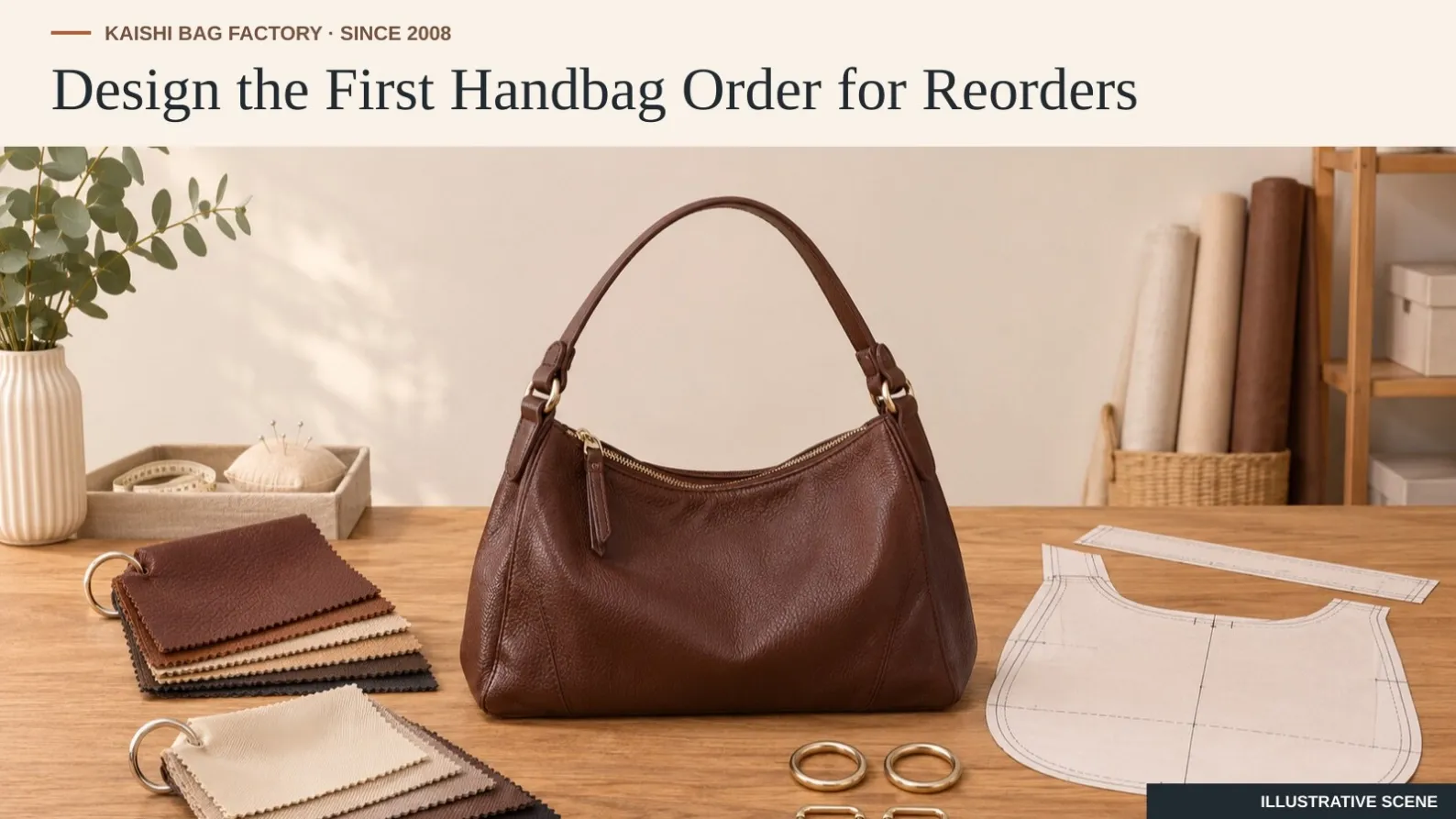
The first handbag order may be feasible because the right material lot, fitting or production slot happens to be available. Before placing it, identify what another run would need to reproduce. Keep a clear bill of materials, physical references and an order record, then discuss which dependencies are likely to need fresh confirmation.
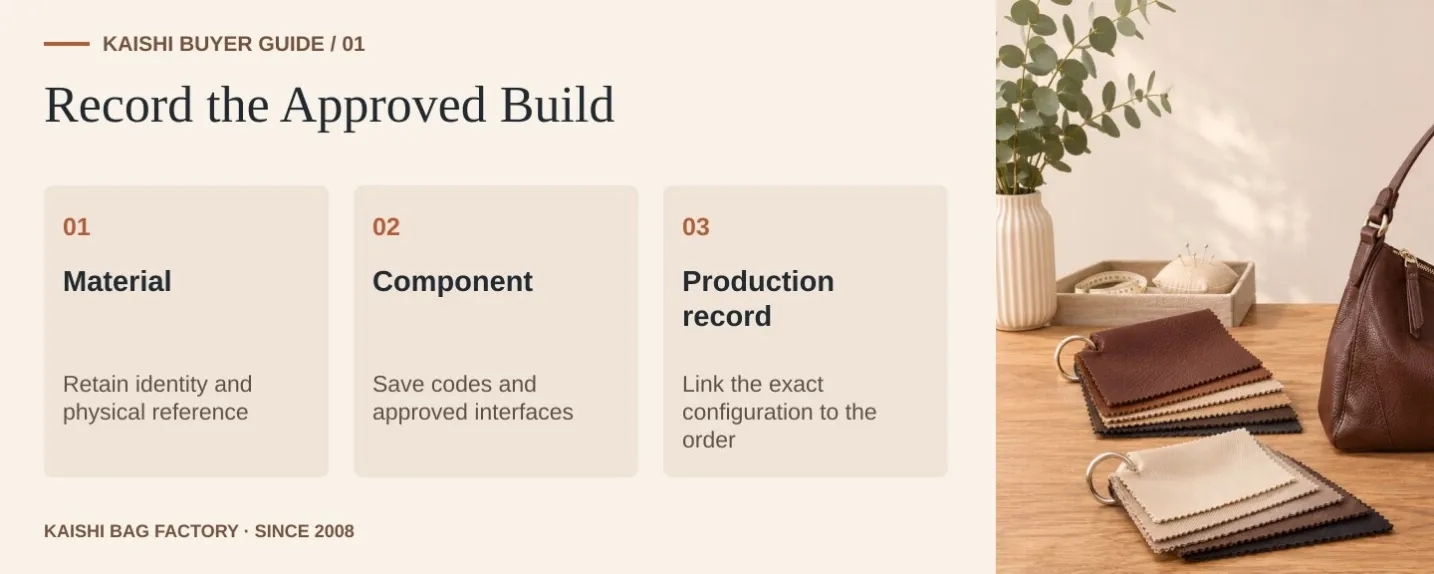
Record what was actually approved
List material references, surface finish, shade, lining, support and component IDs. Link these to the signed sample or retained reference and the current specification. Do not rely on memory or a label such as brown PU. Store the original packing instructions and approved artwork with the order so that a later quotation does not quietly assume a different configuration.
| Dependency | Keep from the first run | Check again for repeat |
|---|---|---|
| Face material | Material identity, finish and physical reference | Available lot and current minimum |
| Trim | Code, finish, fit and tool reference if applicable | Current supply and compatibility |
| Color | Reference and accepted visual conditions | New lot next to existing stock |
| Packing | Final dimensions and unit/carton arrangement | Current costs and shipment basis |
Spot fragile dependencies before launch
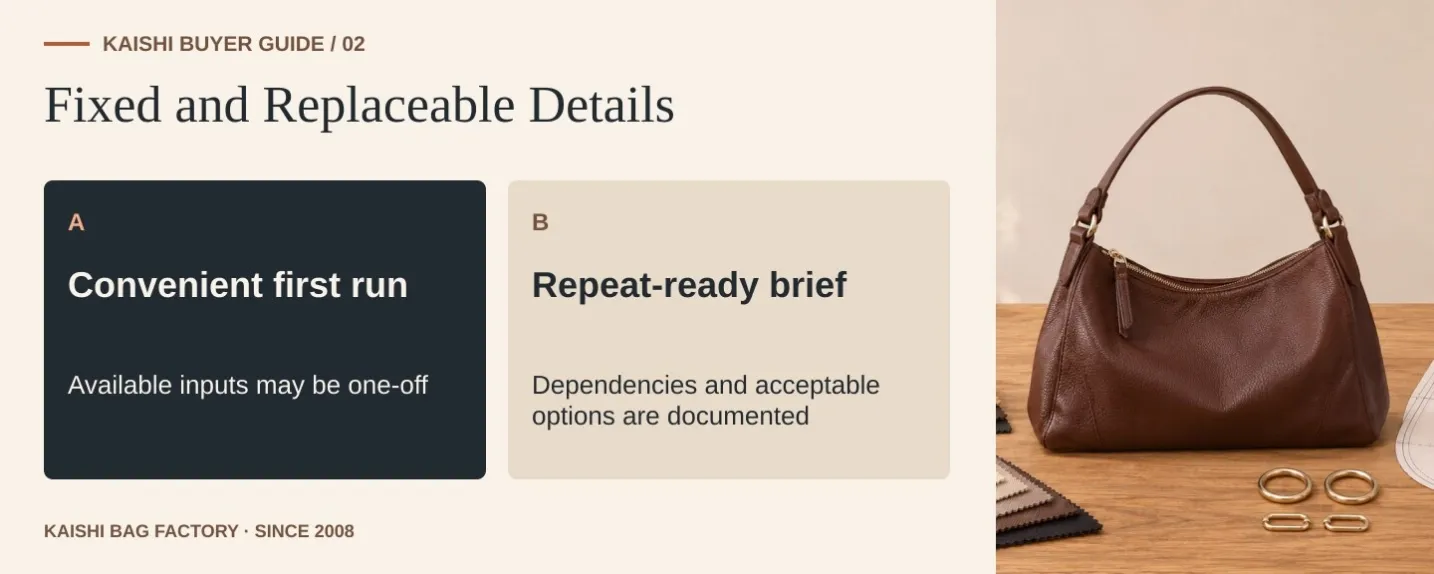
Ask whether the initial material is from a one-time lot, whether the color is made for the order and whether a component is available only from a specific source. This is a conversation about exposure, not a prediction that the source will fail. If the risk matters, consider an approved standard alternative or make the product's seasonal nature explicit.
Define how an alternative would be accepted
Document which visible and functional traits should remain unchanged and what can be reviewed later. An approved alternative is specific to the evidence and configuration reviewed. A similar swatch or fitting is a candidate, not a standing approval. If the price or quantity assumptions change, check the commercial result separately from the appearance decision.
Keep a handover file that someone else can use
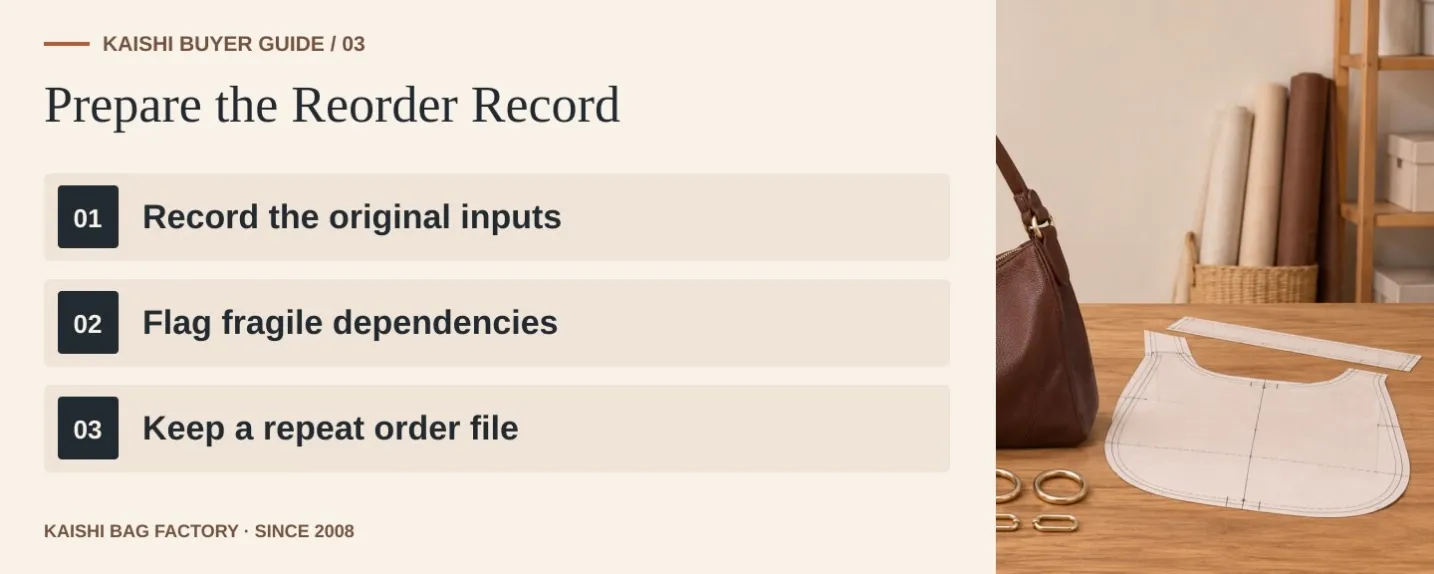
Save dated photos, lot references where available, the approved sample ID, written decisions and current commercial basis. In a hypothetical first order, the buyer chooses a stock dark finish but records the intended appearance and a standard alternative. At repeat time the team still checks the new lot and verifies the alternative; it does not have to reconstruct the original decisions from scattered messages.
FAQ
Does repeat-ready design guarantee the same unit price?
No. Current materials, quantities, packaging and production conditions still need review.
Should I stock all custom materials in advance?
Compare carrying cost, storage, ownership and the uncertainty of future demand before committing. Confirm terms in writing.
Is a physical sample enough to reproduce the order?
It is an important reference, but keep a written record of materials, components, dimensions and approvals alongside it.
Can I pre-approve several alternatives?
Yes, for clearly scoped and tested configurations. Check current supply and confirm which option the next order uses.
What if the original component disappears?
Identify the affected functions, request a replacement proposal and reapprove the affected assembly before release.
Related buying guides
- Wholesale Bag Reorders: Using Sales and Quality Feedback to Plan the Next Order
- Bag Tech Pack Revisions: Control Sample Changes and Approvals
Discuss your bag project
Planning a handbag range or reviewing a sample? Share your reference, target price or quantity and the decision you need to make next. Contact Kaishi Bag Factory or send a WhatsApp enquiry.