
Handbag Pocket Layout: Specify Access, Capacity and Lining Before Sampling
Specify handbag pockets around actual contents, access and lining behaviour. Review the completed sample before approving the interior layout.
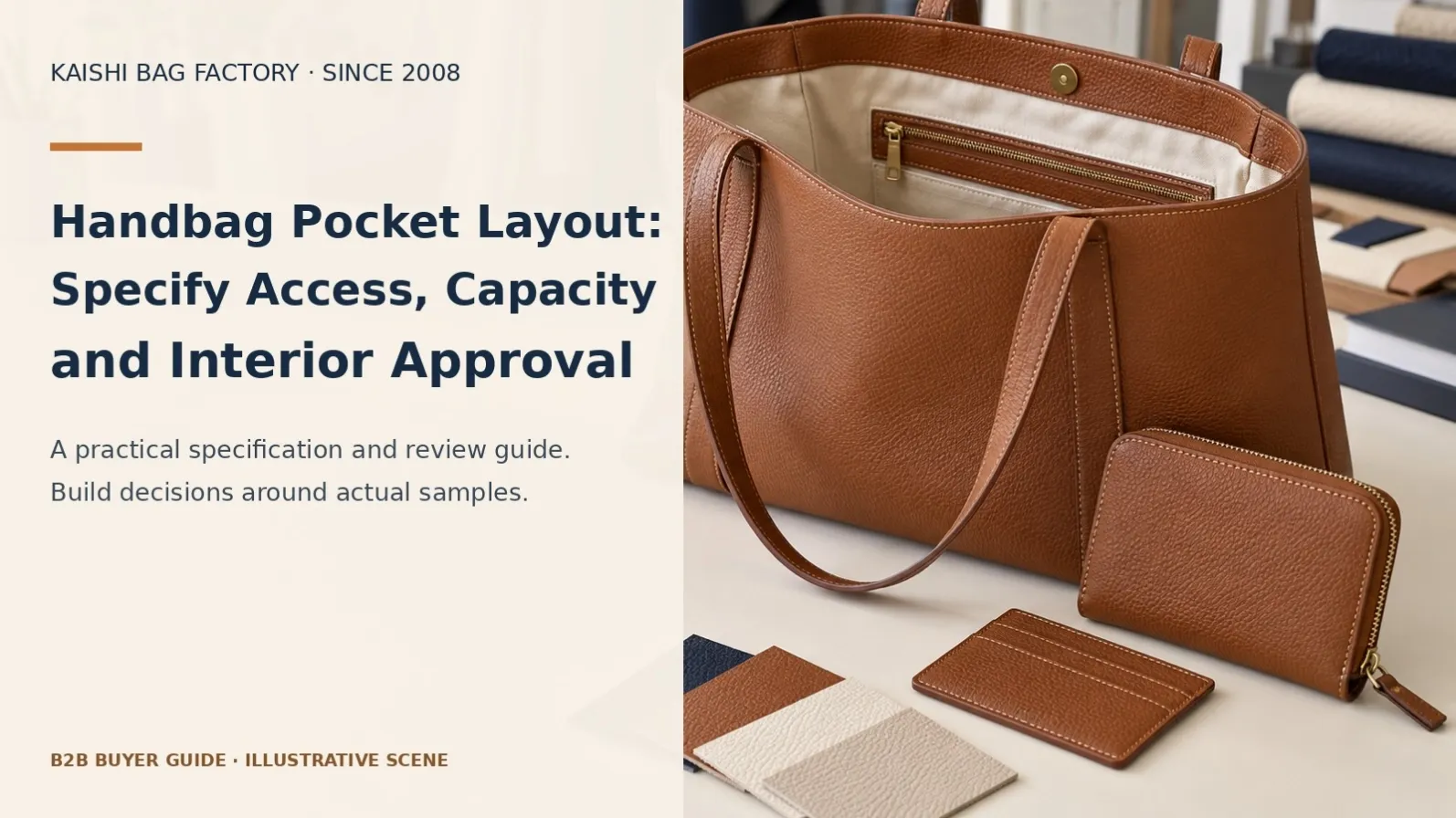
Specify handbag pockets around actual contents, access and lining behaviour. Review the completed sample before approving the interior layout.
This guide is for OEM/ODM brand teams, importers and wholesale buyers developing an original bag specification. It addresses handbag pocket layout specification through decisions that can be documented, sampled and reviewed. A photograph or generic material name is not an approval standard. Define the intended use, compare the actual proposed construction and keep a controlled physical reference before authorizing production.
1. Start with a contents list, not a pocket count
List what the intended user needs to separate, protect and retrieve. Distinguish small loose items from a wallet, phone or document. Record the actual reference-object dimensions instead of promising compatibility with every phone. Define whether access happens while the bag is worn or resting on a desk. These conditions provide a more useful brief than asking for more compartments.
Avoid claiming that a higher pocket count makes a better bag. Extra dividers can reduce flexible space and affect construction. A wholesale buyer should review the proposed interior against the intended product role and price position, rather than copying a competitor’s photograph without understanding the contents or access conditions.
2. Measure usable space after assembly
Mark opening width, usable depth and position from fixed points on the finished bag. A flat pocket pattern is not the same as the available space once seams, facing and lining are assembled. Specify the measuring condition, including whether the bag is empty and how the lining is positioned. Include a reference object when a particular fit matters.
Review neighbouring pockets together. A filled slip pocket may occupy the space intended for a central compartment. Do not accept isolated dimensions as proof that every compartment can be used simultaneously. Compare an agreed representative load with the completed sample and record any intentional limits in the approval sheet.
3. Choose the opening and closure by use
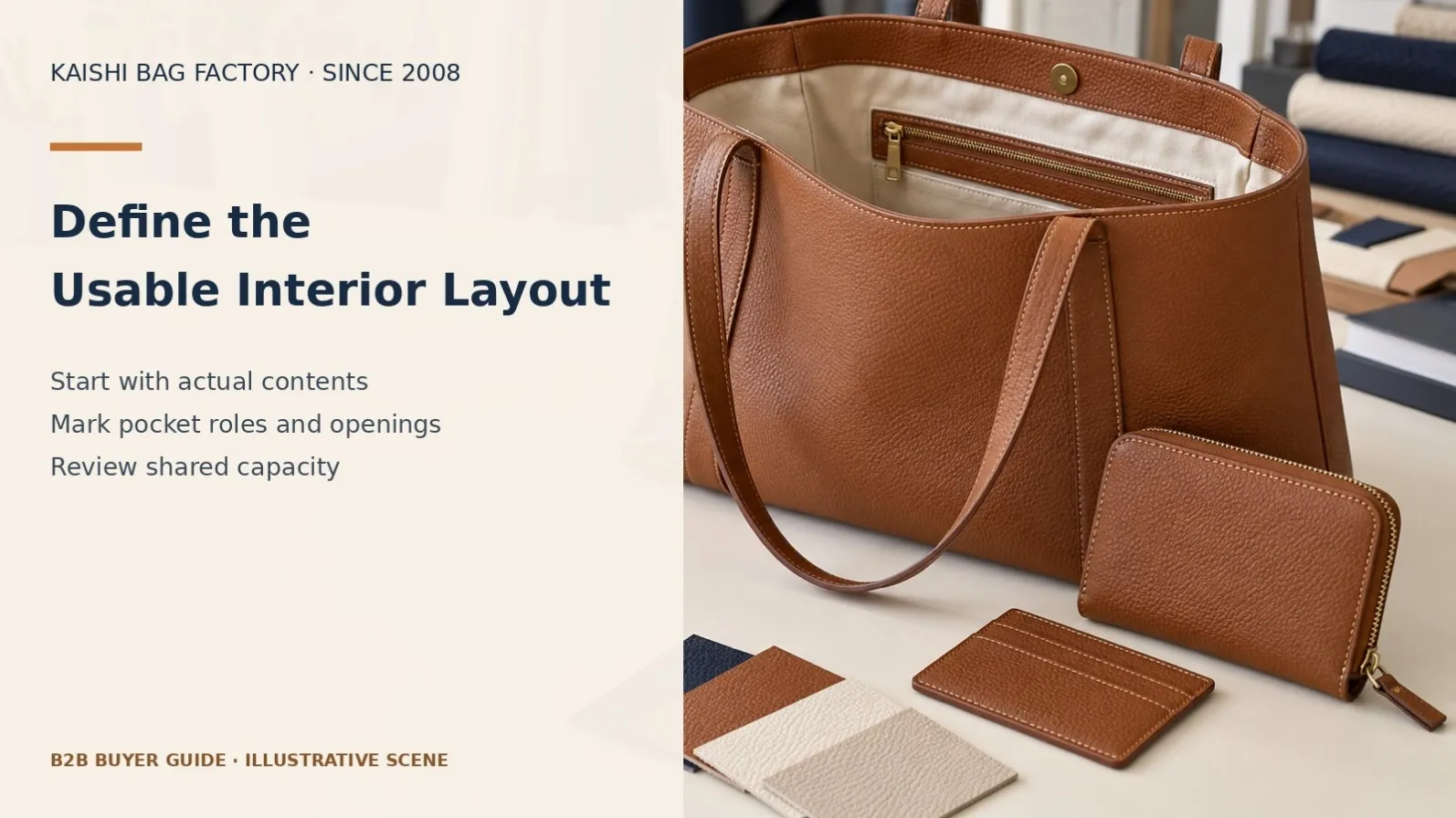
A slip opening can support quick access, while a zippered pocket provides a different access sequence. Decide whether small contents require a closure, then check how the user reaches it. A puller that looks attractive may interfere with another pocket or be difficult to grasp inside a narrow opening. Review the full interaction instead of the component alone.
YKK’s handbag guidance treats the zipper and slider as selection decisions within the bag design. It does not establish one ideal closure for every interior. Ask for the exact proposed reference and review it on the assembled pocket. Avoid a generic promise that any zippered compartment is secure under every use condition.
4. Review lining, seams and reinforcement together
Pocket material affects feel and appearance, but its attachment also matters. Examine the top edge, corners, zipper ends and reverse-side construction. Ask how the pocket connects to the surrounding lining and whether support is proposed for the intended contents. Do not prescribe one lining denier or universal reinforcement thickness without reviewing the product.
AMANN’s bag guidance explains that thread and seam choices depend on material and position. Apply that principle to the pocket attachment and its intended use. Decorative stitch appearance alone does not establish functional performance. If a specific load or durability claim is required, agree suitable evidence with the factory and a competent laboratory.
5. Use a pocket-by-pocket approval sheet
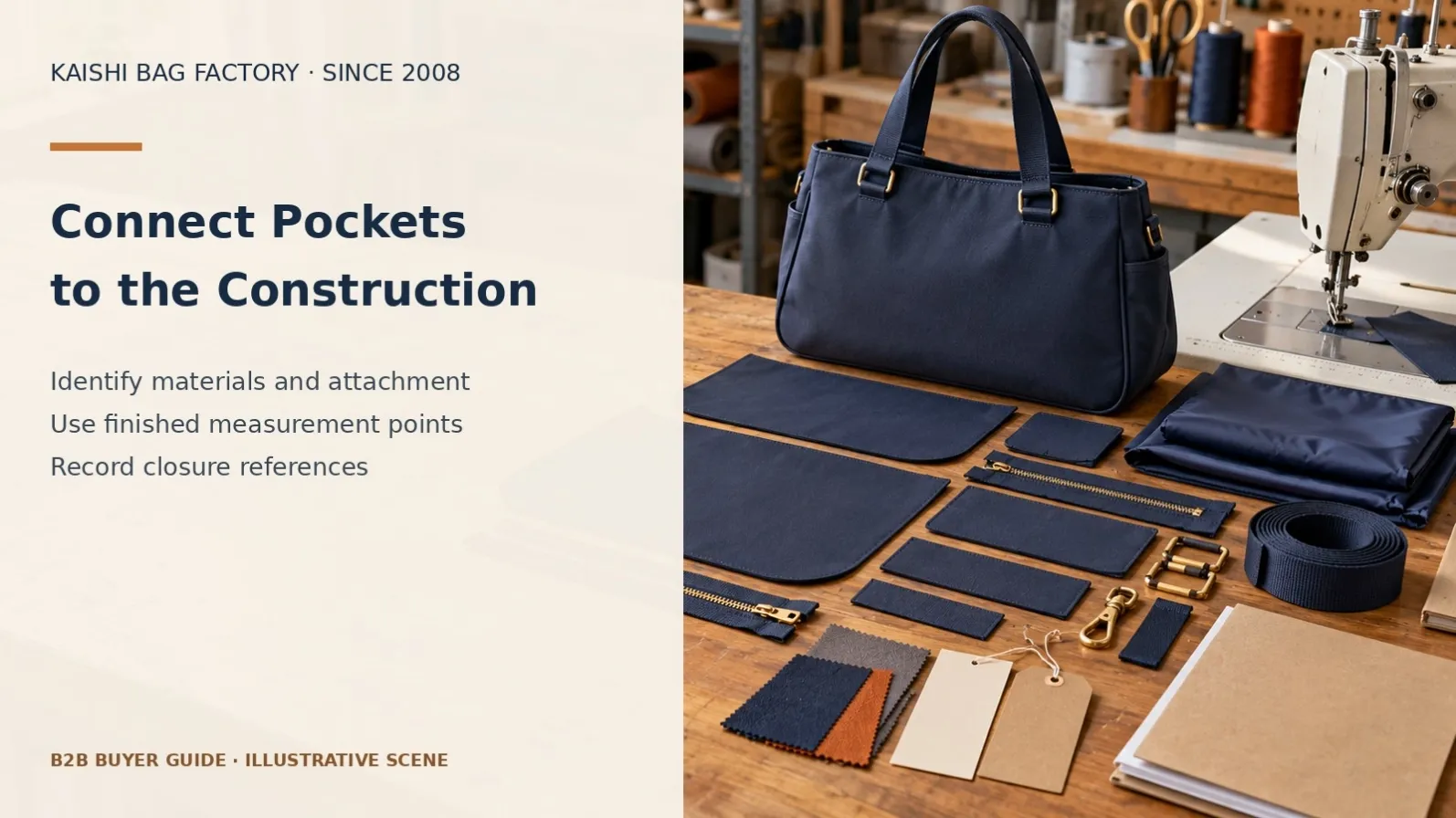
Give every pocket a clear identifier on the interior drawing. Record its role, finished measurements, opening, material reference and review condition. Note whether the development sample contains temporary lining or hardware. A neat prototype should not silently approve components that differ from the intended bulk specification.
The worksheet below is a suggested buyer tool. Add tolerances only where the factory and inspector agree on a repeatable method. Keep the approved sample and interior photographs with the drawing revision. When a comment says the pocket is too small, the team can then identify which pocket and which measured target need review.
| Specify | Sample check | |
|---|---|---|
| Slip pocket | Opening, usable depth, intended item | Access with adjacent pockets filled |
| Zipper pocket | Closure reference and puller | Operation and hand clearance |
| Divider | Position and attachment | Shared capacity and lining behaviour |
| Approval | Drawing and component revision | Complete loaded interior |
6. Test access with the complete interior loaded
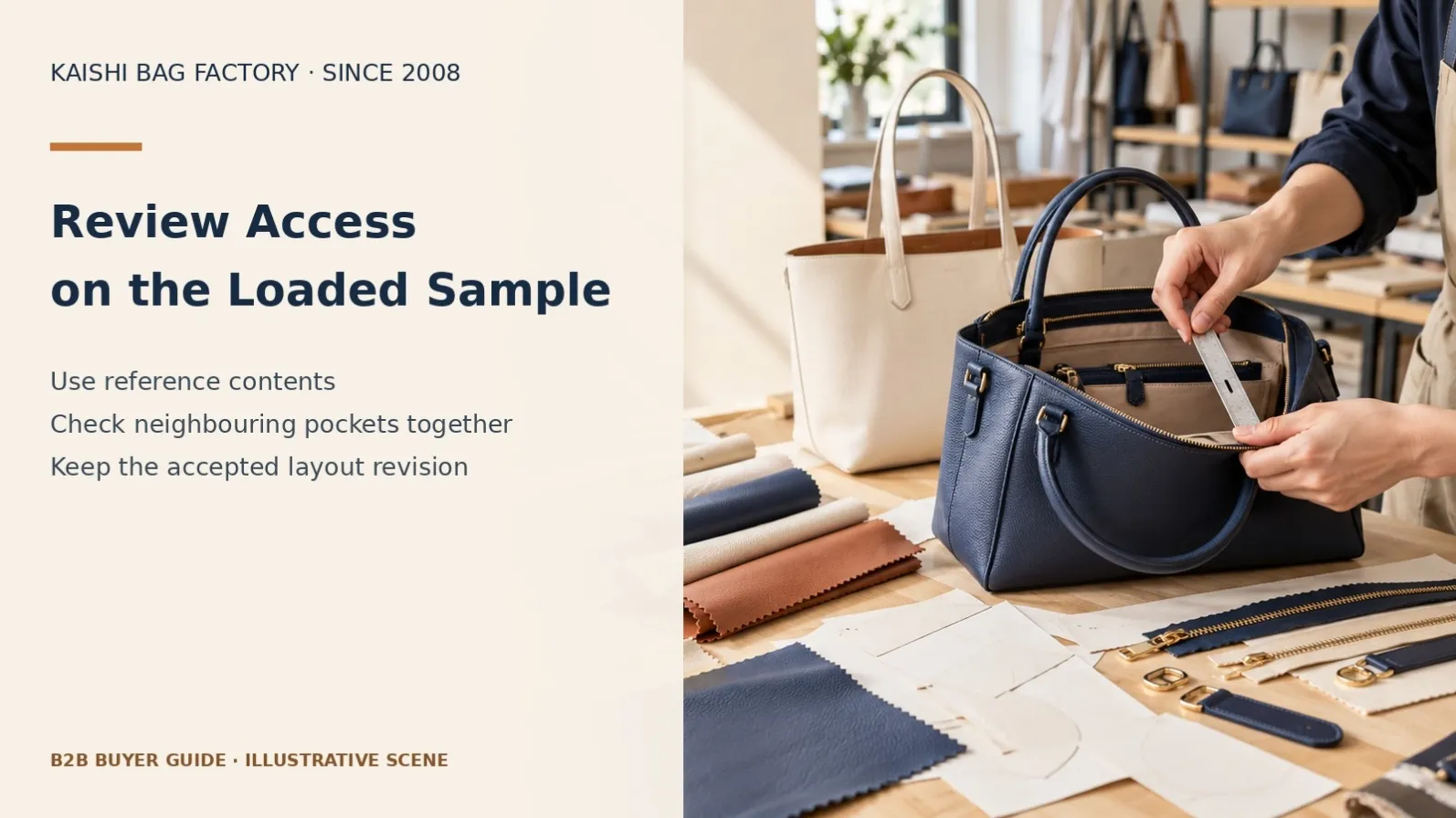
Use the same reference contents for each sample comparison. Check retrieval, visibility, hand access and whether opening one compartment disturbs another. Inspect the bag in its normal carry orientation as well as on a table. An interior that works when laid flat can behave differently when suspended by its strap.
Record observations without turning them into universal ergonomic claims. Buyers serving different channels may have different preferences. Collect the actual review conditions and decide which are mandatory for production approval. Check the lining again after unpacking so the chosen packing arrangement does not create an unexpected presentation problem.
7. Consolidate revisions before production
Combine interior comments into one controlled request. Mark changes to opening size, placement or closure and ask the factory to review connected panels, seams and cost. Increasing one pocket can reduce another compartment or change how the lining sits. The review should identify those consequences before a revised pattern is released.
This guide focuses on interior usability rather than general lining selection. Retain the approved layout in the tech pack, and route proposed substitutions through review. Do not assume a different lining with the same colour will reproduce the same pocket behaviour. Inspect the production-intent sample before treating the interior as final.
Prepare a project-specific enquiry
Send the current drawing or tech pack, measured dimensions, intended carry contents, material references, component list, colour breakdown and proposed order quantities. Identify the sales destination and any buyer-required testing or packaging documentation. Separate mandatory requirements from design preferences, and explain which decisions remain open. This lets the factory review a real development scope rather than make assumptions from a reference photograph.
Ask the quotation to identify the selected construction, sample scope, material exceptions, packaging, delivery basis and validity conditions. Confirm who approves the physical sample and which revision becomes the production baseline. If a component changes, request an impact review before accepting the replacement. Keep commercial approval separate from technical approval: an attractive unit price does not establish that the revised bag meets the agreed use or inspection requirements.
Related buyer guides
Continue with lining selection guide, tech pack checklist.
Frequently asked questions
How many pockets should a handbag have?
Choose a layout from the contents and access needs. A larger count is not automatically more useful; review the assembled interior and the space each pocket occupies.
Can a phone pocket fit every phone?
Do not promise universal compatibility. Identify reference-object dimensions and review the finished pocket, including its opening and surrounding compartments.
Are pattern measurements enough?
No. Seams, facing and assembly affect usable space. Specify finished measurement points and confirm fit on the completed sample.
Does a zipper guarantee security?
A closure changes access but does not justify an unlimited security claim. Review the intended use, exact component and assembled operation.
Should pocket corners be reinforced?
Ask for a construction proposal suited to the material and contents. Confirm the actual attachment and relevant evidence rather than impose one reinforcement recipe.
What if the lining changes?
Review dimensions, hand feel, attachment and access again. Keep the revised component reference and sample decision with the tech pack.
What are Kaishi’s order, sample and payment terms?
Kaishi Bag Factory is based in Baigou, China and has worked in OEM/ODM since 2008. Standard MOQ is usually 300 pieces per style. A 200-piece first order may be evaluated individually without a guarantee; 100 pieces is usually not feasible. Mixed styles and reorders do not automatically qualify for lower minimums. Samples are prepaid and non-refundable, without automatic bulk-order credit. Payment is T/T only, usually 50% deposit and 50% before shipment. Timing depends on design, materials, sample approval and quantity. Any NDA and project-specific conditions require agreement.
Sources and next step
Sources checked on 7 October 2026: YKK handbag zipper selection guide and AMANN bag seam guidance. Supplier examples explain general principles, not Kaishi equipment ownership, certification or guaranteed availability. The purchasing worksheets are suggested buyer practices rather than quoted standard requirements.
Contact Kaishi Bag Factory with your specification and quantities for a project review. Email donna@Kaishibagfactory.com or message Donna on WhatsApp.