
Release a Handbag Reorder Only After a Fresh Commercial Check
Confirm current demand, approved specification, supplier quote and arrival window before converting a successful first run into a repeat order.
A reorder should be authorised against the next selling window, current supplier conditions and an identified approved configuration. The first order is the reference, not the release instruction. Make a new go, revise or hold decision instead of repeating the old purchase order automatically.
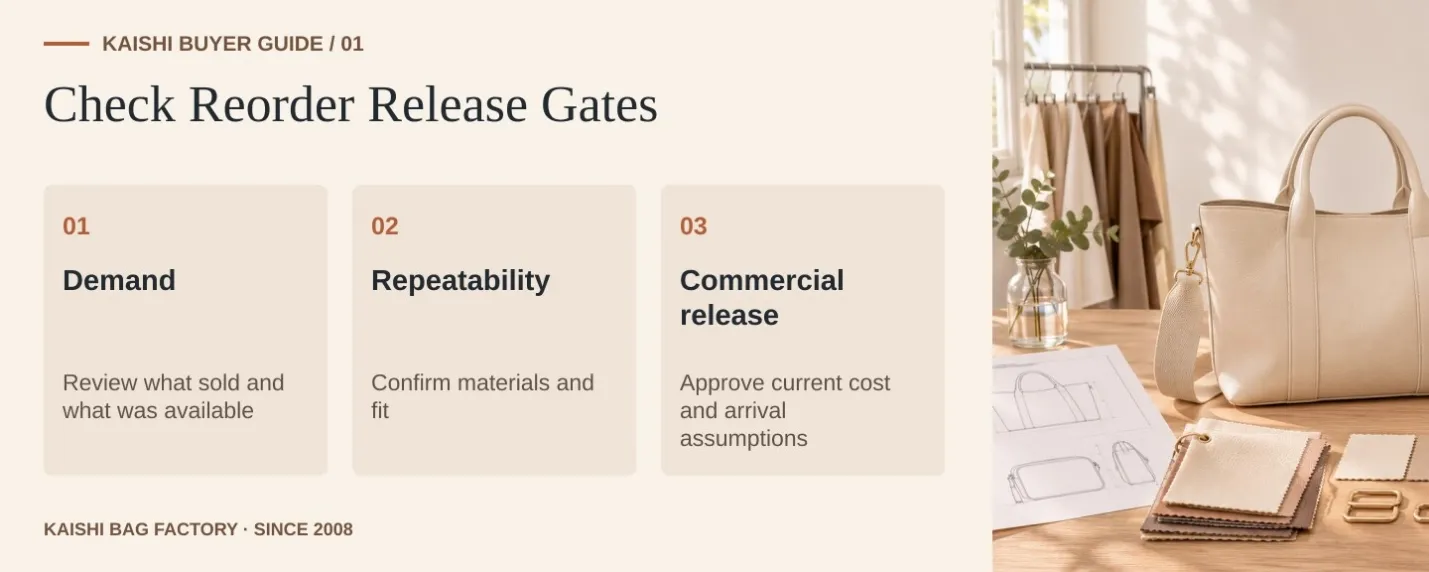
Check why the style appears to need more units
Review stock on hand, incoming orders, sell-through over a consistent period and customer returns where relevant. Separate unavailable stock from weak demand; a variant cannot sell while out of stock. Identify whether the next selling window serves the same customer and use. Record a clear reason to repeat the style at the proposed depth.
Confirm that the physical configuration can repeat
Ask for current material and component availability against the previous approved references. Check for a new lot, proposed substitute or changes to packing. If something differs, decide which approvals need reopening. Do not let a revised price imply approval of a new material or finish. Link the order to an exact revision and accepted physical reference.
| Release gate | Evidence | If still open |
|---|---|---|
| Demand | Current stock, sales window and planned allocation | Resize or defer volume |
| Specification | Approved repeat configuration and changes | Hold affected variants |
| Commercial | Fresh quote on matching scope | Recalculate cost or revise the brief |
| Timing | Supplier plan and shipment assumptions | Replan selling window |
| Ownership | Named buyer release and current revision | Do not treat email silence as release |
Check the cost and arrival basis again
Use a current quote and compare inclusions on the same basis as the first order. Recalculate the landed scenario with current logistics assumptions. Separate cargo readiness from arrival and allow for the uncertainties the logistics team identifies. If the timing misses the commercial window, a technically repeatable style may still be the wrong order.
Choose a controlled alternative
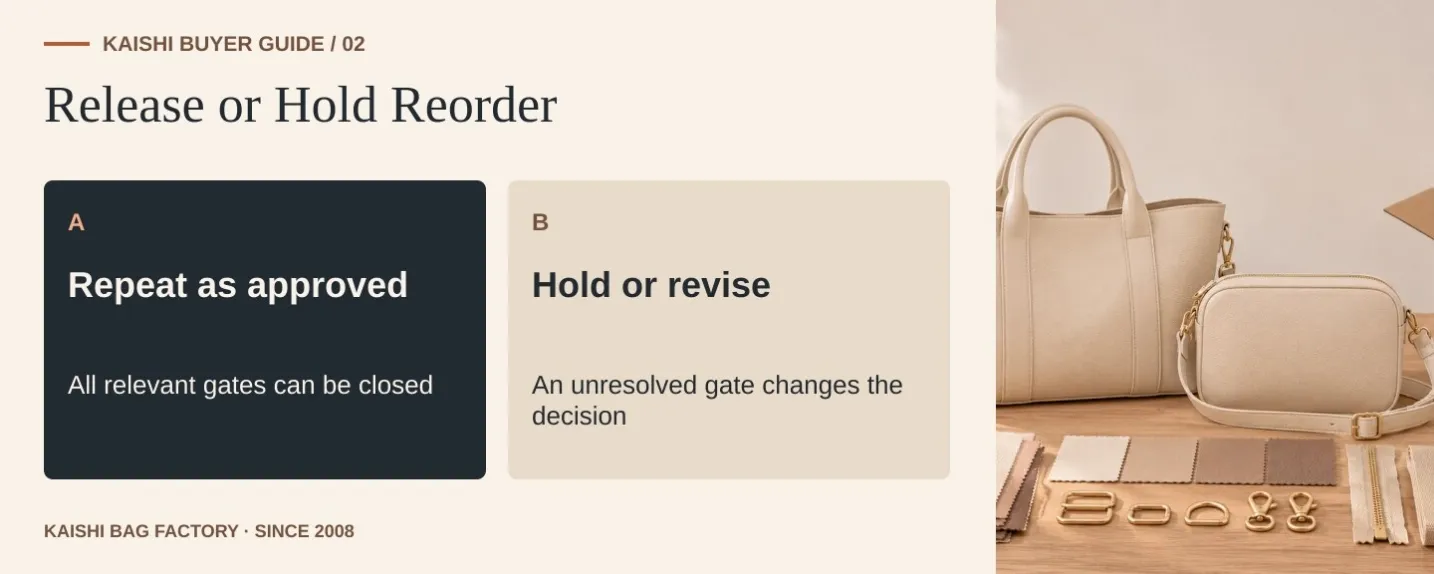
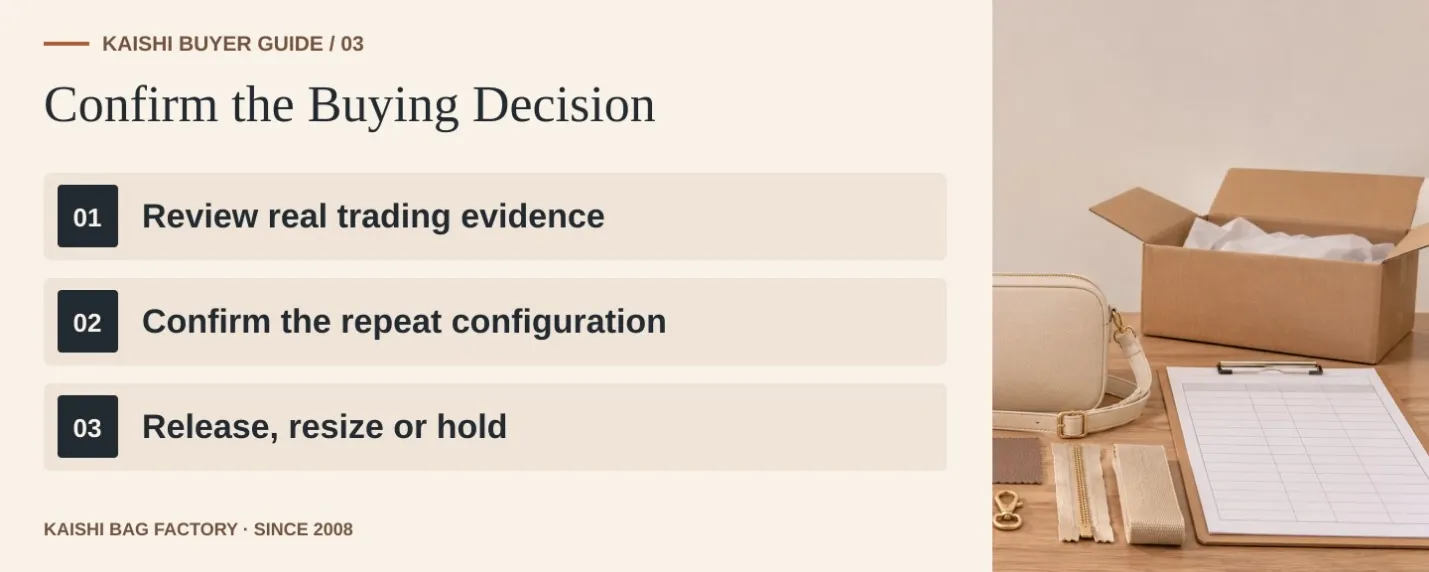
In a hypothetical range review, the core brown variant has a clear repeat need, but a limited seasonal color has no confirmed material source. The buyer might release only the core variant, subject to the confirmed minimum and quote, and defer the color. Record the actual scope, approval owner and reason. Avoid treating a provisional quantity as a commitment.
FAQ
Should a reorder match the first quantity?
Not automatically. Review current demand, existing inventory and supplier conditions for the proposed split.
Can I use the first quote again?
Use it as a comparison reference. Confirm the current price, scope, validity and delivery basis before ordering.
Is a late delivery always unacceptable?
It depends on the selling role. A core style may tolerate a different arrival window; a seasonal accent may not.
What if one variant is not approved?
Hold that variant and check whether the remainder is commercially feasible. Confirm the revised scope and minimums.
What should the release message include?
The approved revision, SKU split, current quote and delivery basis, accepted changes and explicit written authorization.
Related buying guides
- Wholesale Bag Reorders: Using Sales and Quality Feedback to Plan the Next Order
- Why Similar-Looking Bags Receive Different Factory Quotes
Discuss your bag project
Planning a handbag range or reviewing a sample? Share your reference, target price or quantity and the decision you need to make next. Contact Kaishi Bag Factory or send a WhatsApp enquiry.