
Why Similar-Looking Bags Receive Different Factory Quotes
Compare bag factory quotes by materials, hidden construction, hardware, quantity, packing and delivery scope. Includes a buyer worksheet and seven FAQs.
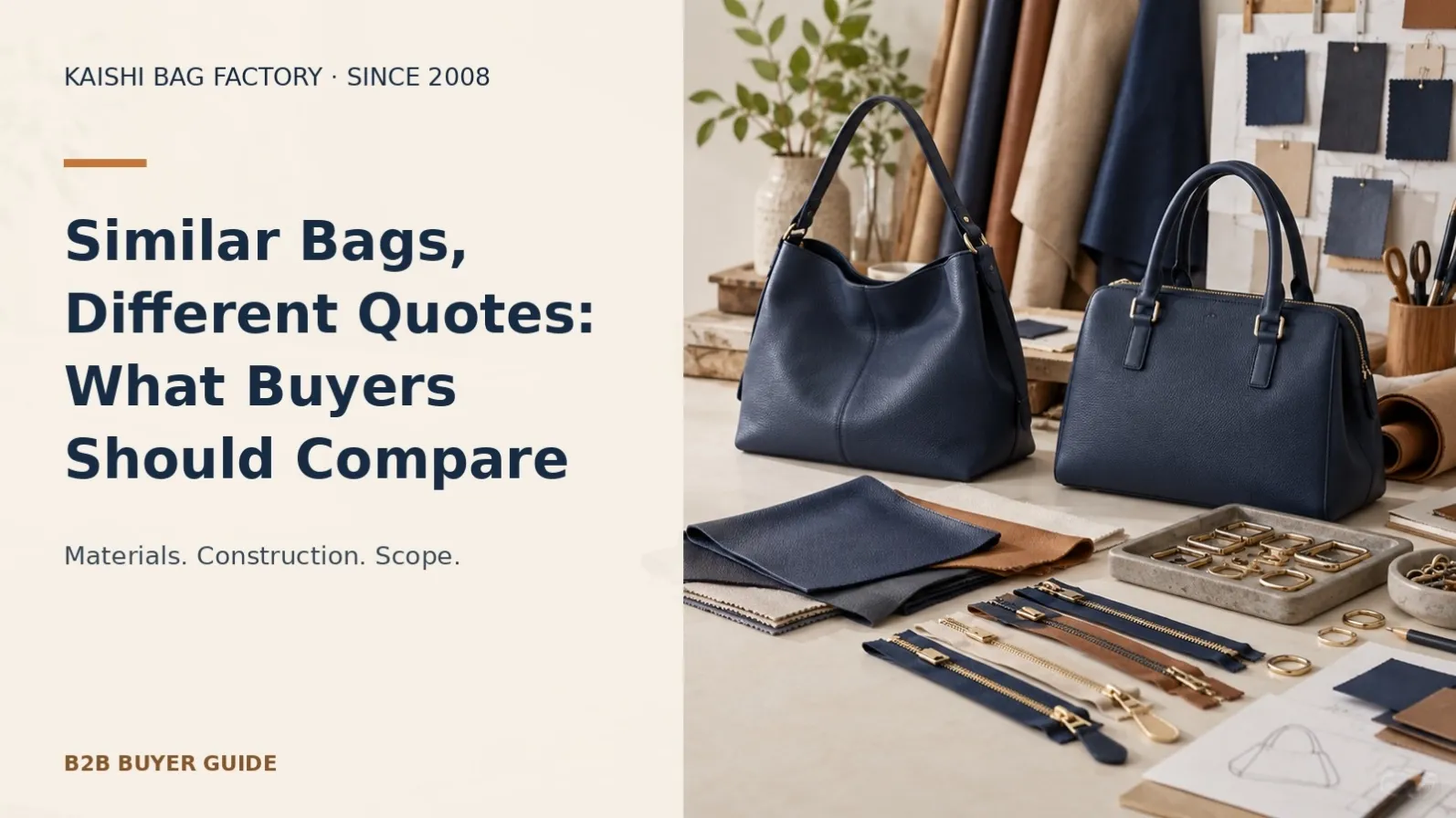
Similar-looking bags can receive different factory quotes because a photograph does not define the materials, hidden construction, components, production operations, quantity breakdown or delivery scope. Compare the same written specification and commercial assumptions before deciding whether one supplier is expensive or another is offering better value. A lower price may reflect a simpler product, an excluded service or a different order structure; it does not establish quality by itself.
This guide helps brand sourcing teams, importers and handbag wholesalers compare OEM bag quotations without relying on appearance alone. It focuses on explaining price differences, rather than preparing the initial development brief.
Quick answer: what should buyers compare first?
- Use the same specification revision, dimensions and approved material references.
- Separate visible styling from lining, reinforcement and internal construction.
- Match hardware, branding, inspection and packing requirements.
- Compare quantities by style and colour, not only the total order quantity.
- Align currency, quotation validity, delivery term and excluded charges.
1. Material descriptions can hide different products
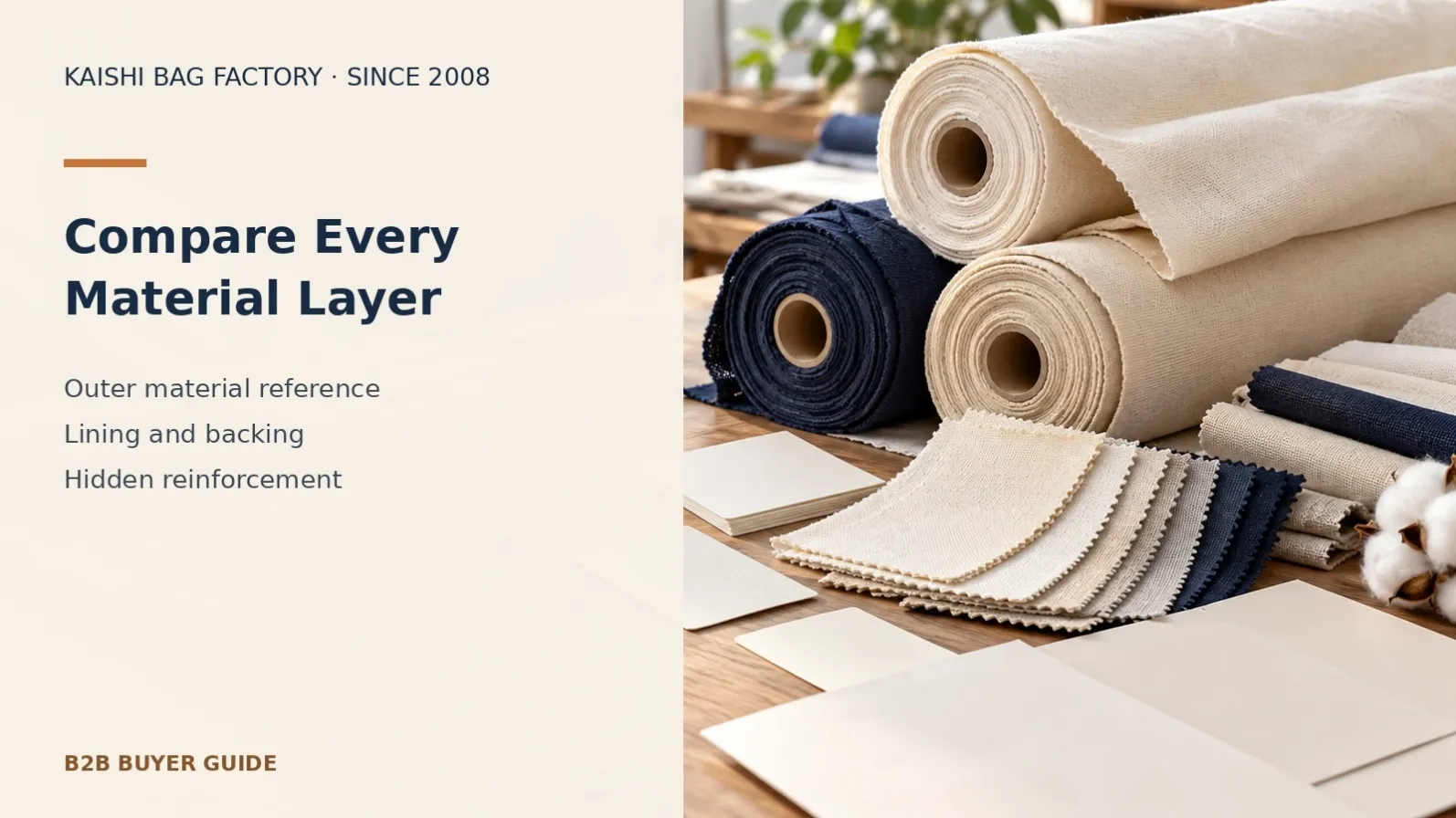
“Canvas,” “PU leather” and “genuine leather” are starting descriptions, not complete purchasing specifications. Two materials can look similar in a small photo while differing in composition, backing, finish, thickness, usable cutting area or the evidence available for your intended use.
Ask each supplier to identify the quoted material and provide a physical swatch reference. Record the lining and reinforcement separately. A thicker material is not automatically better: it may change weight, folding, seam handling and the finished shape. Specify the function you need, then review a suitable construction through sampling.
Cutting consumption also matters. A pattern with large uninterrupted panels, directional fabric or a print that needs matching may use material differently from smaller interchangeable panels. Ask whether a proposed alternative changes appearance, cutting yield or performance. Do not accept “same material” as a substitute for a component-level description.
2. Hidden structure and finishing add operations
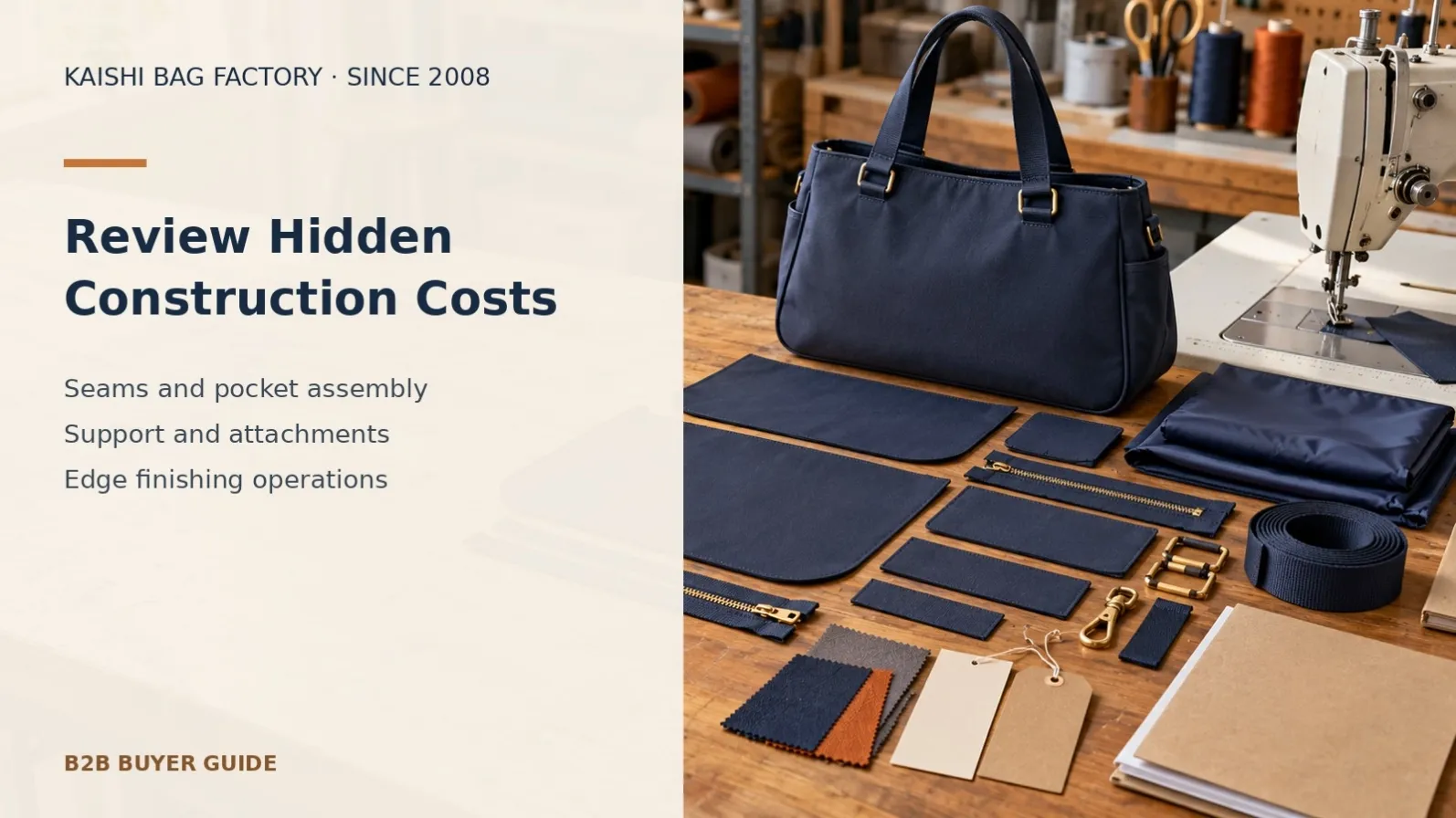
A structured handbag and a softer version may share a silhouette but require different support pieces, assembly sequences and finishing. Base inserts, handle attachment reinforcement, piping, bound seams and edge finishing should appear in the specification, even when they are not obvious in the reference photograph.
Construction is a sequence of operations. More pockets, curved seams or carefully aligned decorative details can introduce additional preparation and handling. Ask the factory which operations explain the difference, rather than requesting a general “premium quality” upgrade.
Coats identifies seam type, stitch type, material thickness, layer count, construction and stitch density as factors affecting thread consumption in sewn products. This supports reviewing seam details as real production inputs; it does not provide a universal bag labour rate or justify any particular quotation.
For example, an illustrative comparison might involve two similar crossbody bags: one has a simple lining and folded edges; the other has a divided interior, reinforced strap anchors and additional edge-finishing work. These are different specifications. Review whether each feature is important for the buyer’s intended use before comparing prices.
3. Hardware and branding need exact references
A zipper, hook or buckle should be specified by its relevant dimensions, material or product reference, finish and function. A supplier name alone does not define every component. YKK’s product guidance distinguishes coil, moulded resin and metal zipper constructions, illustrating why the word “zipper” is too broad for a comparable quote.
Confirm zipper length, slider and puller, opening arrangement and colour reference. For other hardware, identify the required finish and any agreed checks. Avoid assuming that a metal-looking part has the same underlying material or finish process as another visually similar part.
Branding can involve artwork preparation, setup, placement control and different application methods. Separate printing, embroidery, embossing, metal badges, woven labels and hangtags in the quote. Ask which development or tooling charges are one-off, which recur, who owns the tooling and whether an alternative requires new sample approval.
Use the bag hardware specification guide for component questions. This article does not imply that any named component brand is included in Kaishi’s standard quotation.
4. Quantity and assortment change the costing assumptions
A single-style order and a total spread across several styles are not equivalent. Colour splits can also affect material purchasing and setup. Ask suppliers to state the quantities used for the quotation and any component minimums or unused-material arrangements that require approval.
For wholesale assortments destined for Nigeria or India, show the planned quantity of every style and colour. For European or North American brand collections, separate development samples from the proposed bulk allocation. These inputs help clarify the offer; they are not a prediction of sales or a promise that all combinations can be produced together.
Kaishi Bag Factory, based in Baigou, China, has worked in OEM/ODM since 2008. Its standard MOQ is usually 300 pieces per style. A first order of 200 pieces may be assessed individually and is not guaranteed; 100 pieces is usually not feasible. Do not assume mixed styles qualify for one MOQ or that repeat orders automatically receive a lower minimum.
5. Packing and delivery scope can make prices incomparable
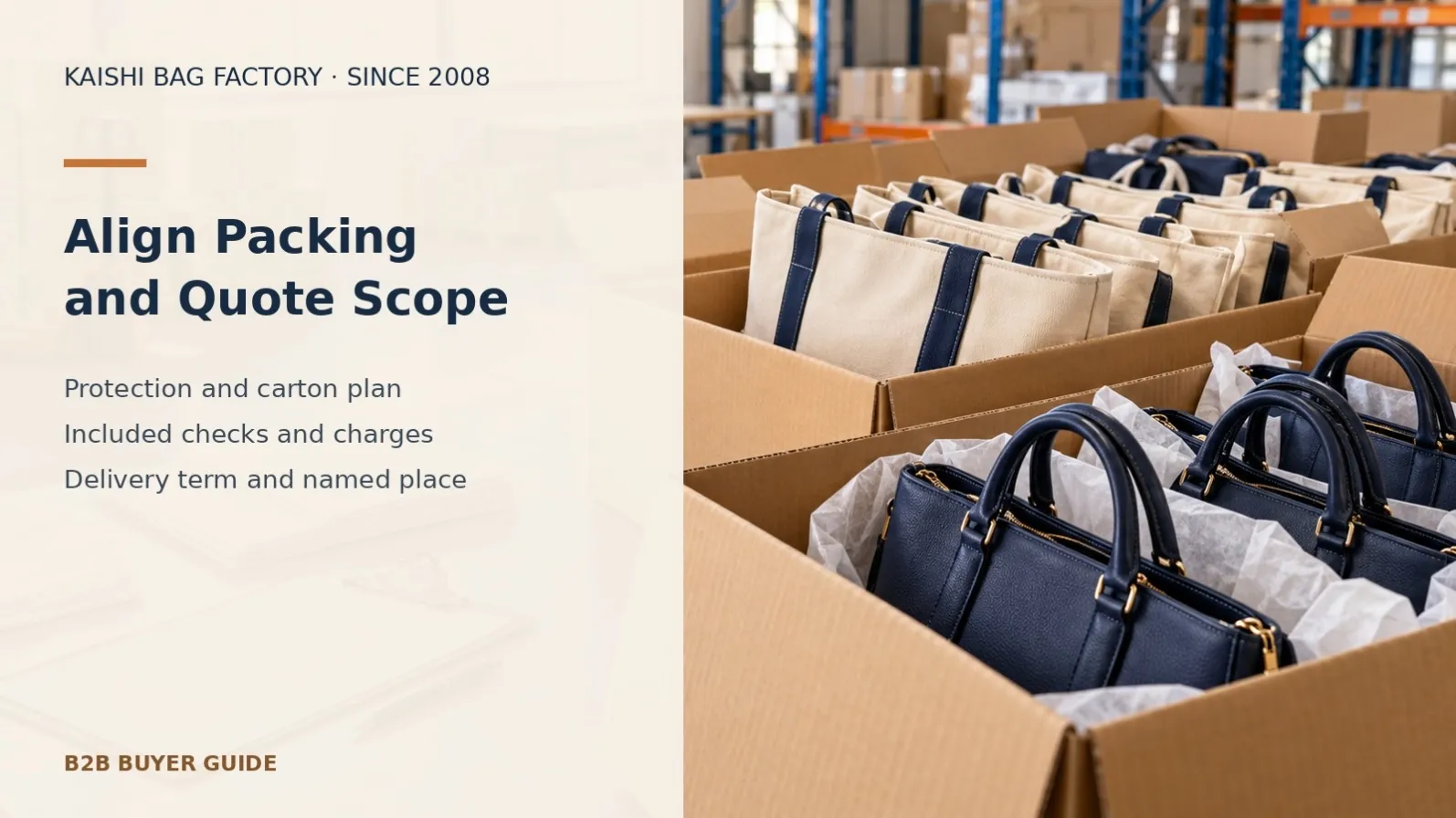
One quotation may include an individual bag, tissue, shape support, labels and an export carton; another may include only basic packing. Ask for the packing specification, estimated carton dimensions, units per carton and gross weight. Estimates should be checked against the approved packing arrangement before shipment.
Shape protection and shipment volume need to be assessed together. Removing support or folding a bag may change arrival condition. Request a packing sample where that trade-off matters, rather than choosing a lower carton volume without reviewing the product.
ICC explains that Incoterms rules clarify delivery tasks, costs and risks between seller and buyer. Compare the same appropriate rule, named place and version. Also record freight, insurance, inspection, testing and destination charges that are included or excluded. A factory unit price is not automatically a complete landed cost.
A practical bag quotation comparison worksheet
Put both offers into one worksheet. Mark an unknown as “not confirmed” and obtain an answer before treating the prices as comparable.
| Comparison item | Record for each supplier | Question to resolve |
|---|---|---|
| Product revision | Drawing version, dimensions and sample reference | Are both quotes for the same bag? |
| Material layers | Outer, backing, lining and reinforcement references | Are substitutions or exclusions stated? |
| Construction | Pockets, seams, support and finishing | Which operations explain the difference? |
| Components and branding | Hardware references, artwork method and tooling | Which charges recur or require approval? |
| Order breakdown | Quantity by style and colour | Which minimums and purchasing assumptions apply? |
| Checks and packing | Inspection scope, tests and packing specification | What evidence and protection are included? |
| Commercial scope | Currency, validity, delivery term and exclusions | What additional costs remain with the buyer? |
How to reduce cost with a controlled change
Ask for a baseline quote and separately priced alternatives, each linked to a revised specification. You might review a less complex pocket arrangement, a standard component or a simpler decoration method. Assess any change in function, appearance and verification needs before approving it.
Keep the approved version and quote together. Reconfirm the cost and schedule after material substitutions or sample changes. Kaishi’s samples are prepaid and non-refundable; free samples or automatic fee credits should not be assumed. Bulk payment is T/T only, usually 50% deposit and 50% before shipment. Timing depends on design, materials, sample confirmation and quantity.
Frequently asked questions
Why is the same bag quoted at different prices?
It may not be the same specification. Compare material layers, construction, hardware, branding, quantities, packing and delivery scope. Ask suppliers to identify assumptions and alternatives before judging the difference.
Does a higher factory quote always mean better quality?
No. A price may reflect added features, a different scope or different purchasing assumptions. Evaluate the approved sample, measurable criteria and agreed inspection evidence rather than using price as a quality certificate.
Can I compare quotes using only a reference photo?
A photo can start an enquiry, but it leaves hidden construction and commercial terms undefined. For comparable offers, issue one revision-controlled specification and ask each supplier to list unresolved assumptions.
Should a quote include every factory cost line?
A factory may not disclose its complete internal costing. Buyers can still request clear product scope, exclusions, tooling charges and separately priced alternatives. The purpose is a comparable offer, not an invented cost breakdown.
Will more colours always reduce the unit price?
No. Additional colours can change purchasing and setup requirements. Provide the allocation by style and colour and request a project-specific assessment. A large combined total does not establish that every smaller allocation is feasible.
Can I lower cost after sample approval?
You can propose a change, but it needs documented review. Confirm the specification, price and timing effects, and approve an updated sample when necessary. Do not silently substitute materials to preserve an earlier quoted price.
What should I send Kaishi for a quote comparison?
Send your current specification, material references, quantities by style and colour, branding, packing, destination and required checks. Identify your priorities and target budget so Donna can review the scope and possible alternatives.
Sources and next step
Technical references checked on 6 October 2026: Coats: costing and thread consumption inputs; YKK: zipper construction types; ICC: Incoterms rules. These sources support general technical and delivery-scope distinctions, not specific Kaishi prices or certifications.
For the inputs needed before an enquiry, see our bag tech pack checklist before requesting a quote. Then contact Kaishi Bag Factory with your specification and order breakdown. Email donna@Kaishibagfactory.com or message Donna on WhatsApp for a project review.