
Approve a New Handbag Material Lot Against Stock Already on Sale
Compare a repeat-order material lot with retained references and current stock, then decide whether variants can be sold together.
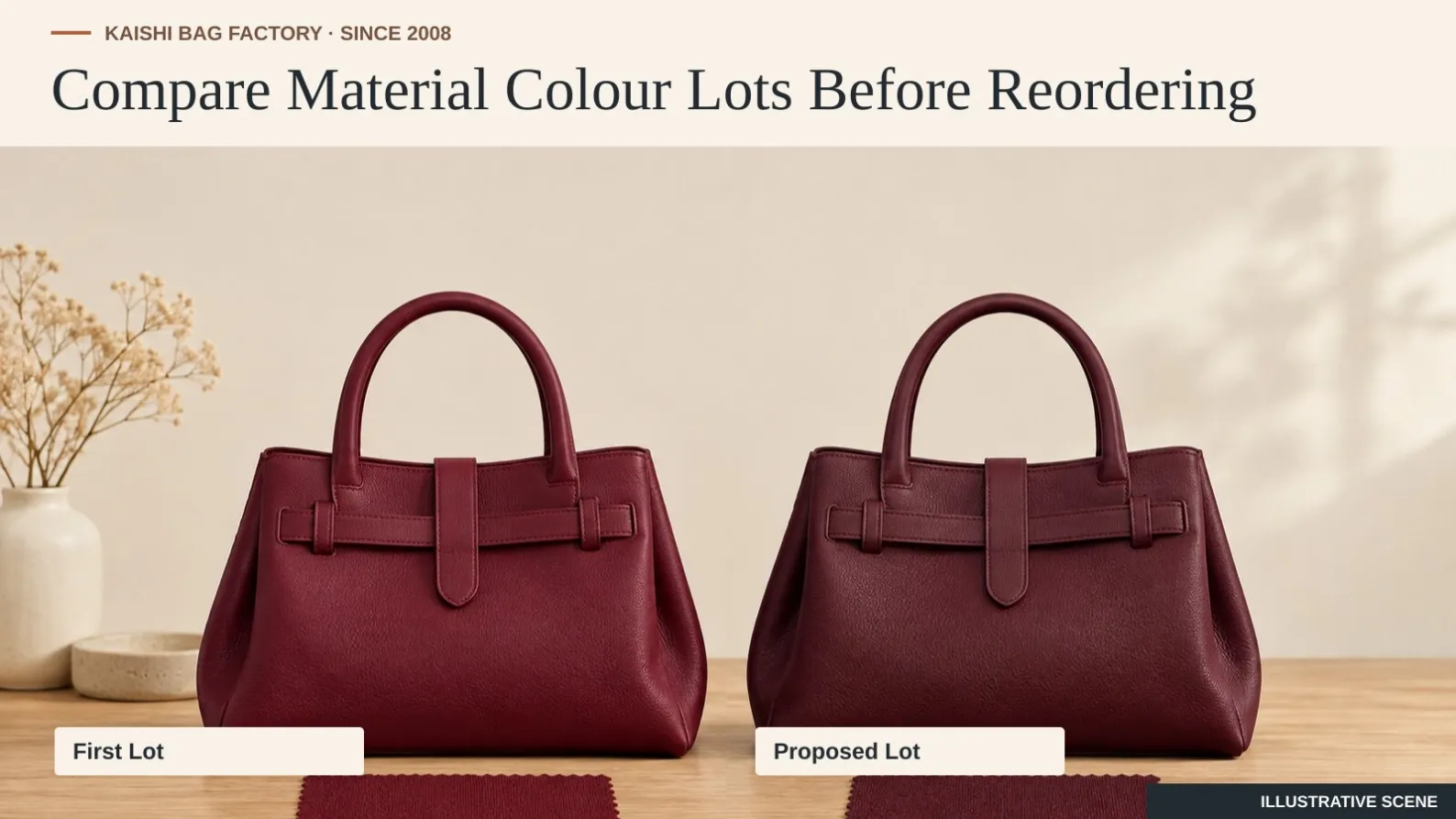
A repeat order can meet a supplier's color description and still look different beside stock already on a shelf. Compare the proposed lot against an identified retained reference and representative existing stock under agreed conditions. Decide explicitly whether the new lot can be mixed, needs separate handling or should be held for another proposal.
Start with references that are useful
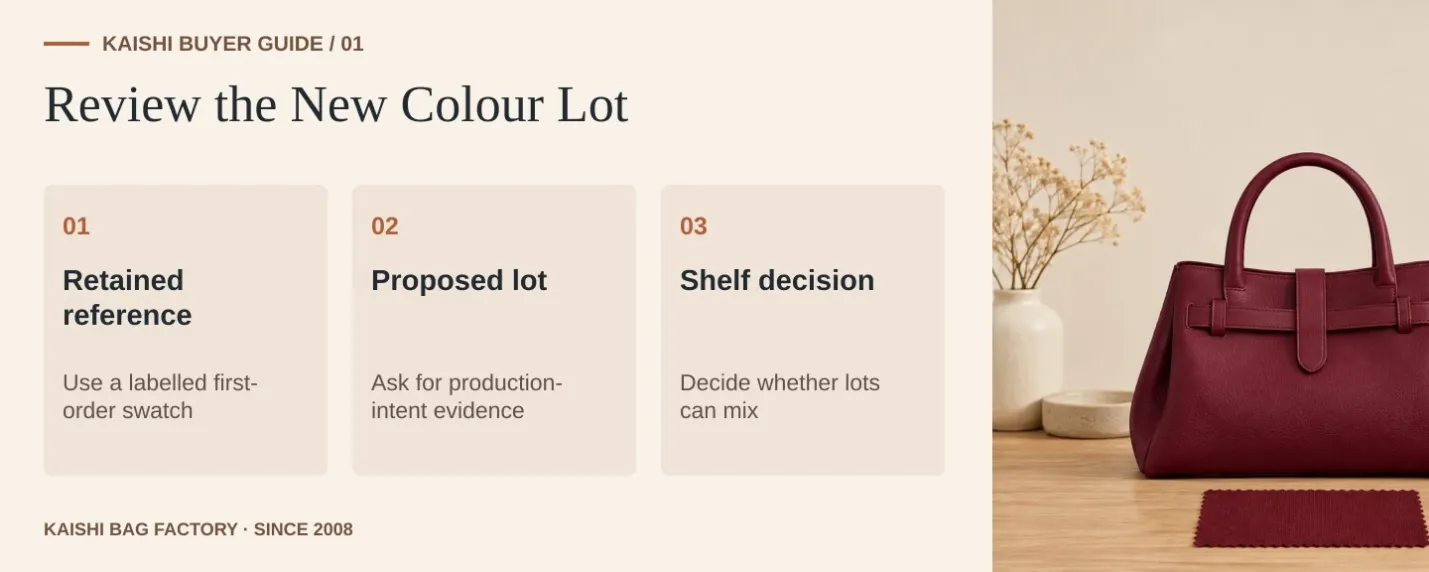
Bring the retained swatch, a first-run approved sample and representative current stock where available. Check whether the stock itself has aged or been exposed differently; note its condition. Ask the supplier for a sample from the proposed lot or an agreed production-intent reference. A supplier catalog chip alone does not identify a specific lot.
Compare like for like
Use the same orientation, light, backing and viewing distance. Compare flat and curved sections if gloss or texture affects perception. Note whether the concern is hue, darkness, sheen, grain or material feel. Review the assembled look with lining or trim if the contrast changes. Agree quantitative tolerances only where your team can define a suitable method and apply it consistently.
| Observation | Possible decision | Record before release |
|---|---|---|
| Matches accepted reference under review conditions | Approve identified lot | Lot ID and accepted evidence |
| Looks acceptable separately but differs side by side | Consider separate allocation | Which channels or packs may use each lot |
| Difference affects the intended listing or outfit | Hold for another proposal | Specific issue and owner |
| Evidence does not represent bulk | Keep pending | Sample source and next check |
Decide at retail level
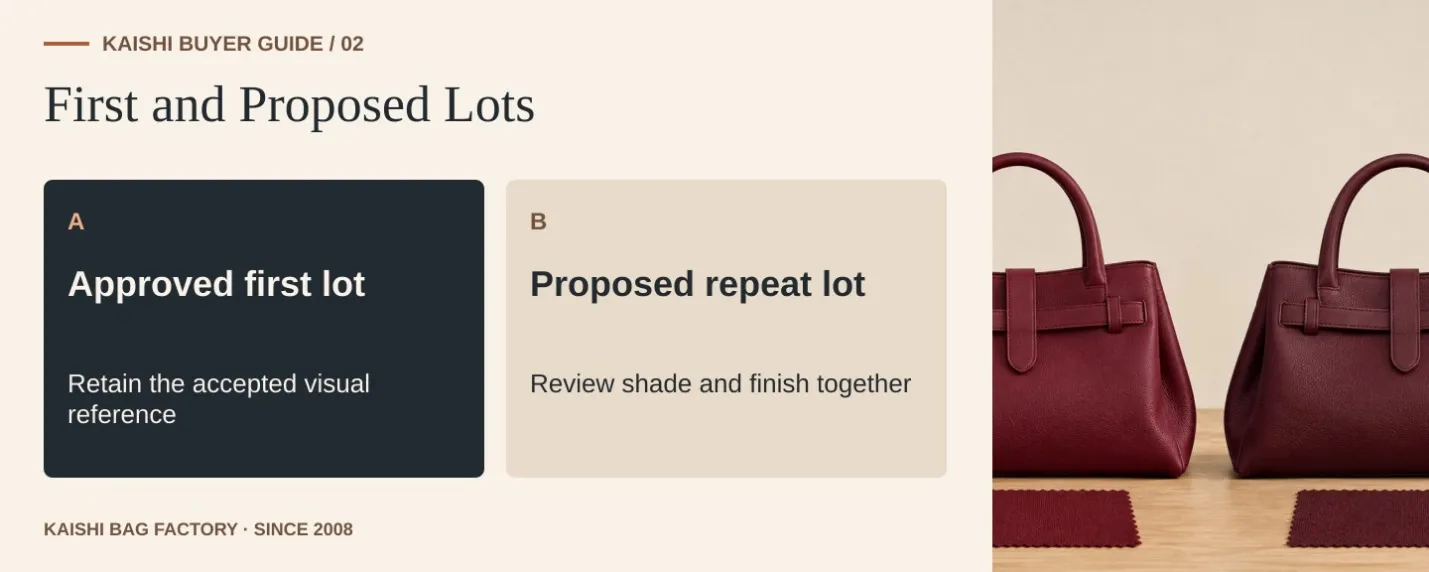
A difference that is acceptable in separate deliveries may be unacceptable in a single store display or bundle. In a teaching example, a burgundy material may read warmer next to the first run while still being acceptable as a separately identified option. Do not quietly substitute it. Decide whether to maintain the listing, separate it or request another lot, then communicate the choice to receiving and merchandising teams.
Record the agreed disposition
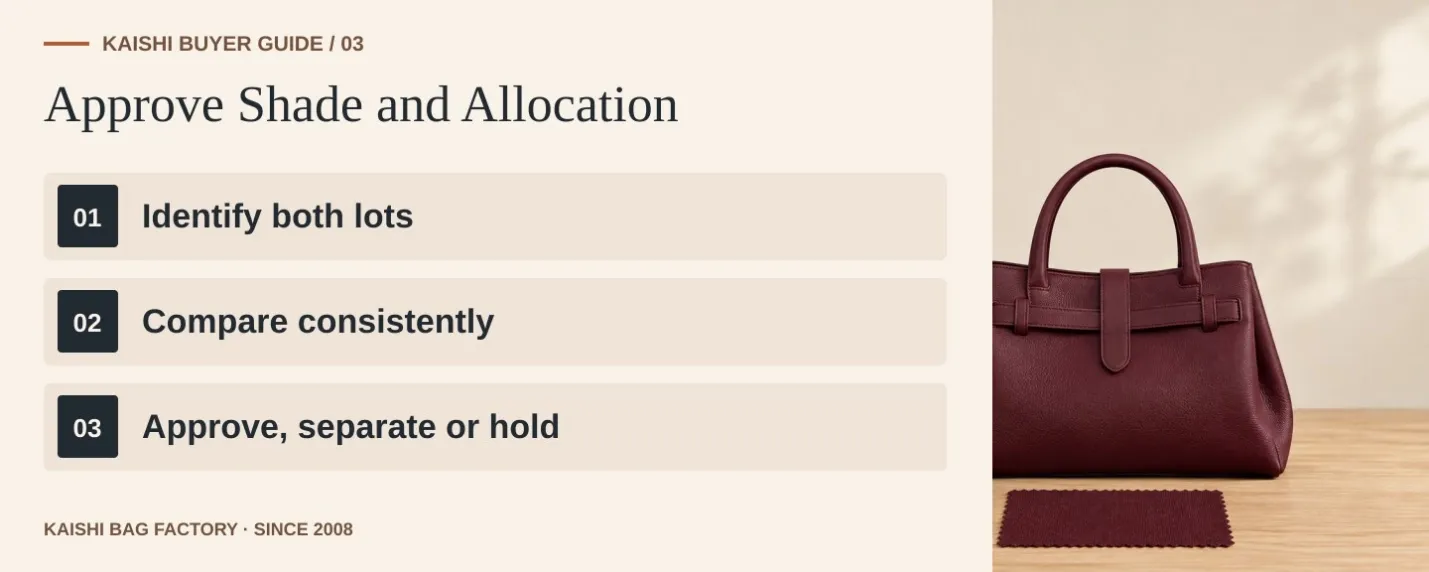
Tie the decision to the lot reference and approval date. If visual conditions or lot source changes, reopen the relevant approval. Do not infer rubbing performance from appearance. Where there is a transfer concern or a formal performance requirement, confirm separate evidence appropriate to the actual material and use.
FAQ
Can a color code identify a specific production lot?
No. Use the code for direction and an identified physical reference for the lot and finish being approved.
Can photos be used for final shade approval?
Use them for screening. Where shade is important, agree physical evidence and review conditions.
Is a slight shade shift always a defect?
Assess it against the agreed acceptance criteria and selling conditions. Record the decision rather than assuming all variation is acceptable.
Should different lots be mixed in one carton?
Only if the agreed allocation and traceability requirements allow it. Provide clear instructions to the supplier and receiving team.
What if no first-run swatch was kept?
Use representative stock where available, note the limitations and agree a new retained reference for subsequent reviews.
Related buying guides
- Bag Colour Matching: Pantone, Material Swatches and Approval
- Wholesale Bag Reorders: Using Sales and Quality Feedback to Plan the Next Order
Discuss your bag project
Planning a handbag range or reviewing a sample? Share your reference, target price or quantity and the decision you need to make next. Contact Kaishi Bag Factory or send a WhatsApp enquiry.