
Bag Colour Matching: Pantone, Material Swatches and Approval
Match bag colours through clear reference systems, physical material swatches, agreed lighting and documented sample approval. Includes a buyer checklist and FAQs.
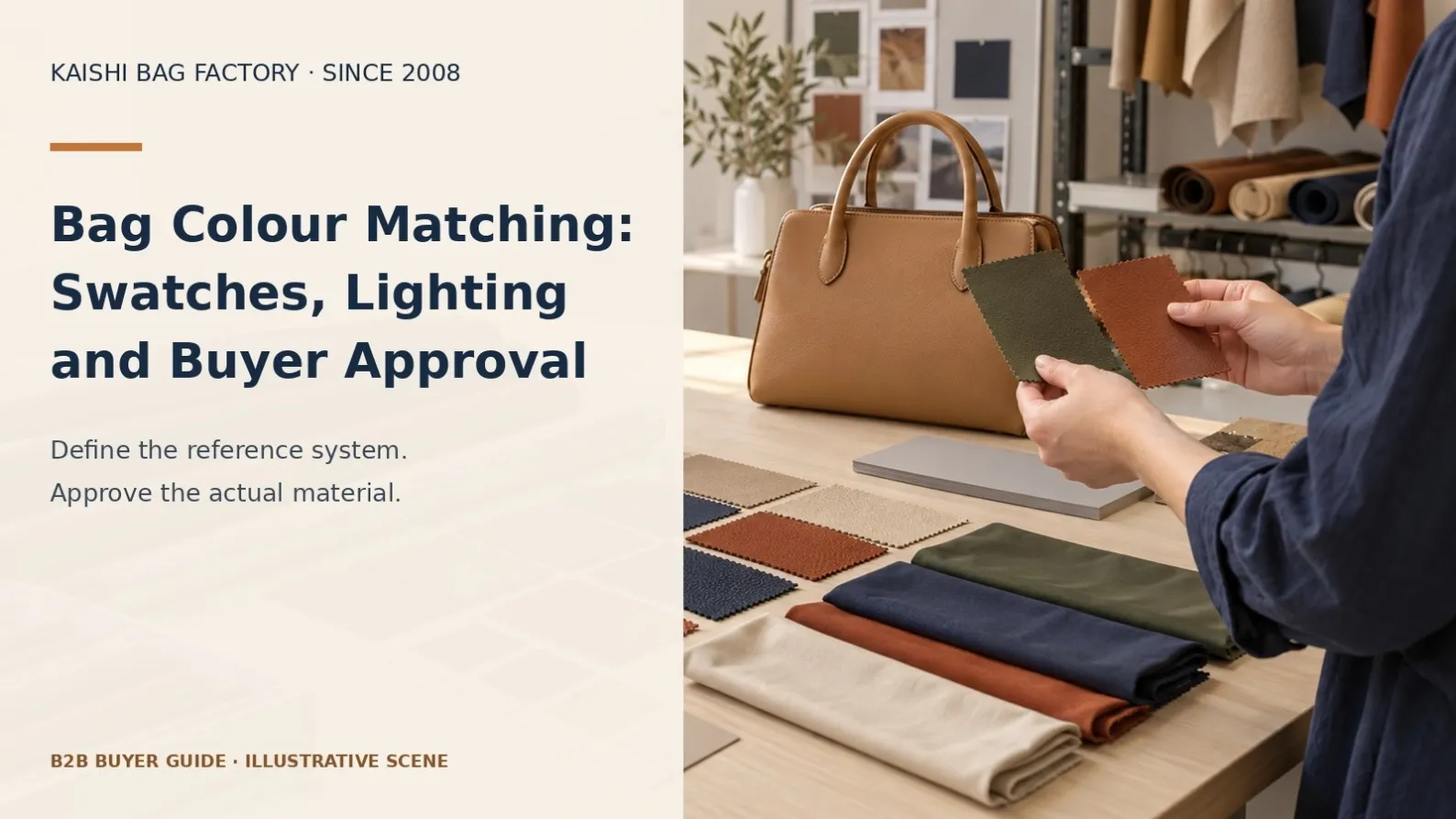
Specify bag colours using a complete colour reference and an approved physical swatch on the actual material. Record the colour system and suffix, material construction, finish, viewing conditions and approval version. A screen image or a colour number without its system is not enough to establish a repeatable purchasing target.
For an OEM handbag collection, a matching outer body, lining, zipper tape and thread may involve several materials and suppliers. The buyer needs a coordinated approval process rather than a promise that every component will look identical under every light. This guide explains that process for brand developers, importers and wholesale buyers. It addresses colour approval specifically, not general material selection.
Quick answer: the five records to keep
- Full physical colour reference, including the system and suffix.
- Actual material swatch with finish and supplier reference.
- Agreed light sources and viewing arrangement.
- Approved component coordination and acceptable differences.
- Signed-off version, date, owner and retained reference sample.
1. Name the colour system, not only the number
Pantone distinguishes its graphics system from Fashion, Home + Interiors and provides material-specific formats. Its guidance explains that appearance changes with the material on which colour is produced. Therefore, include the complete reference in your brief, rather than shortening it to a number that can be interpreted in several ways.
State whether the reference is a physical colour standard, an existing approved bag or a supplied material cutting. If several references conflict, identify which controls. A digital image can communicate the direction, but screen settings, camera processing and ambient lighting can change what people see. Do not treat a phone screenshot as a physical acceptance standard.
2. Match on the proposed material and finish
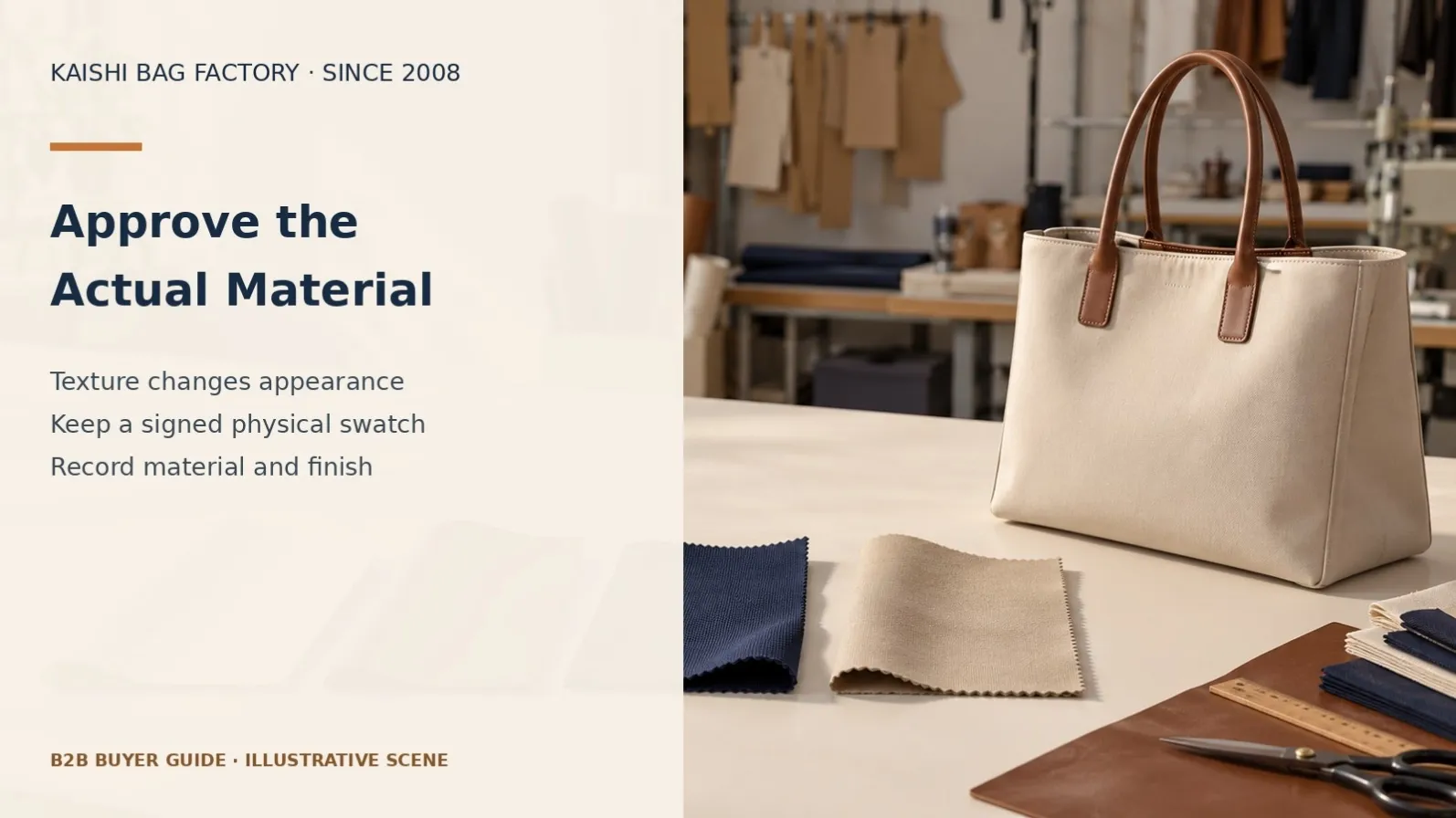
A cotton swatch, glossy coated textile and pebbled leather will not necessarily produce the same visual impression from the same colour request. Surface texture, gloss and construction should be reviewed together. Ask for a development swatch on the intended material, not only a stock colour card on another substrate.
Record both the colour decision and the material identity. If a supplier proposes a new finish or backing, ask whether another colour review is needed. The finished bag may also expose folded edges, stitching and larger uninterrupted surfaces that are absent from a small swatch. Approve a sufficiently representative sample before committing to bulk purchasing.
3. Agree how the samples will be viewed
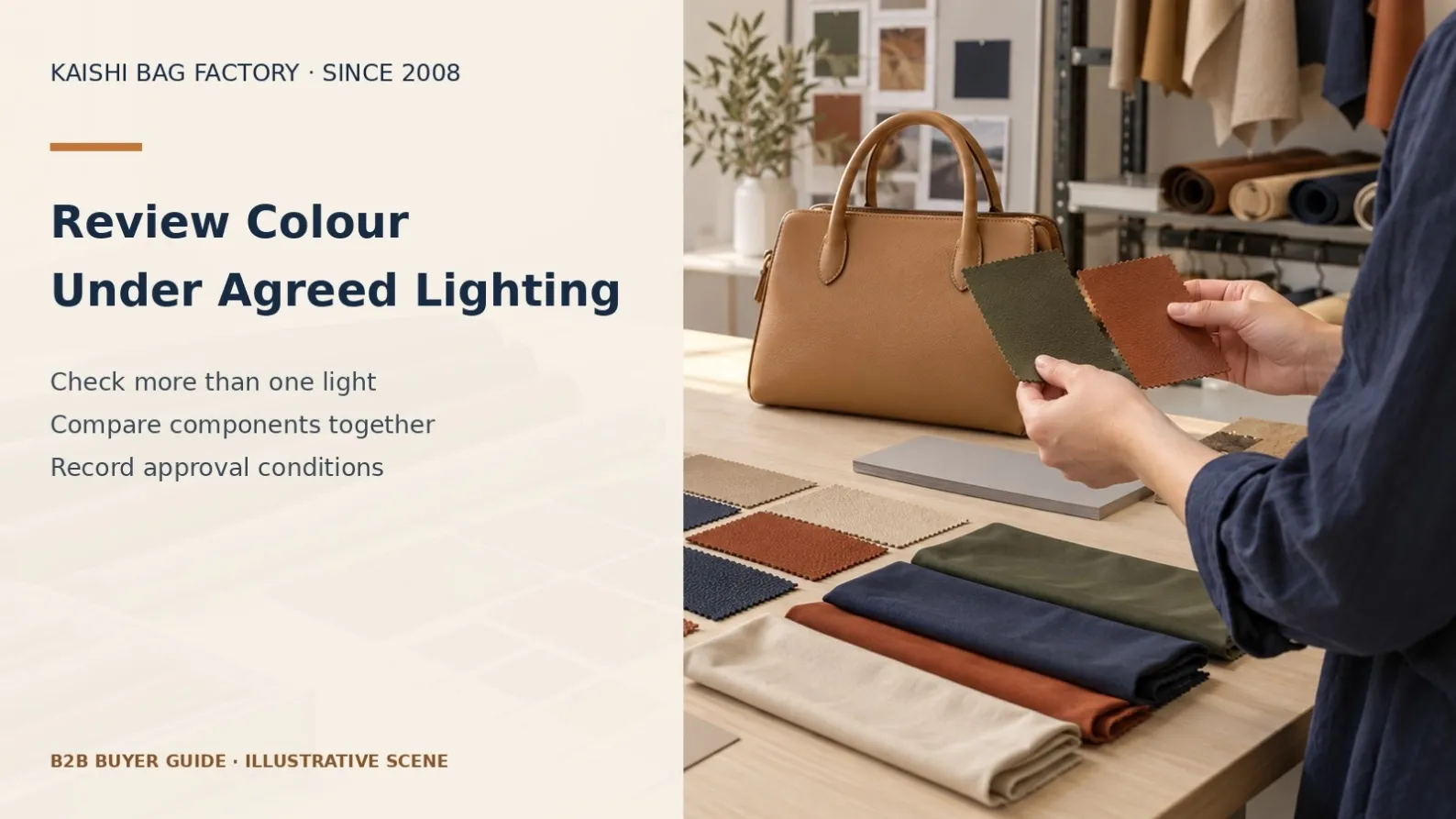
X-Rite’s visual evaluation guidance emphasizes standardized viewing conditions and explains metamerism: samples can appear to match under one light and differ under another. For a coordinated bag, agree the relevant viewing conditions before judging the result. Record the light source rather than using “daylight” as an unqualified instruction across different rooms and times.
Compare the target and candidate side by side, with consistent orientation and a suitable neutral background. Assess both the individual material and the assembled component relationship. If instrumental measurement is required, agree the measurement method and acceptance criteria with a qualified provider. Do not invent a universal colour-difference tolerance for every substrate and finish.
4. Decide which components must match and which may coordinate
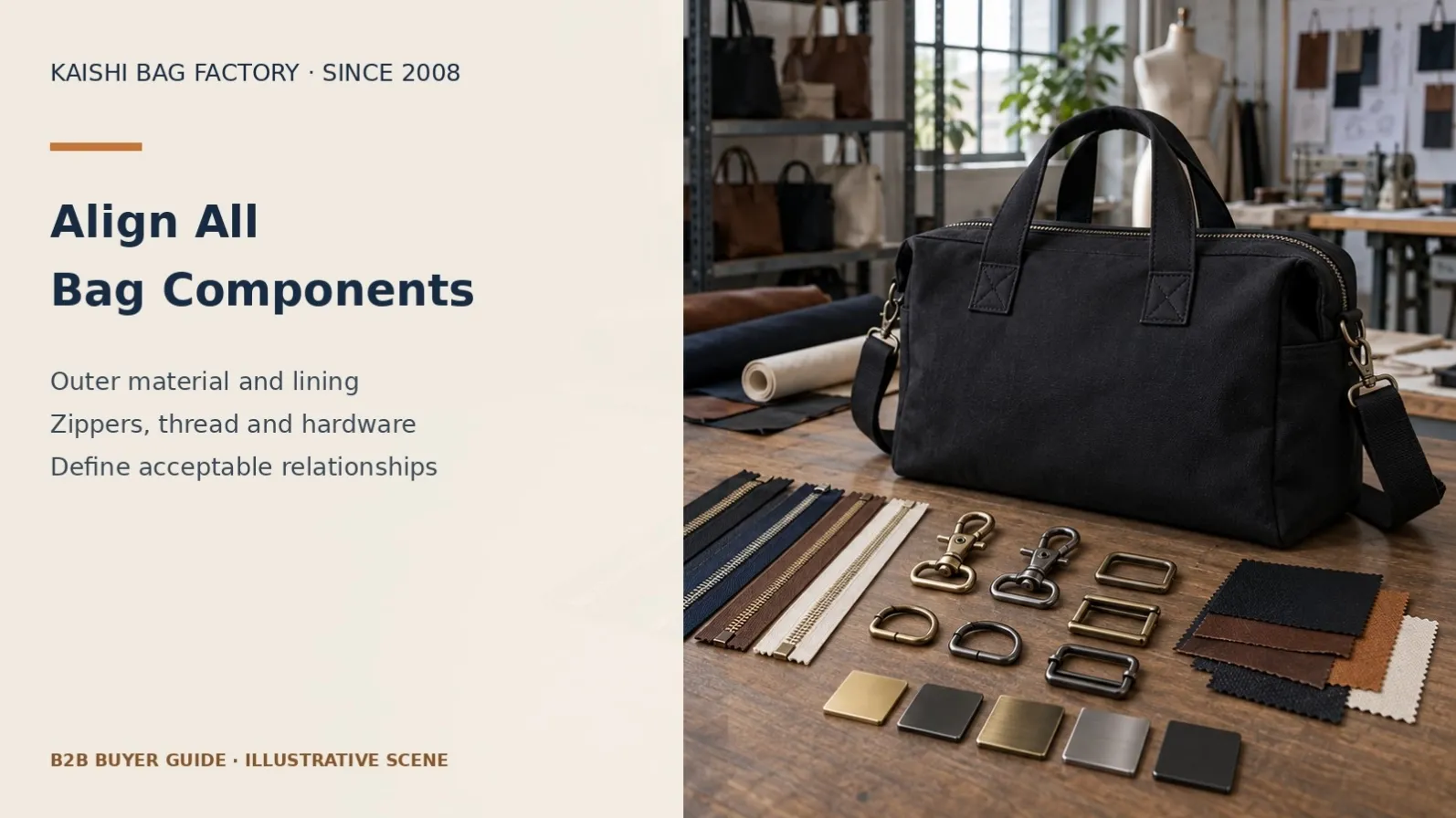
Use a component colour map. Identify outer panels, lining, thread, zipper tape, edge finish, labels and visible hardware. Some should closely match the body; others may intentionally contrast. A bag with a coordinated lining is not necessarily a bag whose lining must have the same measured colour as its outer surface.
Mark the highest-visibility relationships and evaluate them in the assembled sample. A thread colour chosen from a spool can look different when stitched onto the bag. A metal finish should be described by its own approved reference, not assigned a textile colour number as if that defines plating. This keeps the approval focused on the actual appearance the buyer intends.
Colour approval worksheet
| Record | Buyer input | Approval evidence |
|---|---|---|
| Target | Complete colour system or physical master | Reference identity and priority |
| Material | Composition, construction and finish | Actual development swatch |
| Viewing | Relevant light sources and arrangement | Recorded visual review |
| Coordination | Match or contrast for each component | Assembled sample decision |
| Bulk control | Approved version and lot review plan | Retained reference and release record |
5. Separate development approval from bulk confirmation
An approved development swatch establishes a target; it does not automatically approve every later material lot. Ask how bulk material will be compared with that reference and when any differences need buyer review. Identify who retains the master and how replacement references are controlled if an original becomes damaged or unavailable.
For a collection using several colours, maintain one clear record per colour and material combination. Do not place several nearly identical photographs in a message thread and assume the factory knows which is final. Record the selected option, rejected alternatives and any exception. A material substitution should trigger a review of colour as well as cost and construction.
6. Write feedback that a supplier can act on
“Too brown” or “not luxury enough” can start a discussion but should be linked to an identified sample and target. Describe the visual difference under the agreed conditions and state whether you want another development option or are approving with an exception. Send clear comparison photographs as supporting evidence, while recognizing they cannot replace physical assessment.
If delivery timing makes a physical review difficult, discuss the limitations explicitly. Remote photographs, video and supplier measurements can support a decision, but they do not guarantee what the buyer will see on receipt. Avoid converting urgency into an unqualified “exact match” promise. Confirm the unresolved risk and the review owner before proceeding.
7. Include colour decisions in the quote and order
Provide quantities by style and colour and ask whether each allocation is feasible. A requested custom shade may involve material purchasing or development conditions that differ from an available shade. Ask for confirmation rather than assuming all colour splits can share one minimum or that a repeat order eliminates development review.
Use our bag tech pack checklist to connect the colour map with dimensions and components. The lining guide helps define the interior substrate, while the hardware guide addresses separate finish references. Keep these decisions together in the approved specification.
Frequently asked questions
Can I send a Pantone number to match my bag?
Yes, as a starting reference. Include the complete system and suffix, then approve a physical swatch on the proposed material and finish. The number alone does not guarantee an identical result across different components.
Is a screenshot sufficient for colour approval?
Usually it is insufficient as the sole acceptance standard. Screens and cameras alter appearance. Use photographs to communicate direction and feedback, with a physical target and recorded review conditions for the final decision.
Why does the lining look different from the body?
The substrates, texture, gloss and colouring processes can differ. Decide whether the lining should match closely or coordinate, then evaluate the relationship in an assembled sample under agreed lighting.
What is metamerism?
It is a colour-matching phenomenon in which materials can look alike under one light but different under another. Discuss relevant viewing conditions with your supplier rather than judging a collection under one uncontrolled light.
Can every component use one colour tolerance?
Do not assume so. Visual and instrumental criteria need to suit the materials, finishes and measurement method. Agree any numerical tolerance with qualified technical support instead of copying an unrelated product specification.
What MOQ applies to multiple colours?
Kaishi’s standard is usually 300 pieces per style, with colour allocation assessed for the project. A 200-piece first order may be considered individually but is not guaranteed; 100 pieces is usually not feasible. Mixed-order acceptance and lower repeat MOQ are not promised.
How are development and payment handled?
Kaishi Bag Factory is in Baigou, China and has worked in OEM/ODM since 2008. Samples are prepaid and non-refundable, with no automatic credit. Bulk payment is T/T only, usually 50% deposit and 50% before shipment. Timing depends on design, materials, approval and quantity.
Sources and next step
References checked on 6 October 2026: Pantone colour systems, Pantone material-specific guidance and X-Rite lighting and visual evaluation. These explain colour communication and assessment; they do not establish Kaishi equipment ownership or an absolute matching guarantee.
Contact Kaishi Bag Factory with your physical references, material brief and colour quantities. Email donna@Kaishibagfactory.com or message Donna on WhatsApp for a project review.