
Handbag Zipper Specification: Opening Length, Slider, Puller and Sample Checks
Specify a handbag zipper as an assembled system: opening geometry, chain, slider, puller, tape and end construction. Verify it on the sample.
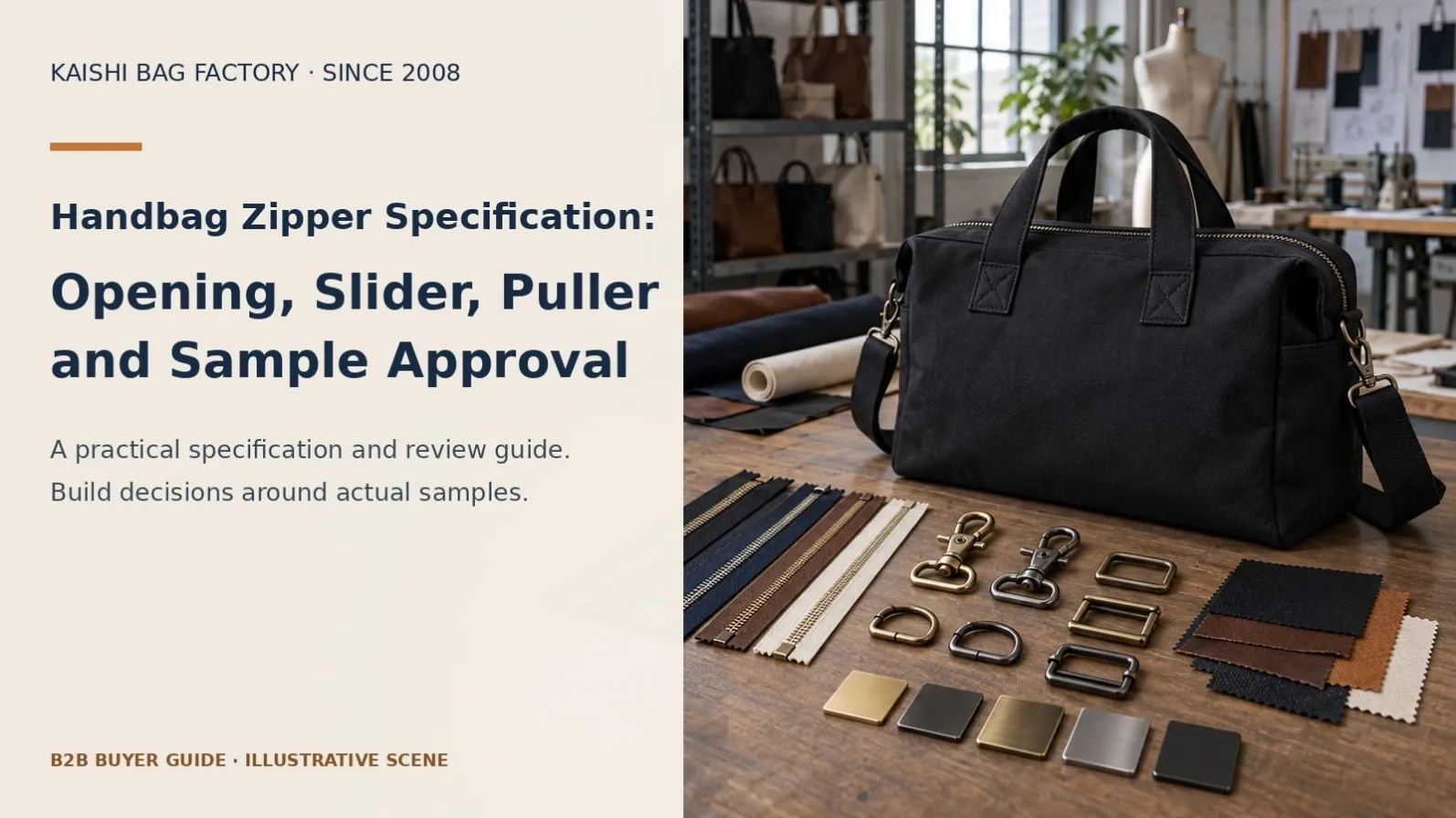
Specify a handbag zipper as an assembled system: opening geometry, chain, slider, puller, tape and end construction. Verify it on the sample.
This guide is for OEM/ODM brand teams, importers and wholesale buyers developing an original bag specification. It addresses handbag zipper specification through decisions that can be documented, sampled and reviewed. A photograph or generic material name is not an approval standard. Define the intended use, compare the actual proposed construction and keep a controlled physical reference before authorizing production.
1. Define the opening the buyer actually needs
Begin with the bag opening and the objects that must pass through it. Distinguish the zipper’s component length from the clear access available on the assembled bag. Mark measurement endpoints and whether the sample is empty or loaded. A long zipper placed on a restrictive opening does not necessarily provide generous access.
Review how the mouth is supported and where the ends sit relative to handles or straps. Ask the factory to explain the proposed installation before choosing a component from a photograph. This article covers zipper-system specification; it complements the broader hardware guide without replacing the complete bag construction review.
2. Identify the chain and tape references
Record the proposed zipper family, size reference, tape colour and material information available from the component supplier. Metal, coil and moulded elements are different design proposals, not automatic quality grades. YKK’s handbag selection guidance describes why appearance, colour and weight can influence the choice. Its examples do not establish that any brand or model is available from Kaishi.
Avoid vague instructions such as use a premium zipper. Ask which reference the quotation includes and what changes if an alternative is proposed. Retain the actual component sample and the supplier information relevant to the selected item. Do not turn a generic catalogue description into a performance promise for the finished bag.
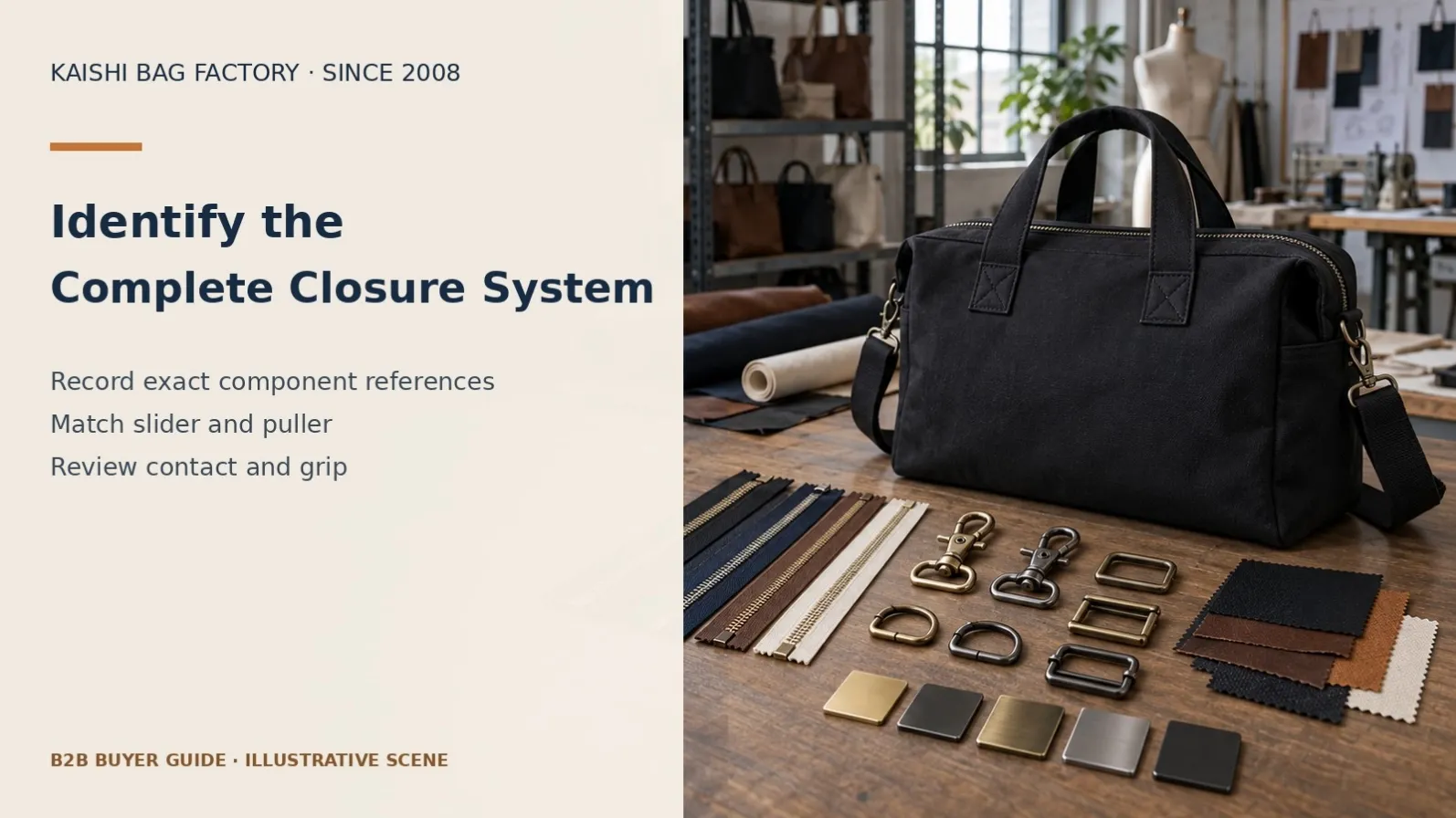
3. Match slider and puller to the operation
Identify whether one or two sliders are proposed and how the puller connects. Review grip, movement and interaction with the bag face. A large decorative pull can add contact or packing issues; a very small pull can be awkward inside a pocket. Evaluate the complete assembly in its normal orientation.
YKK explains that handbag slider designs can differ in operation and puller arrangement. Select by the intended product rather than assuming all sliders are interchangeable. Ask the supplier to confirm compatibility. Do not attach an unapproved puller or close a component in a way that could damage its body or finish.
4. Check installation and end construction
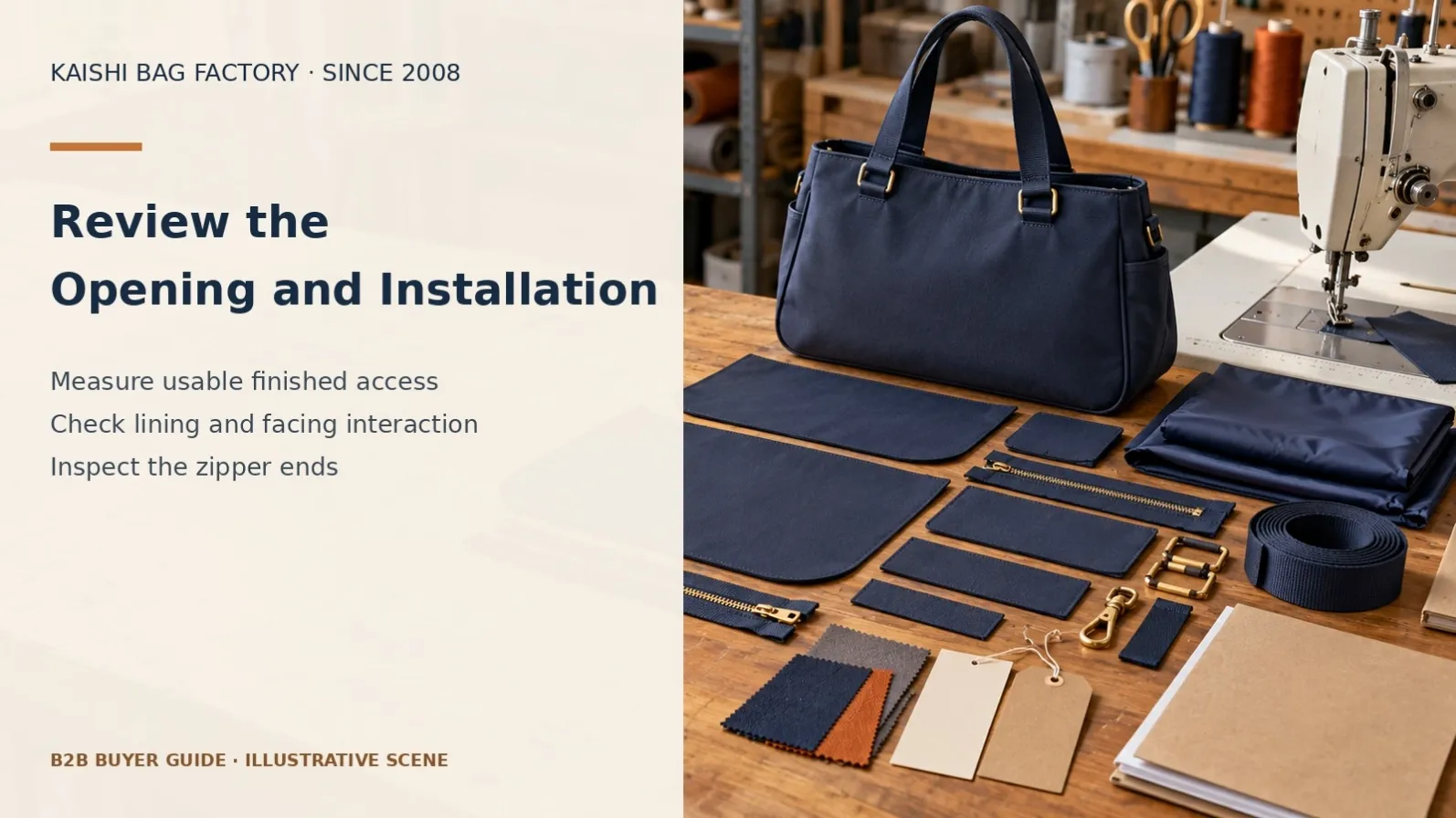
Inspect the facing, seam allowance, tape exposure and zipper ends. Check whether the lining can catch during movement and whether the opening requires a supporting hand. The slider should be reviewed with the actual layers and geometry, because smooth movement on a loose strip does not prove smooth use in an assembled handbag.
AMANN’s bag guidance supports reviewing thread, material and seam construction together. Apply that principle to the zipper installation. Ask for a production-intent sample when temporary facing, lining or tape was used in development. Record unresolved construction details instead of treating an attractive front photograph as full technical approval.
5. Build a component and operation record
Use one record to connect the component reference, finished opening, end construction and operating conditions. Identify the supplier’s information separately from the buyer’s approval criteria. If a test is requested, agree its applicable method and acceptance conditions rather than inventing a universal cycle figure for every bag.
The table below is a purchasing worksheet. Keep the actual zipper assembly with the approved bag sample. Record any intentional exception in appearance or operation. This creates a clear comparison for inspection and helps prevent a visually similar replacement from being accepted without checking compatibility and use.
| Element | Record | Verify |
|---|---|---|
| Opening | Finished clearance and endpoints | Representative contents pass through |
| Chain and tape | Supplier reference and colour | Actual component and installation |
| Slider and puller | Compatibility and grip | Movement and contact |
| Ends and lining | Construction drawing | No unintended catching |
| Replacement | Changed components and revision | Complete sample decision |
6. Review contact, packing and finish changes
Check the puller’s contact with the face material and nearby metal parts. Review packed and unpacked samples, especially when the pull lies against leather or coated material. A protective wrap may change presentation or assembly for the retailer, so confirm the whole packing arrangement rather than specify protection without a trial.
Do not describe a finish as permanently unchanged or corrosion-proof without suitable evidence. Material and surface-treatment behaviour depend on the actual component and conditions. Ask a competent supplier or laboratory to review the intended requirement. Document cosmetic preferences separately from functional issues so the corrective action addresses the right problem.
7. Approve replacements as a system
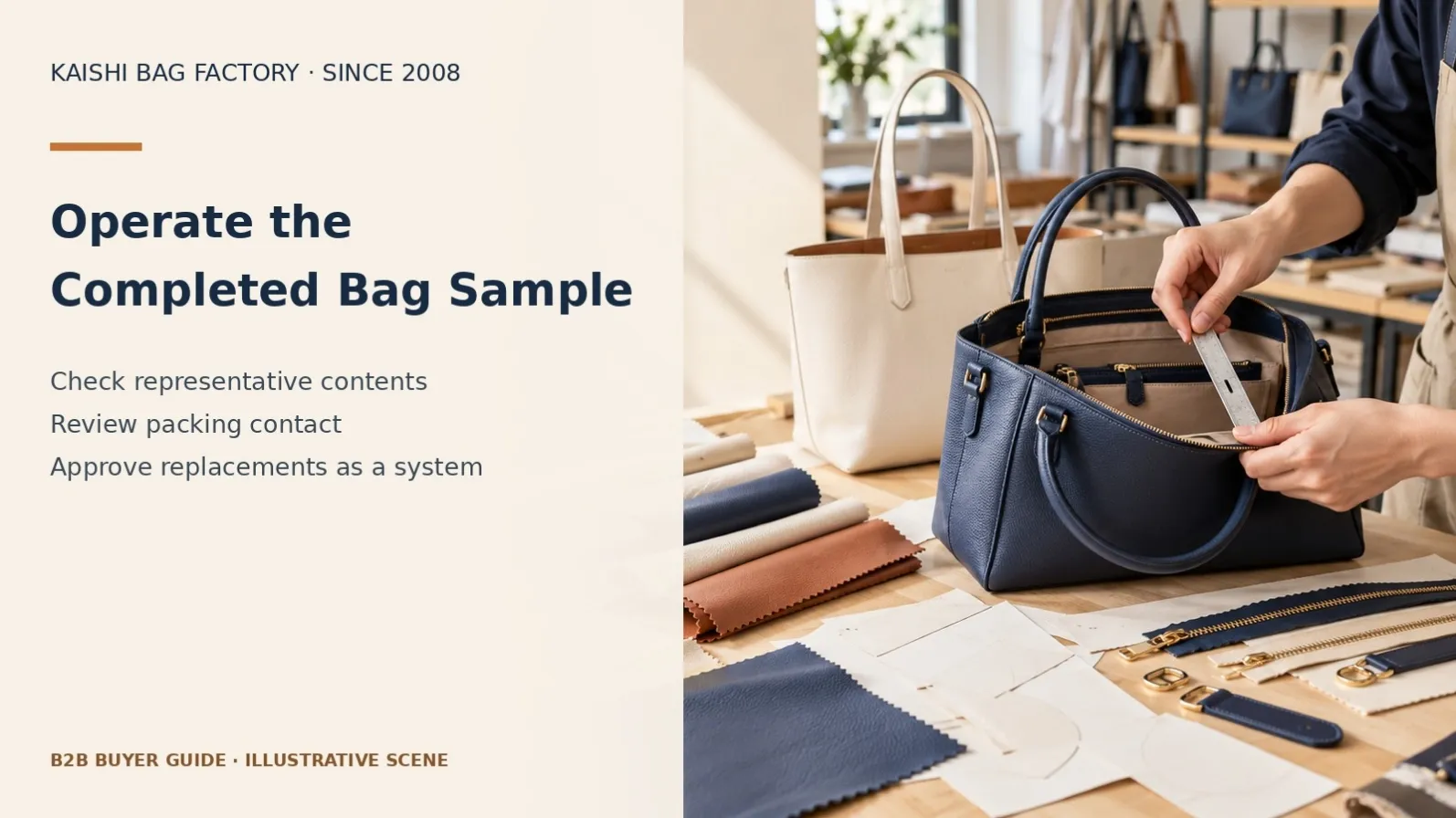
For a proposed substitute, identify the chain, slider, puller, tape and installation details that change. Check whether a new sample is necessary and request cost or timing impacts before approval. A zipper of similar colour or nominal size can still differ in operation and fit.
Keep the final reference in the controlled component list. If bulk inspection finds difficult movement, record the location, conditions and sample identity before assuming the cause. Review the assembled bag and connected layers. Do not promise that every issue can be fixed by replacing the puller or applying an unspecified treatment.
Prepare a project-specific enquiry
Send the current drawing or tech pack, measured dimensions, intended carry contents, material references, component list, colour breakdown and proposed order quantities. Identify the sales destination and any buyer-required testing or packaging documentation. Separate mandatory requirements from design preferences, and explain which decisions remain open. This lets the factory review a real development scope rather than make assumptions from a reference photograph.
Ask the quotation to identify the selected construction, sample scope, material exceptions, packaging, delivery basis and validity conditions. Confirm who approves the physical sample and which revision becomes the production baseline. If a component changes, request an impact review before accepting the replacement. Keep commercial approval separate from technical approval: an attractive unit price does not establish that the revised bag meets the agreed use or inspection requirements.
Related buyer guides
Continue with hardware specification guide, sample approval guide.
Frequently asked questions
Is a metal zipper always better?
No universal ranking applies. Review the intended appearance, weight, operation and suitable evidence for the actual bag.
Is zipper length the same as opening width?
Not necessarily. End construction and bag geometry affect usable access. Measure the finished opening and test reference contents.
Can I change only the puller?
Propose the change, then confirm compatibility, grip, contact and packing. A decorative replacement still needs a system review.
Should I request a fixed cycle test?
Ask a competent laboratory to select a method and criteria suitable for the product. Do not invent a universal cycle count.
Why does the loose zipper work but the bag feel awkward?
Investigate installation, lining, facing, opening geometry and component interaction. A loose strip does not reproduce the assembled conditions.
Are named zipper brands guaranteed available?
No. Catalogue examples explain selection principles. Confirm the actual component and availability for the project before approval.
What are Kaishi’s order, sample and payment terms?
Kaishi Bag Factory is based in Baigou, China and has worked in OEM/ODM since 2008. Standard MOQ is usually 300 pieces per style. A 200-piece first order may be evaluated individually without a guarantee; 100 pieces is usually not feasible. Mixed styles and reorders do not automatically qualify for lower minimums. Samples are prepaid and non-refundable, without automatic bulk-order credit. Payment is T/T only, usually 50% deposit and 50% before shipment. Timing depends on design, materials, sample approval and quantity. Any NDA and project-specific conditions require agreement.
Sources and next step
Sources checked on 7 October 2026: YKK handbag zipper selection guide and AMANN bag seam guidance. Supplier examples explain general principles, not Kaishi equipment ownership, certification or guaranteed availability. The purchasing worksheets are suggested buyer practices rather than quoted standard requirements.
Contact Kaishi Bag Factory with your specification and quantities for a project review. Email donna@Kaishibagfactory.com or message Donna on WhatsApp.