
Lightweight Handbag Development: Set a Weight Target Without Losing Function
Set a handbag weight target for the complete approved configuration. Review components, carry behaviour and function before accepting weight reductions.
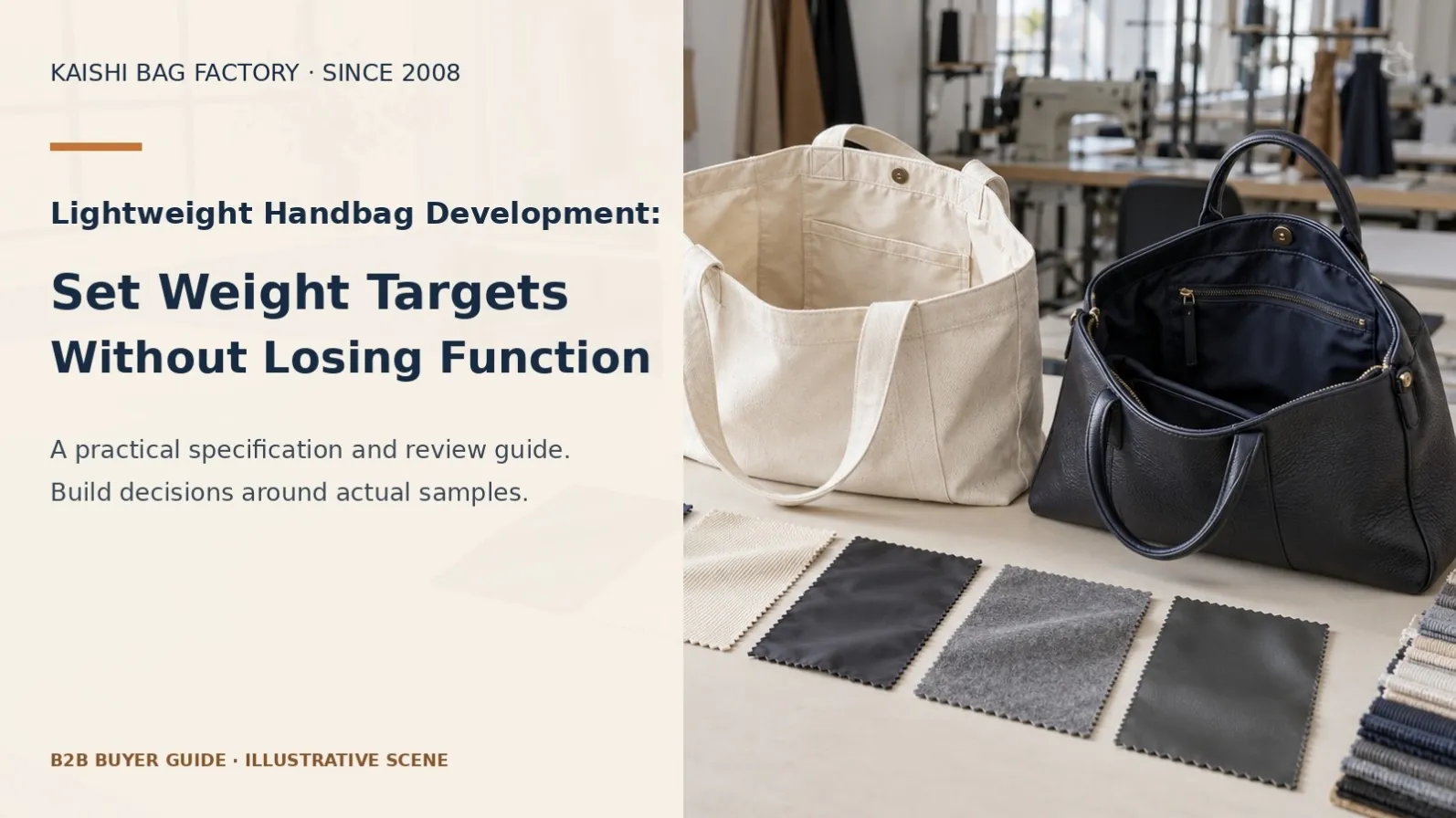
Set a handbag weight target for the complete approved configuration. Review components, carry behaviour and function before accepting weight reductions.
This guide is for OEM/ODM brand teams, importers and wholesale buyers developing an original bag specification. It addresses lightweight handbag weight target through decisions that can be documented, sampled and reviewed. A photograph or generic material name is not an approval standard. Define the intended use, compare the actual proposed construction and keep a controlled physical reference before authorizing production.
1. Define what the measured weight includes
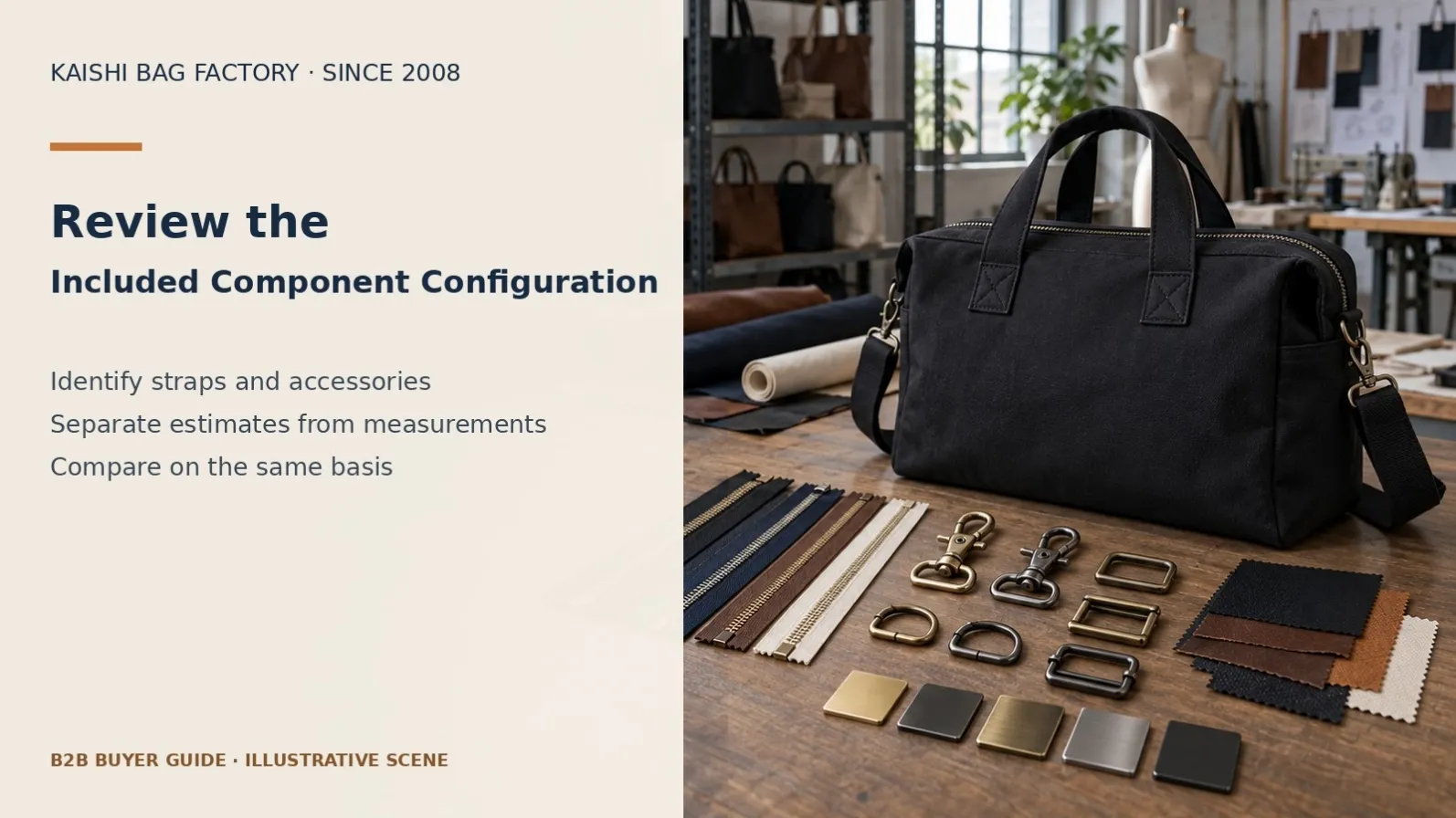
State whether the target includes the long strap, removable pouch, handles, decorative parts or other accessories. Separate product weight from retail and shipping packaging. Use the same configuration for each sample comparison. A bag can appear lighter on paper simply because an included component was left off the scale.
Record the sample revision, material references and measuring procedure. Do not promise one universal comfortable weight for all users or products. The intended carry role and contents should shape the target. This guide addresses development decisions, not a guaranteed percentage reduction or a laboratory rating inferred from a marketing photograph.
2. Build a component-level review
List the outer material, lining, support, hardware, straps and accessories. Ask which changes might affect the target and which would alter the brief. A component review helps the team discuss options without assuming that thinner material or fewer parts is automatically the best route.
Weigh candidate samples consistently where a practical comparison is possible, but keep measured results separate from estimates. Do not publish predicted savings as if they were confirmed on a completed bag. Record how each proposal changes the quoted scope and which parts still need a trial before the buyer accepts the design.
3. Review silhouette and support needs
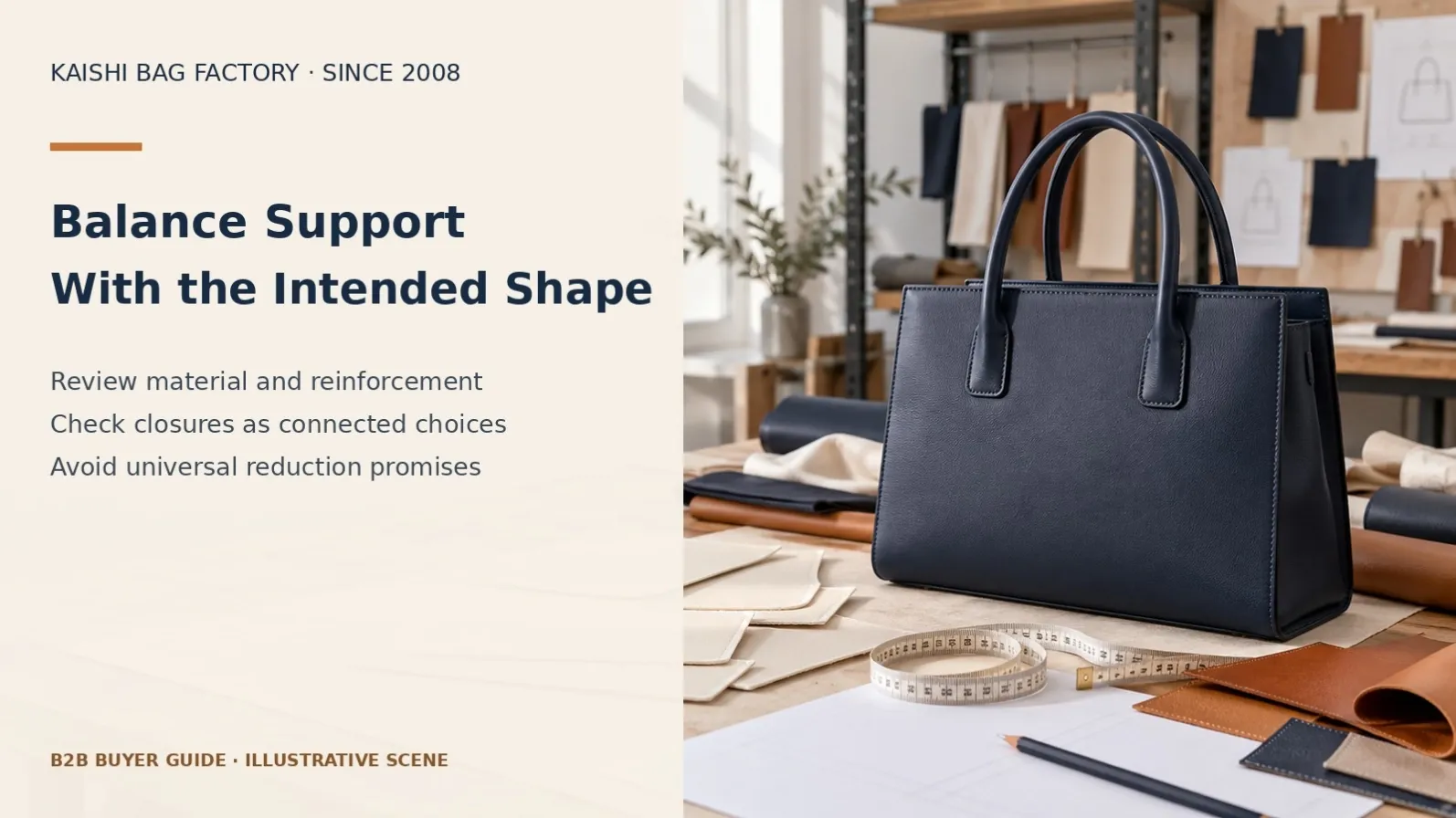
A structured handbag and a relaxed tote may have different support goals. Define the required shape in the normal carry and standing conditions, then review the proposed support arrangement. Removing reinforcement can affect presentation or connected seams; it should not be treated as a weight-only decision.
Freudenberg’s leather-goods overview identifies reinforcement as a component choice for intended construction and shape. It does not establish one universal thickness for every handbag. Ask for a project-specific proposal and compare completed samples. Avoid a claim that the lightest material always produces the best balance between appearance, function and use.
4. Consider closures and hardware as connected choices
Ask whether a different zipper, clasp or decorative trim is feasible without losing the intended access and appearance. YKK’s handbag guidance notes weight as one consideration in zipper selection. That general principle does not prove that a particular substitute meets the same operating or visual requirements.
Review the whole assembly, including attachment, puller contact and packing. A lighter metal part or closure can change more than total weight. Confirm compatibility and any relevant evidence before approval. Do not assume that a product from a catalogue is available for the project or that a named material guarantees a particular weight outcome.
5. Use a weight-and-function decision sheet
For each proposal, record the measured configuration, intended benefit, connected effects and approval evidence. Include the original and proposed sample identities. Keep mandatory requirements visible so a weight target cannot silently override access, carry or appearance needs.
The worksheet below is a buyer tool rather than a technical standard. It deliberately includes a decision column instead of assuming every reduction should be accepted. If the complete proposed sample has not been measured, label the figure as an estimate and keep the approval open. Retain the comparison conditions with the record.
| Decision | Record | Check |
|---|---|---|
| Configuration | Included straps and accessories | Same measuring basis |
| Material proposal | Reference and construction changes | Complete assembled sample |
| Support | Shape and connected effects | Standing and carrying review |
| Closure and trim | Compatibility and appearance | Actual operation and contact |
| Approval | Measured result and revision | Function remains accepted |
6. Review the loaded bag, not only the empty sample
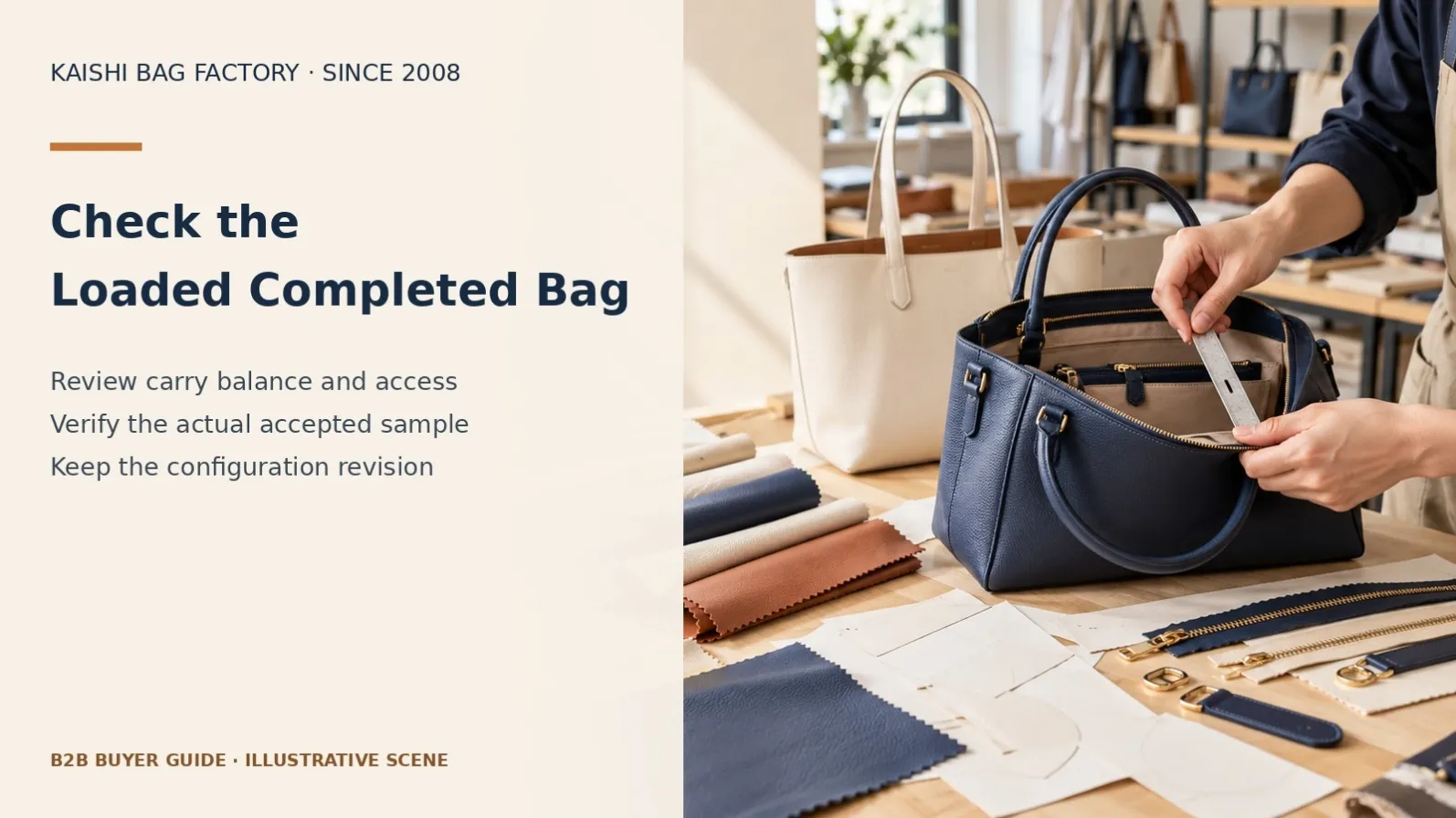
Use representative contents and the agreed carry mode to compare balance, opening access and the way the bag sits. An empty sample weight does not establish comfort or usability. Check the connected handles, straps and attachment points alongside the outer shape.
Document observations as user-review evidence, not a universal ergonomic guarantee. If a functional requirement needs testing, agree suitable methods and acceptance conditions with a competent specialist. Recheck the packed and unpacked sample too: a revised support arrangement can change how the bag should be protected during shipping.
7. Freeze the accepted configuration
Update the component list, drawings and product-weight record when the buyer approves the proposal. State which accessories are included and which sample revision establishes the target. Keep tolerances and measurement conditions explicit where the factory and inspector agree they are appropriate.
For the next order, reconfirm any material or hardware change before reusing the same weight claim. Do not advertise a fixed lightweight percentage without documented comparison conditions. This article does not promise that Kaishi can meet every requested target. Feasibility, sample scope, price and timing require project-specific review.
Prepare a project-specific enquiry
Send the current drawing or tech pack, measured dimensions, intended carry contents, material references, component list, colour breakdown and proposed order quantities. Identify the sales destination and any buyer-required testing or packaging documentation. Separate mandatory requirements from design preferences, and explain which decisions remain open. This lets the factory review a real development scope rather than make assumptions from a reference photograph.
Ask the quotation to identify the selected construction, sample scope, material exceptions, packaging, delivery basis and validity conditions. Confirm who approves the physical sample and which revision becomes the production baseline. If a component changes, request an impact review before accepting the replacement. Keep commercial approval separate from technical approval: an attractive unit price does not establish that the revised bag meets the agreed use or inspection requirements.
Related buyer guides
Continue with bag construction guide, technical input checklist.
Frequently asked questions
What is the ideal handbag weight?
No universal figure applies. Define the product role, included components and buyer requirements, then review the completed sample.
Can I compare weights from different configurations?
Only if the differences are explicit. Prefer the same included components and measuring conditions for a useful comparison.
Will thinner material always improve the bag?
Not automatically. Review shape, seams, access and relevant performance before approving a thinner material.
Can a zipper change reduce weight?
It can be evaluated as a proposal. Confirm the actual component, operation and completed sample rather than promise a fixed saving.
Does lower empty weight guarantee comfort?
No. Contents, balance, carry mode, contact and user preference also matter. Review the loaded bag under agreed conditions.
Can we publish a percentage reduction?
Only with a documented baseline, matching configuration and measured result. Do not present estimates as confirmed performance.
What are Kaishi’s order, sample and payment terms?
Kaishi Bag Factory is based in Baigou, China and has worked in OEM/ODM since 2008. Standard MOQ is usually 300 pieces per style. A 200-piece first order may be evaluated individually without a guarantee; 100 pieces is usually not feasible. Mixed styles and reorders do not automatically qualify for lower minimums. Samples are prepaid and non-refundable, without automatic bulk-order credit. Payment is T/T only, usually 50% deposit and 50% before shipment. Timing depends on design, materials, sample approval and quantity. Any NDA and project-specific conditions require agreement.
Sources and next step
Sources checked on 7 October 2026: Freudenberg leather-goods reinforcement overview and YKK handbag zipper selection guide. Supplier examples explain general principles, not Kaishi equipment ownership, certification or guaranteed availability. The purchasing worksheets are suggested buyer practices rather than quoted standard requirements.
Contact Kaishi Bag Factory with your specification and quantities for a project review. Email donna@Kaishibagfactory.com or message Donna on WhatsApp.