
Soft Cotton Bags: Choosing Fabric Beyond Ounce Weight
Choose soft cotton bag fabric by construction, finish, drape, seam behaviour and intended use, not ounce weight alone. Approve a finished bag made from the actual proposed fabric.
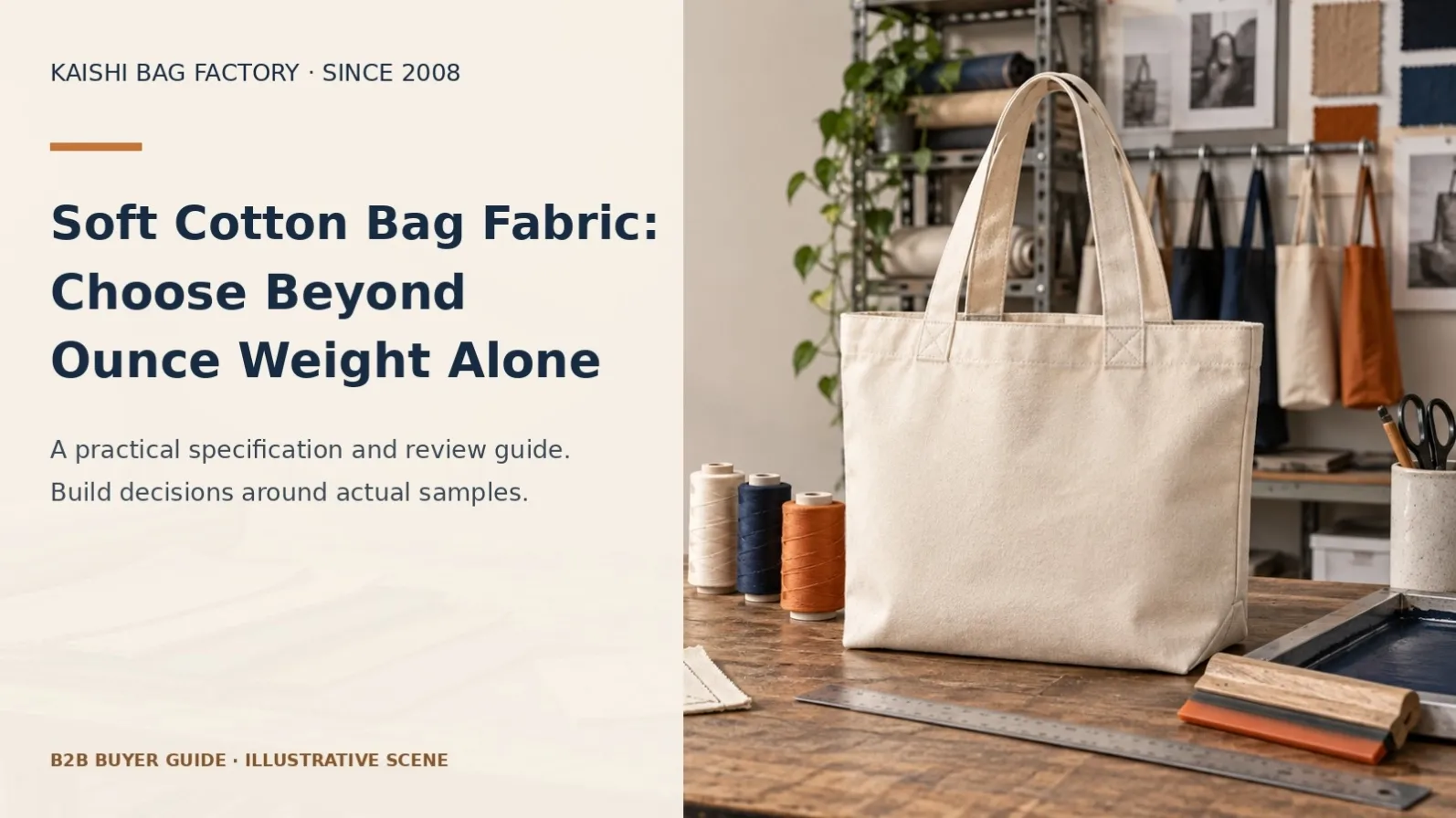
Choose soft cotton bag fabric by construction, finish, drape, seam behaviour and intended use, not ounce weight alone. Approve a finished bag made from the actual proposed fabric.
This guide is for OEM/ODM brand teams, importers and wholesale buyers developing an original bag specification. It addresses soft cotton bag fabric through decisions that can be documented, sampled and reviewed. A photograph or generic material name is not an approval standard. Define the intended use, compare the actual proposed construction and keep a controlled physical reference before authorizing production.
1. Describe what softness means for your bag
A soft shopping tote, a foldable promotional bag and a relaxed fashion shoulder bag can need different fabrics. Explain whether the bag should collapse easily, drape around contents or retain a broad silhouette when empty. Include photographs for intent and identify the expected contents, carrying method and storage format.
“Soft cotton” is an incomplete purchase specification. It does not identify the weave, yarn, blend, finishing treatment or layer construction. Ask for material references that can be sampled. State whether softness is a priority over a crisp printed appearance or structured silhouette, and identify the compromises the buyer is willing to review rather than expecting every property to improve together.
2. Clarify the unit behind the weight
If a quote uses ounces, ask whether it means mass per square yard, mass per linear yard or another convention. For grams, distinguish grams per square metre from finished bag weight. Specify the unit and whether the value refers to the finished supplied fabric. Ambiguous units make apparently similar quotations difficult to compare.
Weight is a useful descriptor, not a complete prediction of feel or strength. CottonWorks covers fabric construction and analysis as separate technical subjects, including yarn and construction parameters. Two fabrics with a similar stated weight can have different hand and behaviour. Keep weight alongside the actual swatch reference, width, composition and finish rather than using it as the only acceptance criterion.
3. Evaluate weave, yarn and finishing together
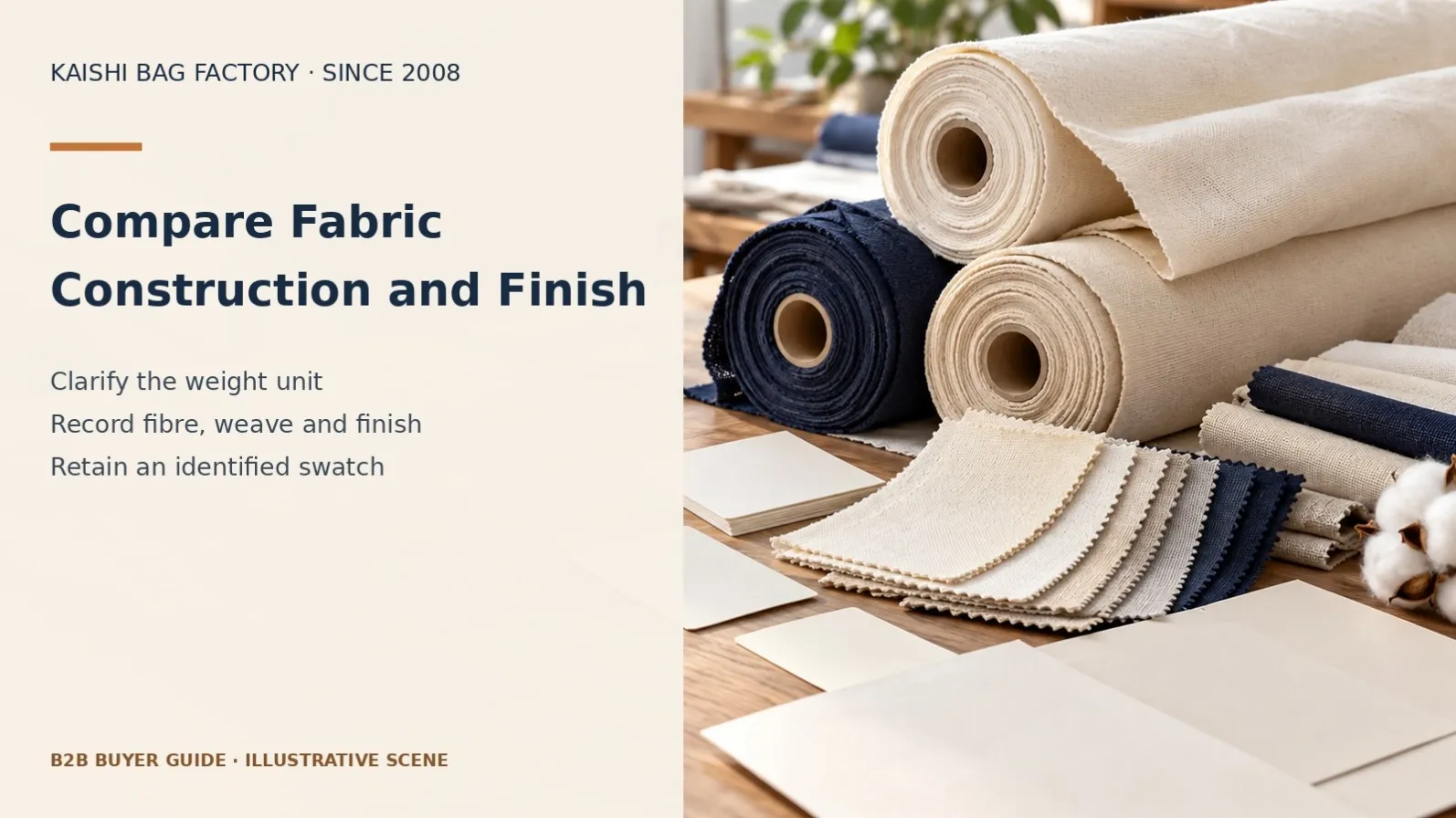
Compare candidate fabrics by touch and by how they bend over a similar bag form. Look at surface texture, openness, thickness and response to folding. Ask the fabric supplier to describe the construction and finish in terms that can be repeated for the order. Do not infer a guaranteed performance grade from the word canvas.
Finishing can change the feel and appearance, so approve the fabric in the condition intended for production. A raw sample and a washed or treated sample are not interchangeable approvals. If the buyer wants a washed look, discuss whether it is developed through fabric finishing or a finished-product process and how dimensions, colour and trims will be checked.
4. Test the fabric as part of a bag
Sew a production-intent panel or sample that includes the handle attachment, pocket and bottom construction. Soft fabric may respond differently around reinforcement and multiple layers than it does in a loose swatch. Review seam appearance, panel alignment, distortion and the intended carrying function before approving the entire bag.
Choose relevant test questions with the supplier and laboratory. They may concern strength, rubbing, dimensional change or seam behaviour, depending on the actual use. Do not announce a universal load rating or a washing claim from a fabric weight. AMANN’s bag guidance reinforces that seam performance involves thread, needle, material and construction together, rather than fabric alone.
5. Build a fabric comparison sheet
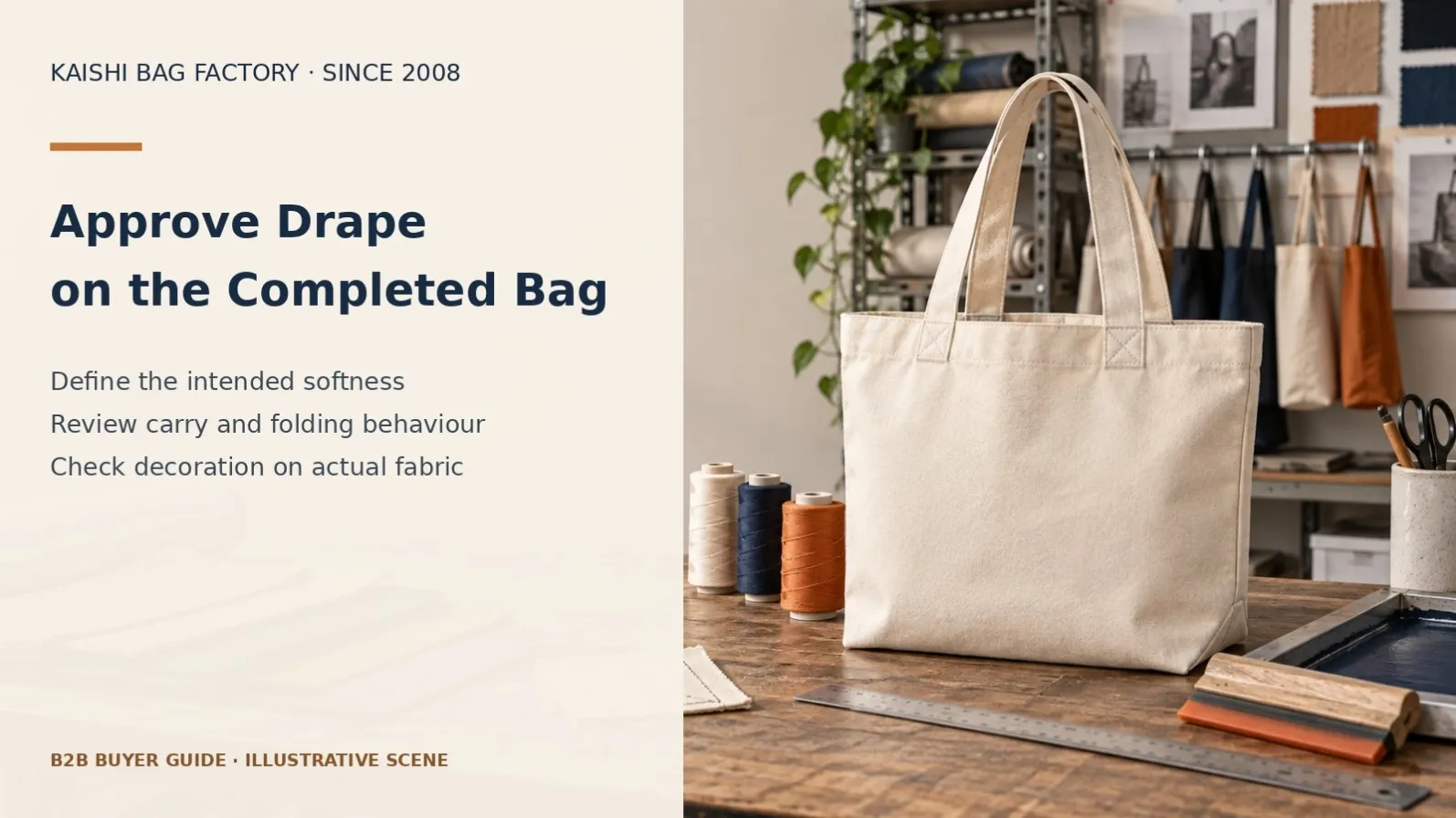
Compare actual candidate references side by side. Keep the intended bag design constant where possible so the buyer can distinguish fabric effects from pattern changes. Record what was observed, which properties remain untested and what commercial conditions require confirmation. A neat scorecard should not turn a subjective hand-feel preference into an invented laboratory result.
The worksheet below helps separate specification inputs from approval evidence. Add agreed tolerances where they are necessary and measurable; do not copy a fixed weight range from an unrelated tote program. Keep the retained swatch linked to the completed sample. A supplier substitution needs a documented review even when the replacement has the same fibre name and nominal weight.
| Input | Record | Approve through |
|---|---|---|
| Weight | Number, unit and supplied condition | Identified fabric reference |
| Construction | Fibre, weave and supplier description | Actual finished swatch |
| Hand and drape | Intended bag behaviour | Completed sample |
| Seam and decoration | Component and artwork requirements | Representative panel and checks |
| Claims | Exact claim and evidence scope | Relevant supply documents |
6. Check decoration, care and packaging implications
Printing and embroidery need review on the selected material. An open texture, soft hand or surface treatment can influence the visible result and panel response. Supply actual artwork and approve a decorated panel before concluding that a fabric is suitable for branding. Decoration can also change the hand in the decorated area.
Define care instructions only after the complete bag is evaluated, including lining, hardware and decoration. Cotton content alone does not establish that a handbag is machine washable. Review the proposed fold and packing arrangement because creasing can affect presentation. Distinguish a practical packing observation from a claim that every crease will disappear after unpacking.
7. Keep sustainability claims separate from feel
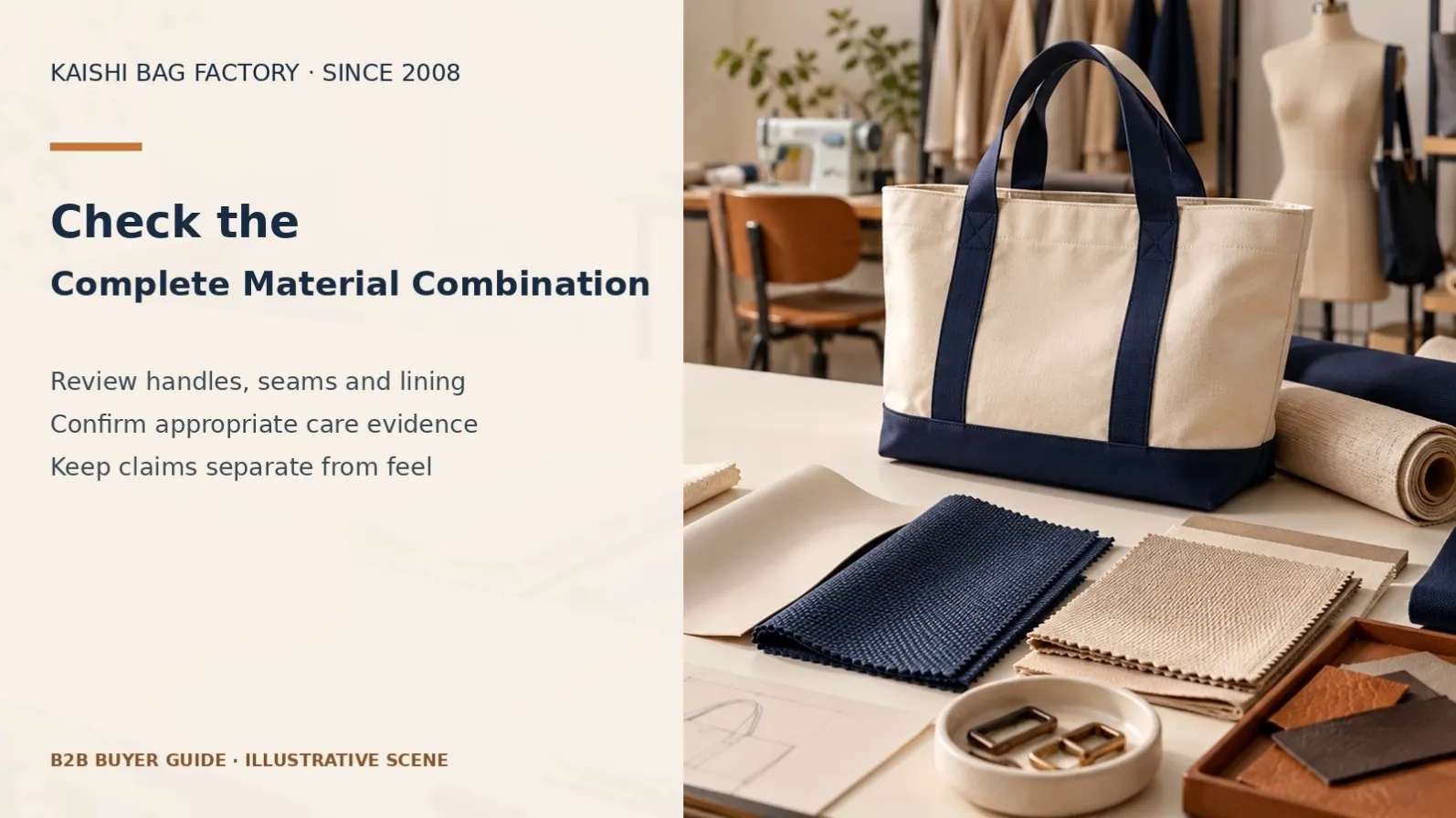
Softness and natural fibre content are not evidence of organic certification, recycled content or lower environmental impact. Ask for composition information and the documents needed for the particular claim. Textile Exchange explains distinct standards for organic and recycled content; a generic cotton swatch does not demonstrate that a transaction is covered by one.
Confirm whether the proposed material and documentation can be sourced for the project, without assuming stock or availability. Use specific wording supported by evidence instead of broad claims such as sustainable cotton. For a reorder, retain the fabric reference and check any finish or supplier change. A similar hand feel is useful, but does not establish identical composition or claim eligibility.
Prepare a project-specific enquiry
Send the current drawing or tech pack, measured dimensions, intended carry contents, material references, component list, colour breakdown and proposed order quantities. Identify the sales destination and any buyer-required testing or packaging documentation. Separate mandatory requirements from design preferences, and explain which decisions remain open. This lets the factory review a real development scope rather than make assumptions from a reference photograph.
Ask the quotation to identify the selected construction, sample scope, material exceptions, packaging, delivery basis and validity conditions. Confirm who approves the physical sample and which revision becomes the production baseline. If a component changes, request an impact review before accepting the replacement. Keep commercial approval separate from technical approval: an attractive unit price does not establish that the revised bag meets the agreed use or inspection requirements.
Related buyer guides
Use the canvas bag guide for the broader sourcing process and the lining guide when selecting the full material combination.
Frequently asked questions
Is heavier cotton always stronger?
Weight alone cannot establish strength. Fabric construction, finish, seams and the complete bag need evaluation for the intended use.
Can two fabrics of the same weight feel different?
Yes. Keep construction and finishing references with the weight, then compare physical swatches and completed samples.
What does an ounce specification need?
It needs an explicit unit basis and supplied fabric condition. Confirm these with the supplier instead of assuming all quotations use the same convention.
Are soft cotton bags machine washable?
Do not assume so. Evaluate the full construction, decoration and trims before approving a care instruction or dimensional-change expectation.
Does cotton mean organic?
No. Organic-content claims need appropriate evidence and supply-chain scope. Fibre identity by itself does not establish certification.
Should I approve a fabric replacement on weight alone?
No. Compare composition, construction, finish, appearance and sample behaviour, and document whether additional testing is needed.
What are Kaishi’s order, sample and payment terms?
Kaishi Bag Factory is based in Baigou, China and has worked in OEM/ODM since 2008. Standard MOQ is usually 300 pieces per style. A 200-piece first order may be evaluated individually without a guarantee; 100 pieces is usually not feasible. Mixed styles and reorders do not automatically qualify for lower minimums. Samples are prepaid and non-refundable, without automatic bulk-order credit. Payment is T/T only, usually 50% deposit and 50% before shipment. Timing depends on design, materials, sample approval and quantity. Any NDA and project-specific conditions require agreement.
Sources and next step
Sources checked on 7 October 2026: CottonWorks fabric analysis, AMANN bag seam guidance and Textile Exchange Organic Content Standard. Supplier examples explain general principles, not Kaishi equipment ownership, certification or guaranteed availability. The purchasing worksheets are suggested buyer practices rather than quoted standard requirements.
Contact Kaishi Bag Factory with your specification and quantities for a project review. Email donna@Kaishibagfactory.com or message Donna on WhatsApp.