
SS2027 Handbag Colour Directions: From Runway Signals to Material Swatches
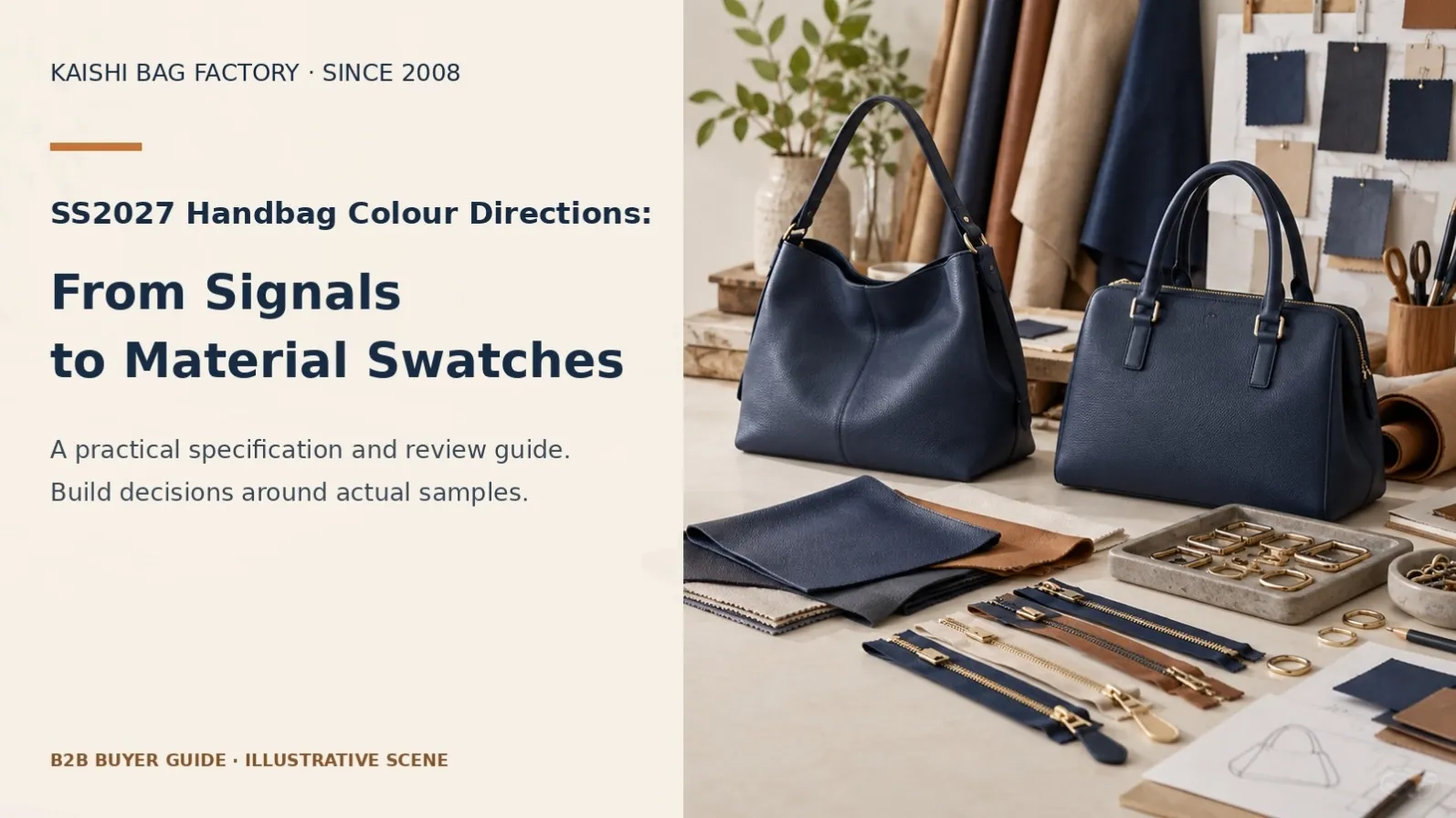
Use SS2027 colour reporting as a development signal, not proof of handbag demand. Build original colour proposals, compare actual materials and validate the palette with your buyer market.
Use SS2027 colour reporting as a development signal, not proof of handbag demand. Build original colour proposals, compare actual materials and validate the palette with your buyer market.
This guide is for OEM/ODM brand teams, importers and wholesale buyers developing an original bag specification. It addresses SS2027 handbag colour directions through decisions that can be documented, sampled and reviewed. A photograph or generic material name is not an approval standard. Define the intended use, compare the actual proposed construction and keep a controlled physical reference before authorizing production.
1. Identify what the current sources actually establish
Pantone’s official New York Fashion Week Spring/Summer 2027 report was released on 10 September 2026. Its published summary describes a combination of understated ease and expressive colour. This is a seasonal fashion observation, not a quantified handbag sales forecast, and it should not be presented as a guaranteed palette for every market.
This article is an early development guide based on sources checked on 7 October 2026. Recheck later official releases before the planned November publication. Specific colour codes are not reproduced here without a verified source and the correct physical reference. A report’s existence does not justify inventing a ranked list of bag colours, buyer requests or future best sellers.
2. Keep runway facts separate from bag proposals
The Prada Group’s official Miu Miu SS2027 release, dated 4 October 2026, describes contrasting everyday wardrobe elements and intentional material treatments. Its discussion concerns the collection as presented; it does not establish a universal handbag colour standard. A garment or footwear observation should not silently become a claim about all handbags.
For a colour research board, label the source, date and exact object observed. Then label any proposed bag application as your development interpretation. Use your own original bag shapes and authorized imagery. Do not reproduce logos, distinctive protected motifs or brand product designs simply because a runway reference is available online.
3. Build a palette by role rather than a trend ranking
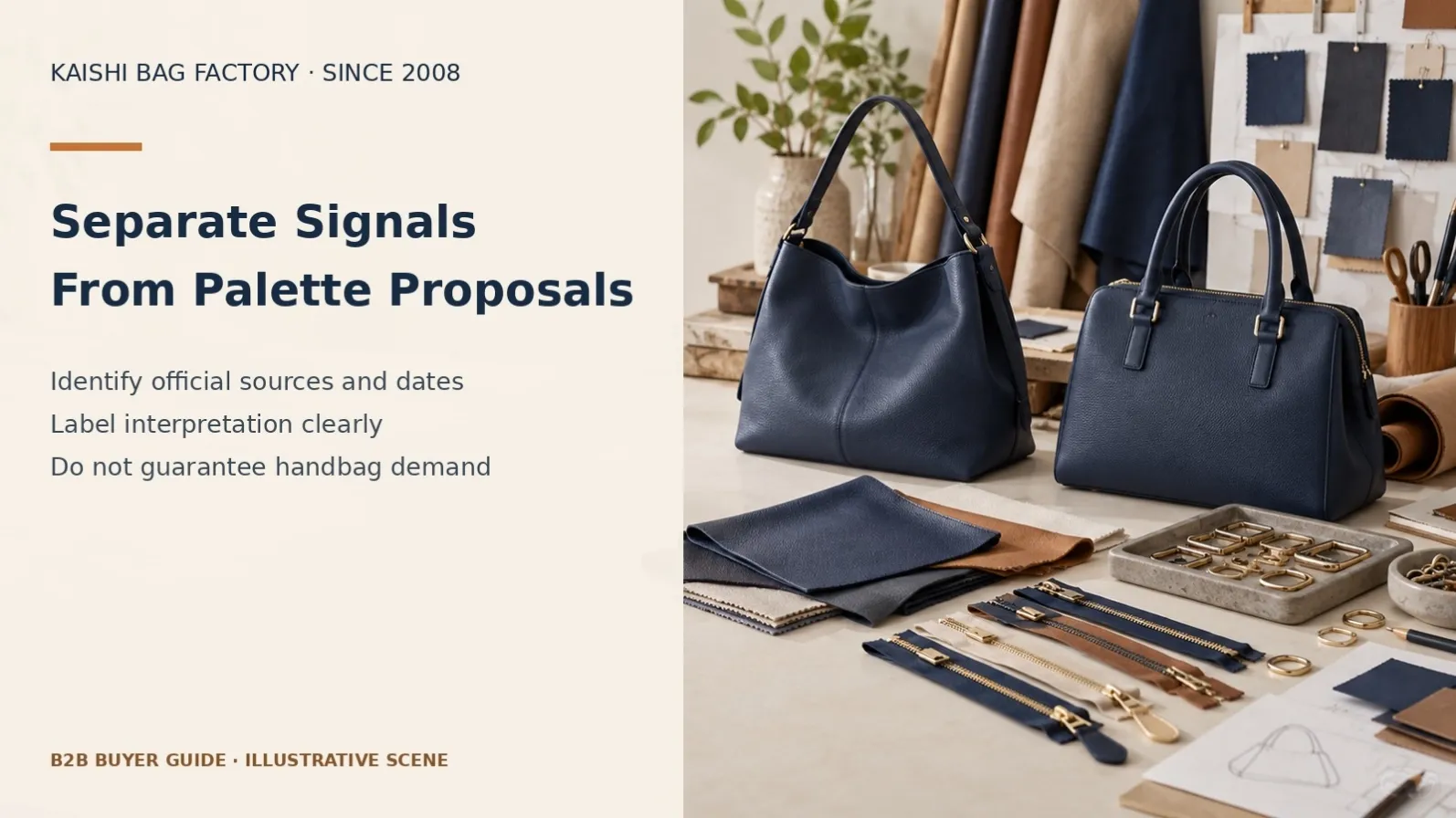
A practical buyer proposal can separate a foundation colour, a texture-led natural tone and a deliberate accent. These are planning roles, not a verified SS2027 top-three list. The foundation supports collection continuity; the accent is a bounded test; a natural tone may emphasize material character if that matches the brand brief.
For example, a buyer could evaluate an ivory or dark base, a warm leather tone and a saturated accent on original samples. These example families are development suggestions, not Pantone report colours or predictions of demand. Keep the proposed SKU count within the confirmed quantity and budget. Adding fashionable colours without allocation discipline can fragment an order.
4. Translate colour intent into the actual substrate
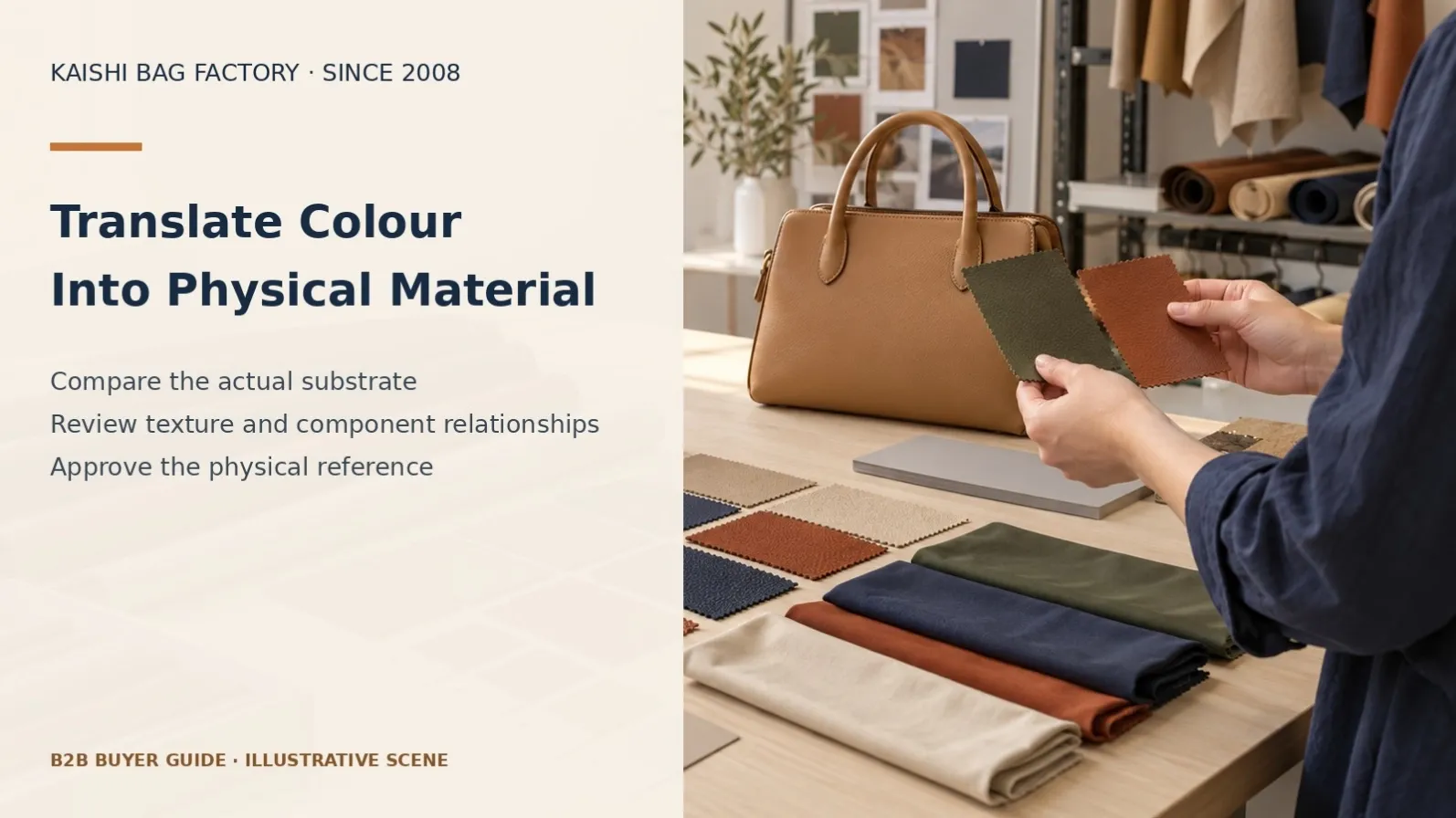
A smooth screen colour does not describe how a shade appears on pebbled leather, coated material, cotton canvas or a lining. Compare candidate swatches in the intended finish and texture. Define the reference system and the physical standard used for approval. A colour name alone can be interpreted differently by buyer and supplier.
Review outer material, lining, edge finish, thread and hardware together. Some components may intentionally contrast; others may need a close relationship. Record those roles so the factory is not asked to match everything indiscriminately. Pantone’s system guidance distinguishes colour tools by application, while material evaluation still requires the actual supplied samples. Avoid choosing a code from an uncalibrated screenshot.
5. Make a source-to-palette worksheet
Connect the research observation to the proposed bag role, actual swatch and validation question. This makes the forecast boundary visible: a sourced fashion signal supports an idea, while buyer evidence determines whether that idea belongs in an order. Do not add percentages or sales projections simply to make a mood board look analytical.
The worksheet below uses neutral planning labels rather than invented official colour names. Record who proposed each option and the date of the evidence. Keep rejected alternatives as development notes if useful, but do not imply they were produced or sold. The output should guide sampling and market review, not assert that Kaishi has all proposed materials in stock.
| Research step | Document | Buyer question |
|---|---|---|
| Official signal | Source, date and observed object | What is fact rather than interpretation? |
| Palette role | Foundation, texture tone or accent | Why does this fit our collection? |
| Material translation | Physical reference and finish | Does the actual substrate meet the intent? |
| Market review | Authorized buyer/channel evidence | What supports the allocation? |
| Approval | Sample group and component standards | Which version can be quoted? |
6. Test colour choices against the actual sales channel
Ask the brand or wholesaler how the proposed palette fits existing stock, customer feedback, price band and expected use. Nigerian and Indian wholesale channels cannot be reduced to one shared preference. Compare information from the buyer’s actual city, customer group and retail format rather than writing country-wide colour stereotypes.
Distinguish expressions of interest from orders and observed sales from forecasts. If local evidence is limited, propose a controlled comparison within confirmed order conditions rather than claiming certainty. Do not guarantee sell-through, a seasonal premium or a lower reorder MOQ. Keep material availability, development costs and packing requirements in the commercial review before expanding the palette.
7. Approve an original collection palette
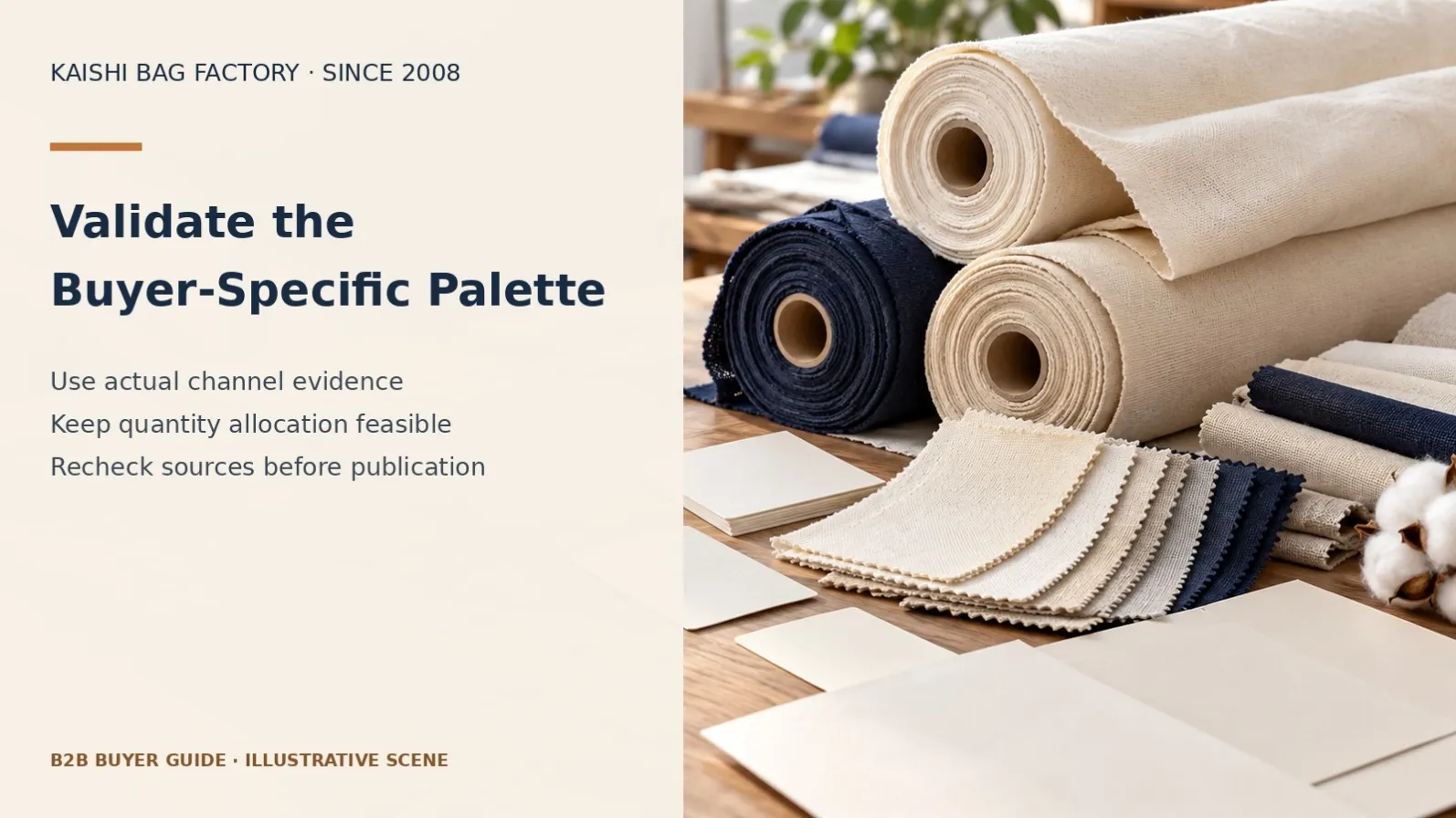
Review the complete sample group under agreed conditions and identify which swatches are the controlled standards. Record material references, intentional contrasts and any unresolved component differences. Photographs are useful for communication, but the final palette needs appropriate physical approval. Recheck the selection when a material finish or supplier changes.
Before publishing a trend-led article, distinguish the source publication date from the article date. Add verified developments only when they materially change the interpretation, and preserve uncertainty where demand is unknown. The useful buyer outcome is an original, sampleable colour brief. It is not a claim that a runway palette proves manufacturability, rights clearance or commercial success.
Prepare a project-specific enquiry
Send the current drawing or tech pack, measured dimensions, intended carry contents, material references, component list, colour breakdown and proposed order quantities. Identify the sales destination and any buyer-required testing or packaging documentation. Separate mandatory requirements from design preferences, and explain which decisions remain open. This lets the factory review a real development scope rather than make assumptions from a reference photograph.
Ask the quotation to identify the selected construction, sample scope, material exceptions, packaging, delivery basis and validity conditions. Confirm who approves the physical sample and which revision becomes the production baseline. If a component changes, request an impact review before accepting the replacement. Keep commercial approval separate from technical approval: an attractive unit price does not establish that the revised bag meets the agreed use or inspection requirements.
Related buyer guides
Prepare the original specification with the tech pack guide and review the lining selection guide for component colour decisions.
Frequently asked questions
Are these guaranteed SS2027 handbag best sellers?
No. The article separates sourced fashion signals from development proposals. Actual demand requires evidence from the buyer’s market.
Does a garment colour prove a bag trend?
No. Identify what the source actually shows, then label a proposed handbag application as an interpretation.
Why are specific Pantone codes not listed?
Only verified codes and the appropriate reference system should be used. A screen image or an incomplete source is not a reliable physical approval standard.
Can I develop a runway-inspired original palette?
Use observations as research, then develop original products and review rights where needed. Do not copy logos or distinctive protected designs.
Should every component be exactly the same shade?
Not necessarily. Define intentional matches and contrasts, then approve the actual material combination.
Does the same palette fit Nigeria and India?
Do not assume so. Use the buyer’s specific channel and customer evidence rather than national stereotypes or guaranteed sales claims.
What are Kaishi’s order, sample and payment terms?
Kaishi Bag Factory is based in Baigou, China and has worked in OEM/ODM since 2008. Standard MOQ is usually 300 pieces per style. A 200-piece first order may be evaluated individually without a guarantee; 100 pieces is usually not feasible. Mixed styles and reorders do not automatically qualify for lower minimums. Samples are prepaid and non-refundable, without automatic bulk-order credit. Payment is T/T only, usually 50% deposit and 50% before shipment. Timing depends on design, materials, sample approval and quantity. Any NDA and project-specific conditions require agreement.
Sources and next step
Sources checked on 7 October 2026: Pantone NYFW SS2027 report, Miu Miu SS2027 official release and Pantone colour systems. Supplier examples explain general principles, not Kaishi equipment ownership, certification or guaranteed availability. The purchasing worksheets are suggested buyer practices rather than quoted standard requirements.
Contact Kaishi Bag Factory with your specification and quantities for a project review. Email donna@Kaishibagfactory.com or message Donna on WhatsApp.