
Sep 22, 2026Sourcing & Importing
Custom Travel and Sports Bags: What Buyers Should Know
A B2B specification guide for custom travel and sports bags: materials, load paths, zippers, moisture claims, testing, MOQ and sample approval.

Travel and sports bags are the category where engineering matters most and styling matters least. Customers load them heavily, carry them awkwardly, and expose them to weather and hard surfaces. A duffel that looks right on a shelf can fail within a season if its load paths and closures were not thought through.
This guide covers the specification points that decide whether a travel or sports bag survives real use — and how to brief a factory on them.
The Category Range
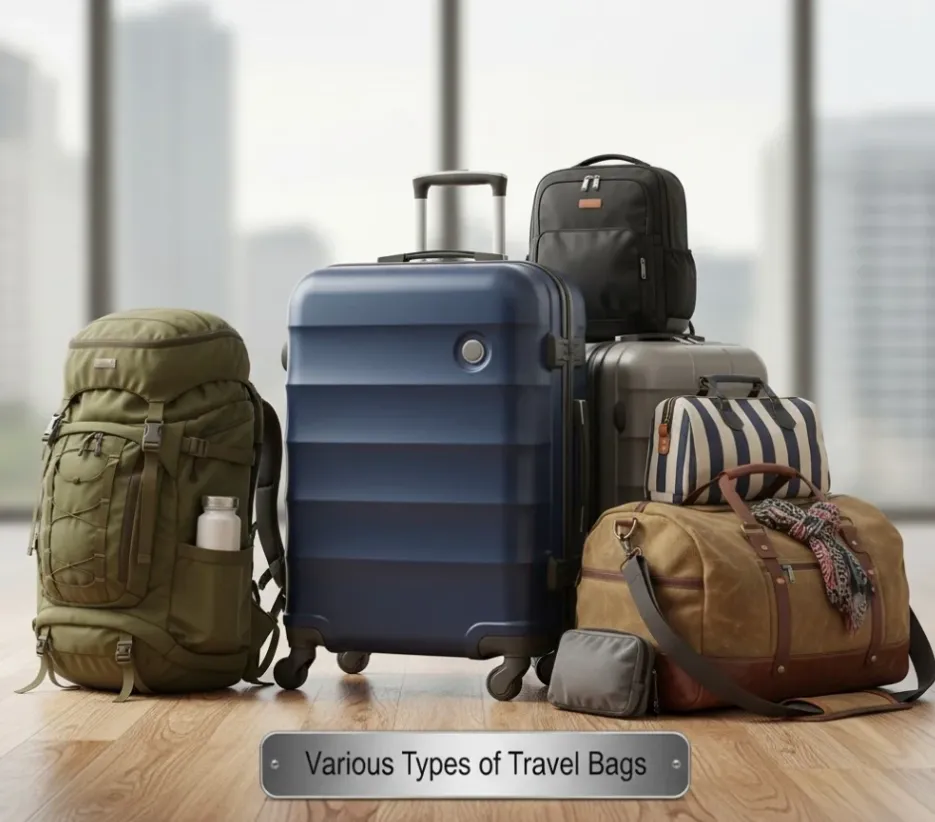
"Travel and sports bags" covers several product types with different engineering priorities:
- Duffels and weekenders — high volume, carried by hand or shoulder, heavy loads
- Travel organisers and packing bags — lighter, often internal to a larger bag
- Gym and studio bags — moderate loads, frequent ventilation needs
- Sports and specialty bags — yoga, cycling, and sport-specific carry with dedicated compartments
- Tactical and outdoor styles — heavier duty, attachment systems, abrasion resistance
Decide which you are making first. The optimal material and construction for a weekender differs from a yoga bag.
Materials
Shell Fabrics
Nylon. The default for travel and sports bags. Strong for its weight, naturally water-resistant, and abrasion-resistant. Heavier deniers suit load-bearing panels and bases.
Polyester. Similar practical performance, often lower cost, and takes heat-transfer and sublimation printing well — which suits fully printed sports bags.
Coated and laminated fabrics. Where water resistance is a firm requirement, coatings or laminated backings add protection. Coating quality varies significantly, so specify it rather than leaving it to chance.
Canvas and heavy cotton. Used in heritage-styled weekenders. Durable and attractive, but heavier and not water-resistant without treatment.
For a broader comparison of fabric characteristics, see our [material guide](/posts/canvas-vs-pu-vs-nylon-bag-materials).
Linings and Compartments
Lining choices matter more in this category than in most, because bags are compartmentalised:
- Main compartment lining — nylon is the usual choice for durability and cleanliness
- Wet or shoe compartments — coated or water-resistant lining is essential; it is the single most useful interior feature in a gym or sports bag
- Ventilated pockets — mesh panels that allow air movement, important for damp clothing
- Device pockets — brushed or padded lining where electronics are carried
Specify each compartment's lining separately. A waterproof shoe pocket let down by an unlined interior fails at its job.
Load Paths: The Engineering That Matters
Travel and sports bags experience concentrated loads. Four areas decide whether the bag holds up.
1. Handle and Strap Attachment
A loaded duffel may weigh considerably more than a handbag. Handle attachment points must be reinforced with bar-tacks, box-and-cross stitching, or rivets — and the surrounding panel may need reinforcement.
Ask how the handles are attached and whether the attachment panel is reinforced. This is the most common failure point on a cheap duffel.
2. Base Construction
The base takes repeated contact with floors, benches, and ground. Options:
- Reinforced base panel in a heavier fabric
- Coated or water-resistant base material
- Protective studs or feet to lift the base off surfaces
Base reinforcement is one of the highest-value upgrades available on this category, and it is usually inexpensive relative to the durability it adds.
3. Zippers and Closures
Main compartment zippers on travel bags are opened and closed constantly and are under load when the bag is full.
- Use #8 or larger for main compartments on load-bearing bags
- Consider a two-way zipper with lockable sliders, a common travel requirement
- Check zipper smoothness across the full length on the sample, not just at the start
4. Strap and Compression Systems
- Shoulder straps — padded, and detachable where the design allows
- Compression straps — with buckles that hold position under tension
- Attachment points — D-rings and loops sized to the webbing, with finished inner edges so webbing is not abraded
Unfinished ring edges are a slow-burn failure: the webbing wears through long after inspection has passed.
Features Worth Specifying
The features customers actually value in this category:
- Separate wet or shoe compartment with water-resistant lining
- Ventilation — mesh panels for damp clothing
- Lockable zippers on travel styles
- Trolley sleeve that slides over a suitcase handle
- Multiple carry options — handles plus a detachable shoulder strap
- Interior organisation — slip pockets, key clip, small-item pockets
- Exterior quick-access pocket for travel documents
Every feature adds material, labour and cost. Add the ones your customer will use, and price the rest into options rather than standard specification.
MOQ and Sampling
- Simpler duffels in standard fabrics can often be negotiated lower, particularly where fabric is already in stock
- Technical bags with custom hardware, multiple compartments and specialised materials require more, because setup and sourcing costs are higher
Sampling lead time depends on your design and materials. A simple duffel in stock nylon samples faster than a multi-compartment technical bag with custom-moulded components. A responsible factory answers in conditions rather than quoting one fixed number.
Load-Test the Sample
This category needs functional testing more than any other. When the sample arrives:
- Load it to the weight the customer will carry, and lift it by each handle and strap
- Carry it for a distance, and check balance and comfort
- Open and close every zipper across its full length, with the bag loaded
- Test every clasp and buckle under tension
- Check internal compartments for correct dimensions and lining
- Inspect stress points — handle attachment, base, strap ends — for stitch quality and reinforcement
A travel bag that passes visual inspection can still fail under load. Only load testing finds that at sample stage, which is the cheapest place to find it.
Common Mistakes in This Category
- Under-reinforcing handle attachment on a bag designed to carry heavy loads
- Skipping base reinforcement, so the base wears through first
- Specifying a light main zipper on a load-bearing compartment
- No water-resistant lining in the compartment intended for wet items
- Unfinished ring or loop edges, causing slow webbing abrasion
- Over-featuring the standard specification, raising cost without customer benefit
- Not load-testing the sample before approval
- Leaving material and lining weights unspecified, so quality drifts between sample and bulk
How We Handle Travel and Sports Bags
We are a factory-direct operation in Baigou, Hebei — China's bag capital — running since 2008 and having delivered more than 200,000 bags. We develop and produce duffels, weekenders and travel organisers, along with sports and functional bags for yoga, gym, cycling and specialty use, engineered for their specific applications.
Our development process works from your drawing, reference sample or technical pack, and covers construction, materials, hardware and compartment layout around your design and target price. Sampling lead time depends on your design and materials, and we credit the sample fee against your bulk order. A typical MOQ is around 300 pieces per style.
Send us your sketch, intended use and target price. We will come back with development feedback and a realistic path to an approved sample.