
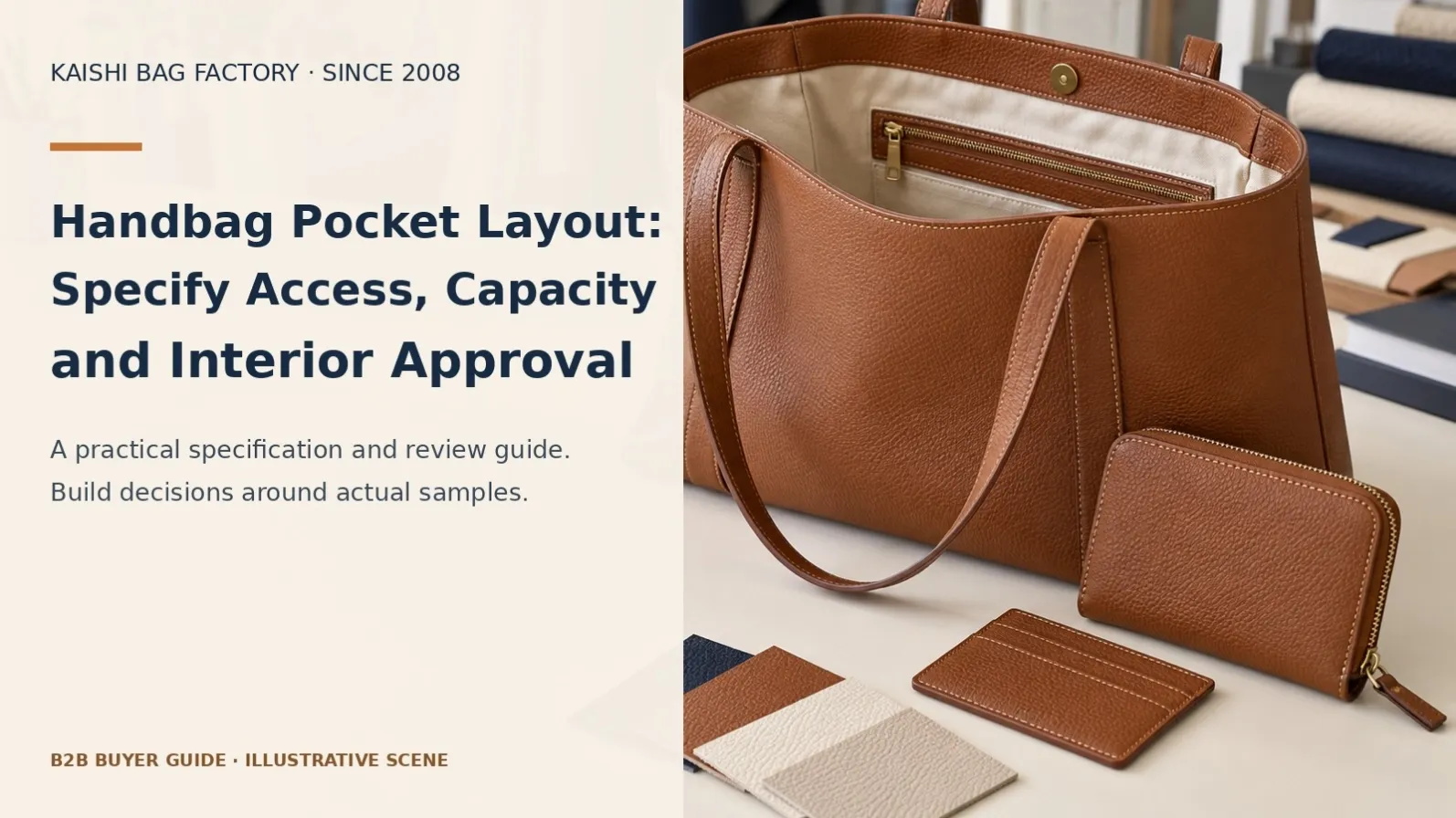
Materials & Customization
Handbag Pocket Layout: Specify Access, Capacity and Lining Before Sampling
Specify handbag pockets around actual contents, access and lining behaviour. Review the completed sample before approving the interior layout.
BAG SOURCING GUIDES
Practical guides for brands and importers on sourcing, sampling, materials, quality control and importing custom bags from China.
Specify handbag pockets around actual contents, access and lining behaviour. Review the completed sample before approving the interior layout.
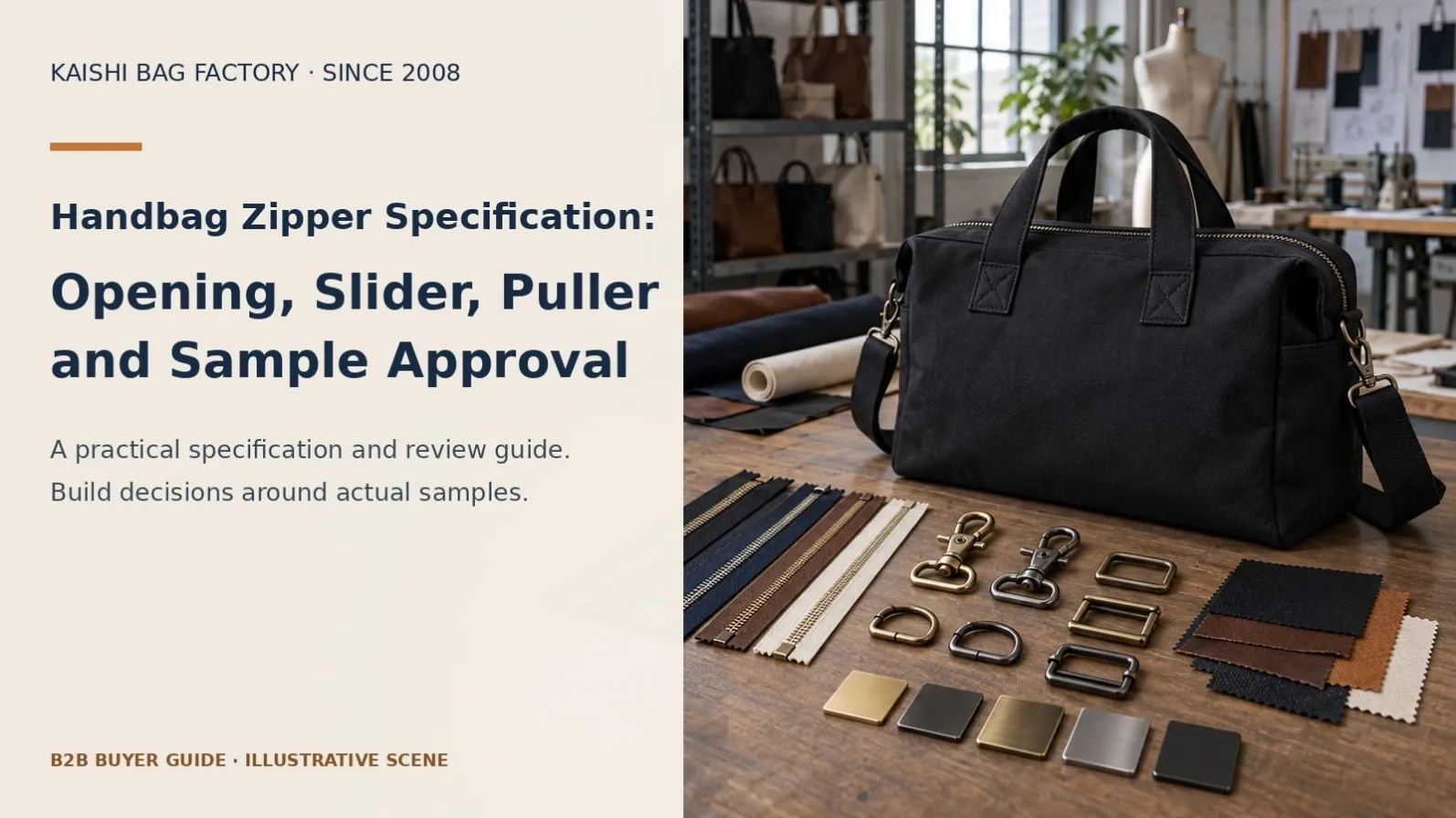
Specify a handbag zipper as an assembled system: opening geometry, chain, slider, puller, tape and end construction. Verify it on the sample.
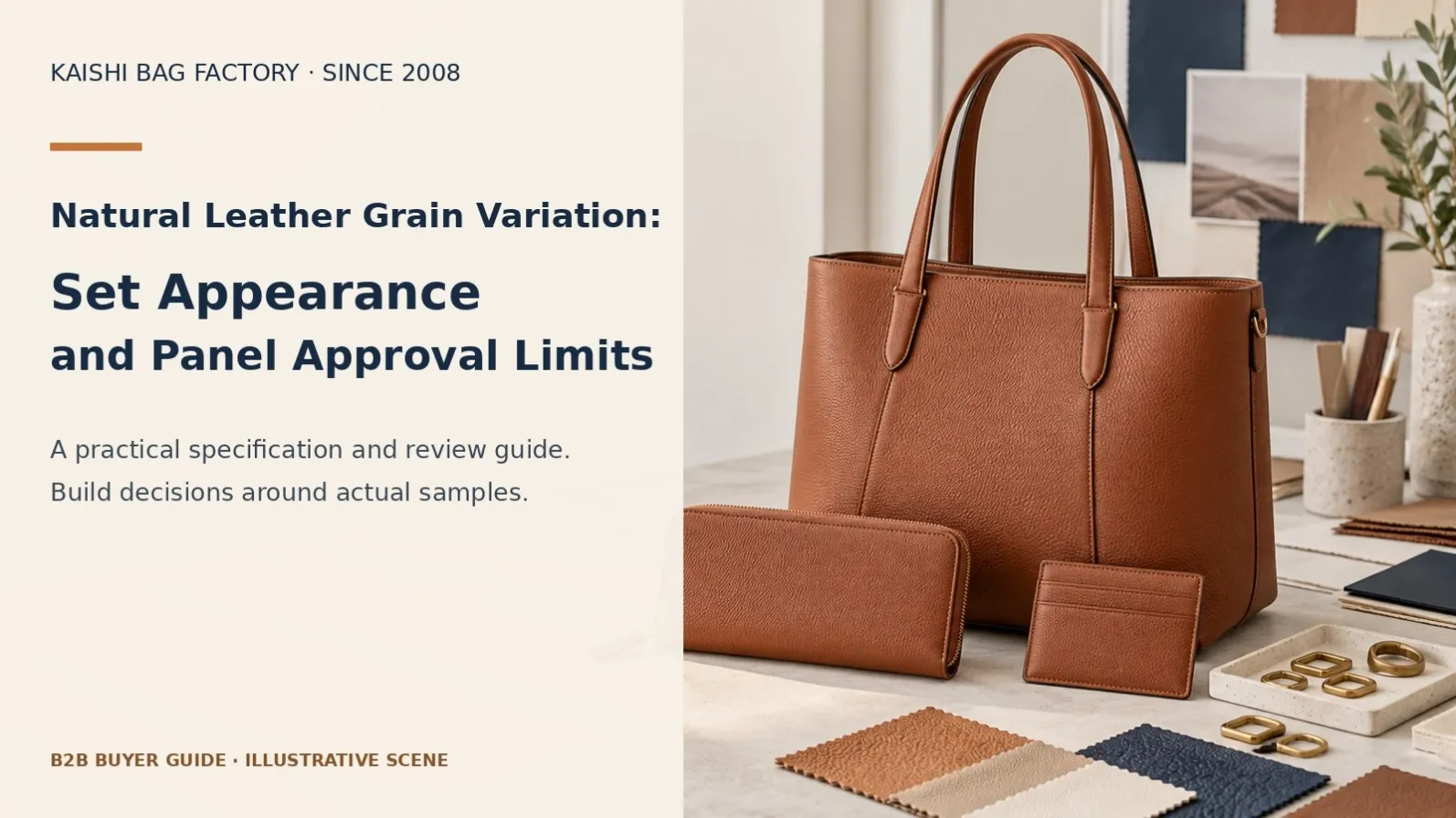
Approve leather grain variation with identified material samples, panel placement rules and appearance limits. A single showroom bag is not a complete standard.
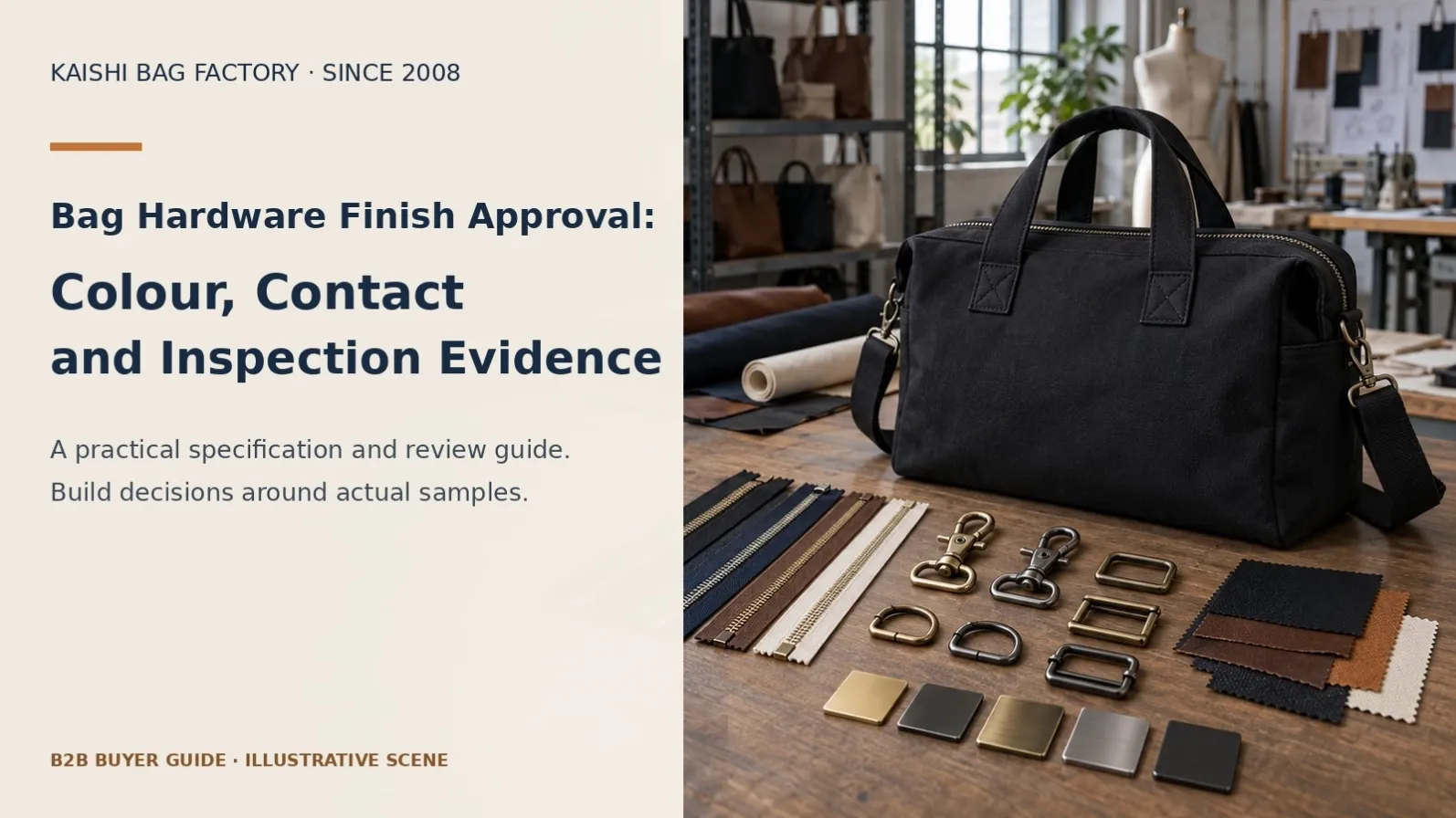
Approve bag hardware finishes using actual components, contact conditions and suitable evidence. A colour name or glossy photo is not a durability guarantee.
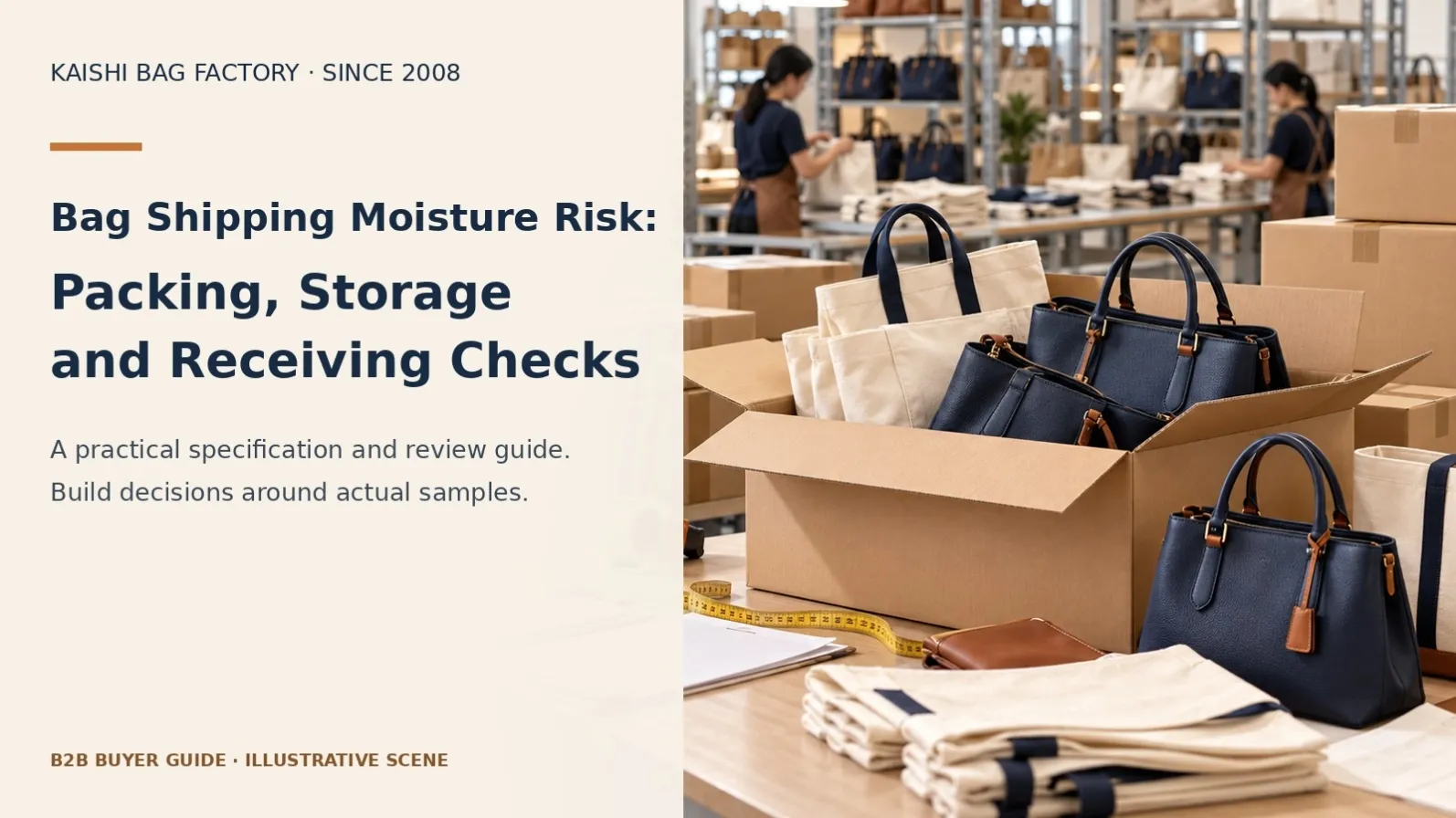
Manage bag shipping moisture through material review, dry packing conditions, route-specific protection and receiving records. No single sachet guarantees prevention.
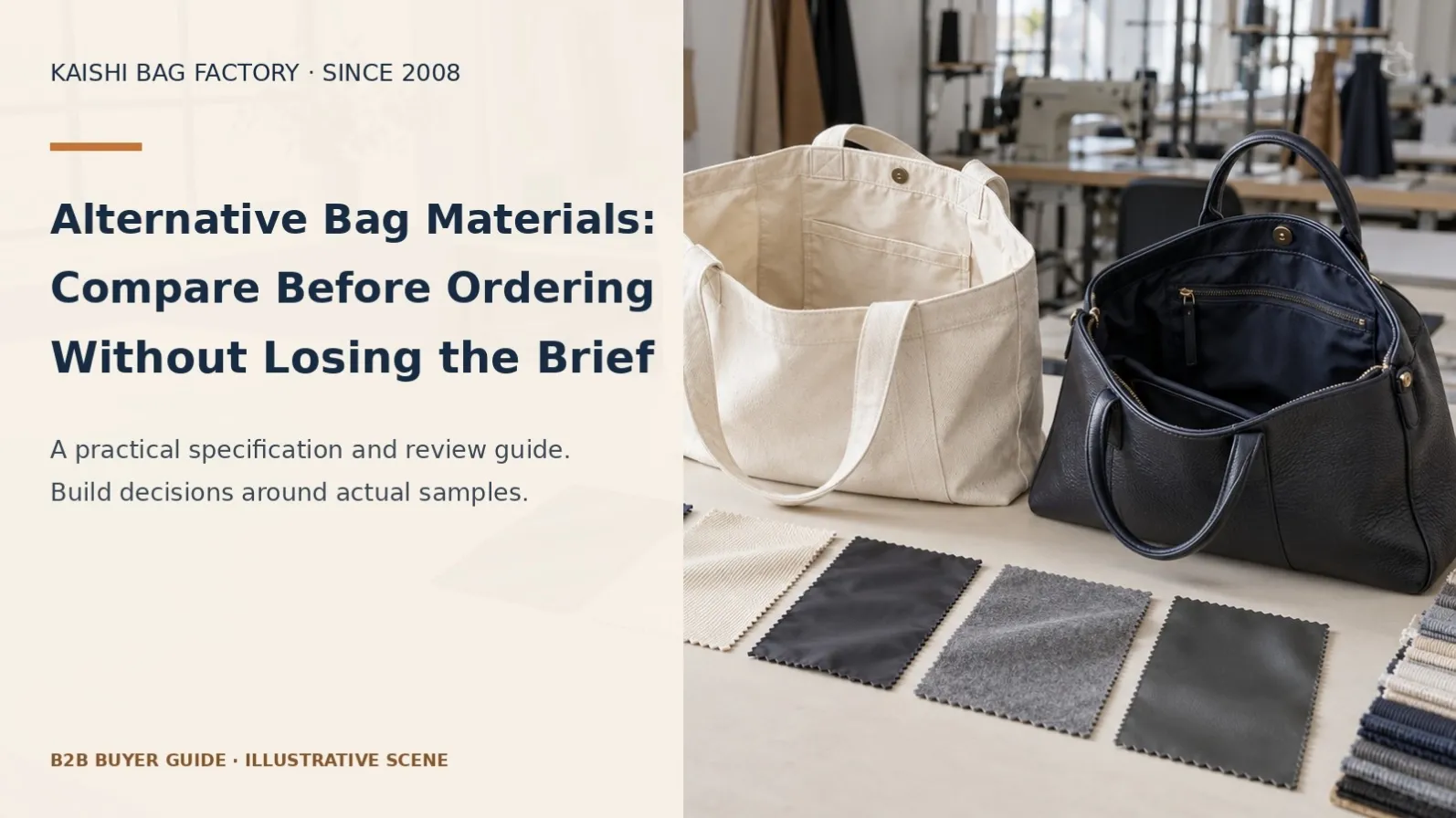
Compare alternative bag materials against the intended look, construction, performance and documented claims before ordering. Similar appearance does not establish equivalence.

Connect bag carton labels to SKU, quantity, packing records and receiving checks. Use customer-approved identifiers rather than inventing barcode numbers.
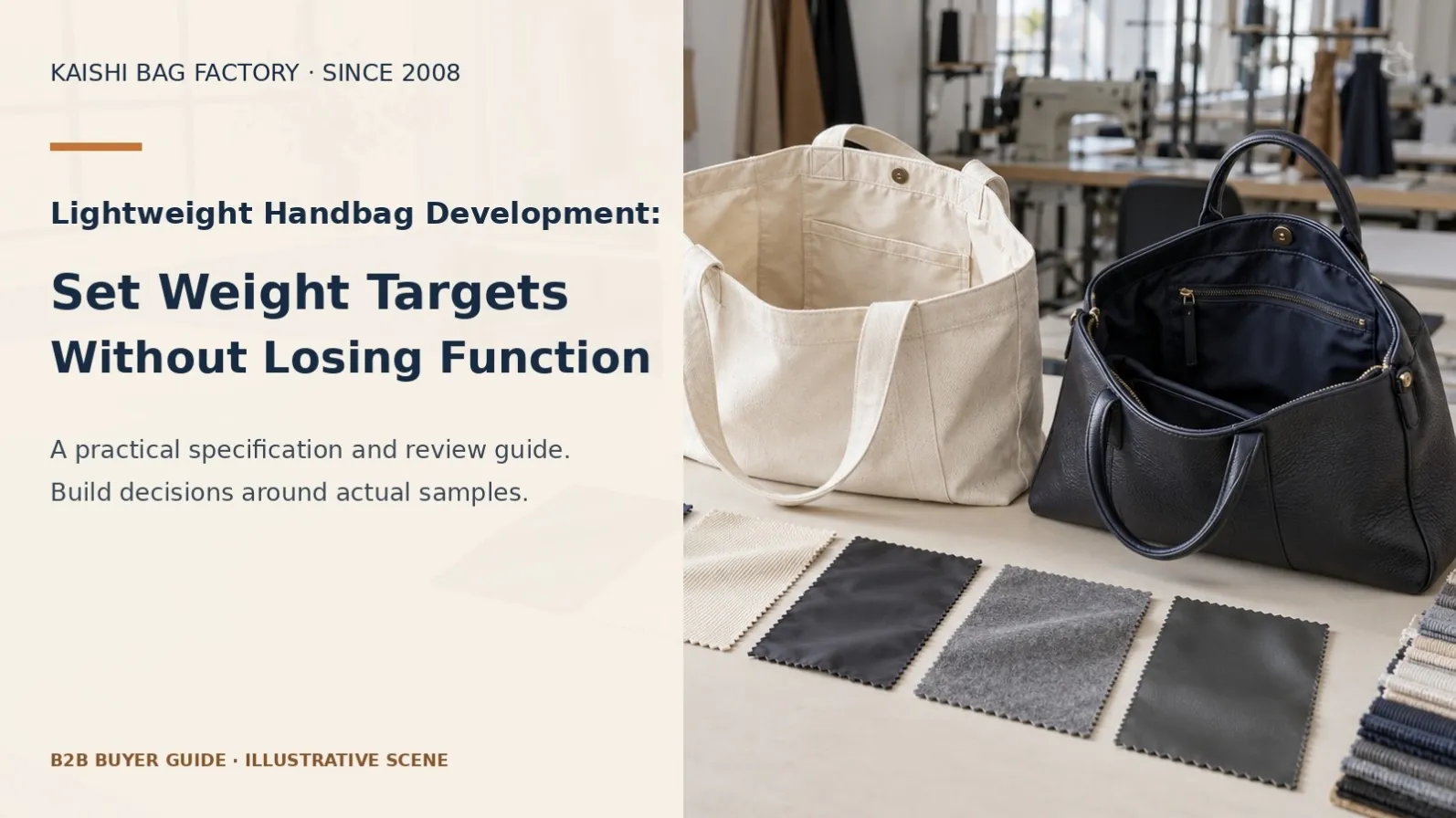
Set a handbag weight target for the complete approved configuration. Review components, carry behaviour and function before accepting weight reductions.
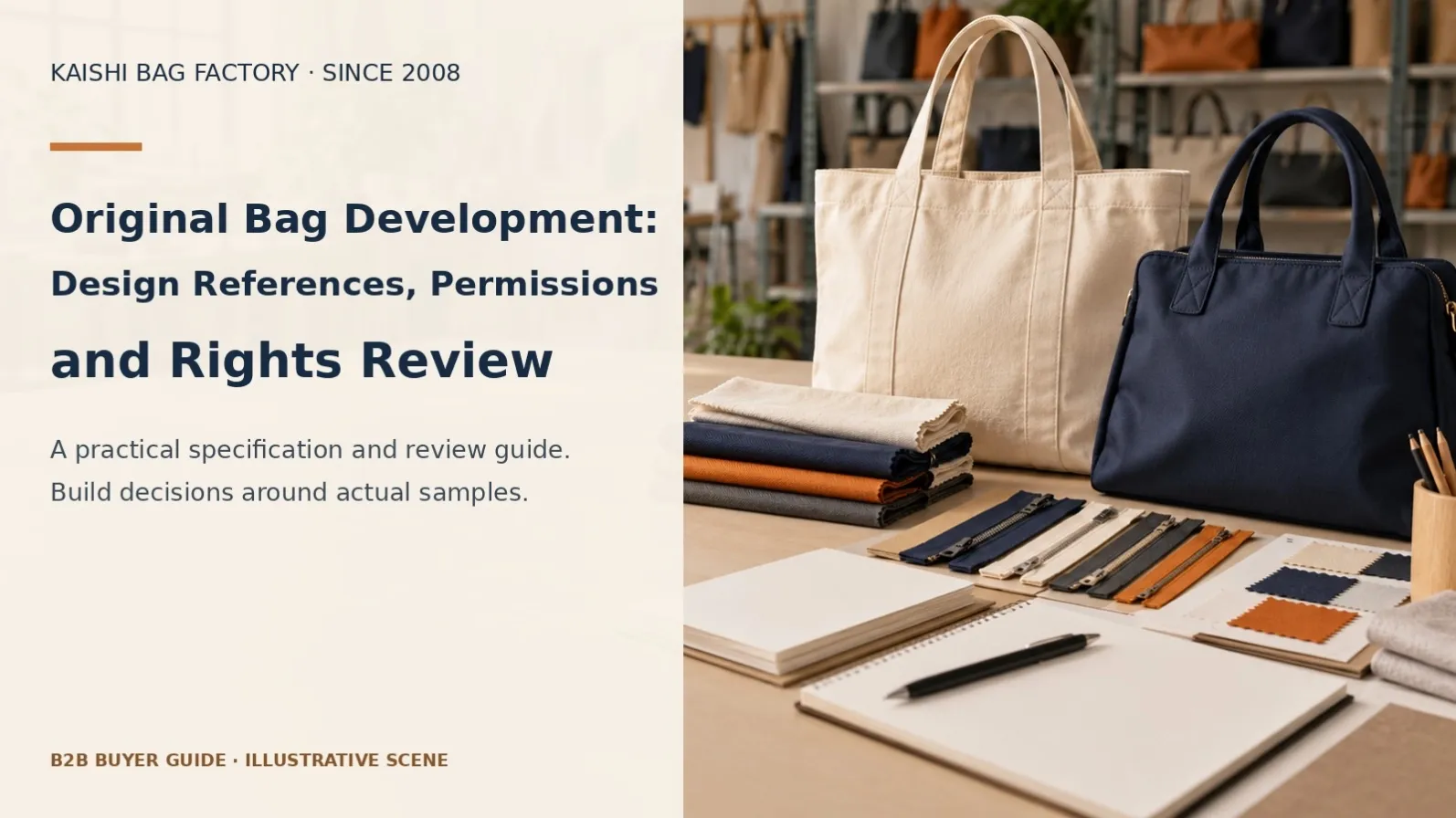
Build an original bag brief with documented design references, artwork permissions and territory-specific rights review. An NDA does not authorize copying.
Prepare accurate bag product images with an approved sample, required views, component details and version-controlled files. Keep visuals consistent with the supplied product.